
World · taz · · 3h
Humanitarian crisis in Ukraine: Hardly any food, no escape in Oleschky
Deutsch (original) · Auto-translated to English
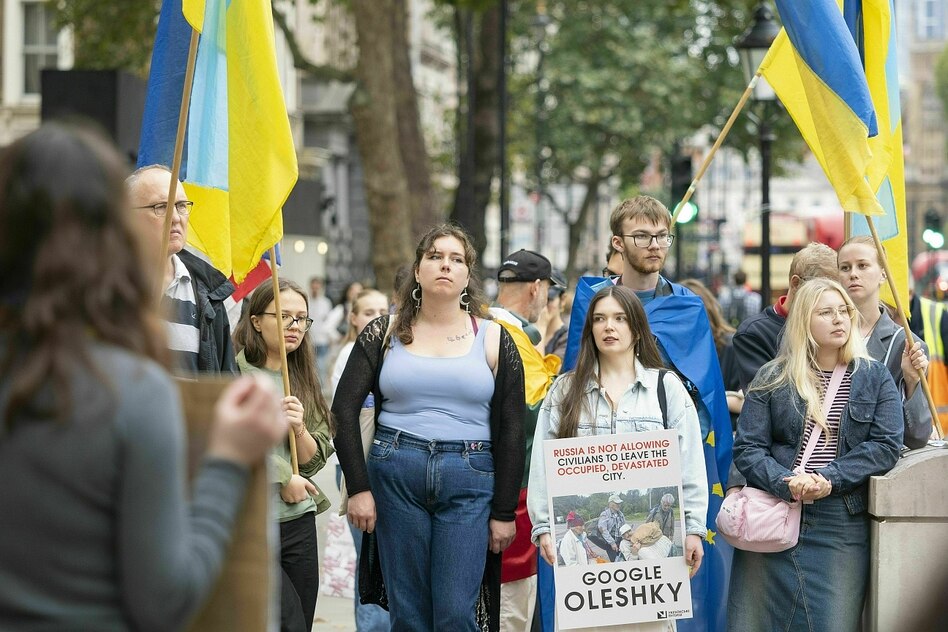
On the night of September 26th to 27th, dozens of heavy cargo drones, accompanied by reconnaissance drones, flew over the Dnipro in southern Ukraine. Under Russian fire, they lowered a total of four tons of food into the Russian-occupied town of Oleschky. Oleshky is located on the left bank of the Dnipro, just nine kilometers from the southern Ukrainian port city of Kherson. It was the largest relief operation to date to deliver food to the city, which has been experiencing a humanitarian disaster for eight months.
"We dropped flour, grain, oil, canned goods, baked goods and bread at hundreds of places in the city. Until then, people were on the verge of starvation," explains Oleksandr Tolokonnikov, deputy head of the military administration of the Kherson region.
Oleschky was occupied right at the start of the 2022 Russian invasion. According to Tolokonnikov, Russian troops have effectively turned the city into an exclusion zone. All routes for evacuating people from and delivering goods and supplies to and from Oleschky are mined.
"No one knows the exact figures because there is no access to the city. But according to residents and thanks to the observations of our reconnaissance, about 2,000 people still live there, including 50 children. More than once we have turned to Russia and the international community with a request to set up a humanitarian corridor to evacuate these people," says Tolokonnikov. "But the Russians refuse and use the people in Oleschky as a protective shield. The whole area is controlled by Russian drones," he explains.
According to authorities, 14,000 people lived in Oleschky until the full invasion began in 2022. Some were able to leave the city in the first days of the war. Others died during flooding following the blowing up of the Kachkovka Dam in June 2023. Still others died from Russian shelling.
Since 2023, there has been no electricity, no functioning shops, no medicine, no fire engines and no schools in Oleschky. People get water from holes and wells they have dug themselves.
Six Ukrainian military units and formations were involved in the humanitarian aid operation to deliver food. The operation was carried out by units of the Armed Forces of Ukraine, the National Guard and the State Border Guard Service with the military administration of the Kherson region.
"The drones flew especially at night by detecting the Russians' blind spots and using thermal imaging cameras to avoid being shot down. The people in Oleschky will now be able to survive with this food for the next two or three weeks," says Tolokonnikov. And he adds that he doesn't know whether such an operation would be successful again, as the Russians would probably be more vigilant in the future.
Volunteers and Kherson region officials say the humanitarian blockade in Oleshky became known because civilians occasionally managed to transmit messages to the Ukrainian side by telephone. Those with generators charge the phones and then try to find a Ukrainian cell signal.
"There is a famine in the city. There are huge problems with the water supply, there are no heating materials, neither gas nor electricity. The hospital was previously supplied with electricity via generators. But now heating oil is no longer supplied, so it had to stop operations. The delivery of food, medicine and the most urgently needed goods has not been possible since May. This is a genocide. The morgue is no longer in operation, since February the corpses have been stored in basements," says the co-founder of the humanitarian organization "Humanity", Iryna-Ester Vratarjova, who maintains contact with the city's residents.
Vratarjova says that at the beginning of September she received messages saying that people in Oleshky were practically eating nothing more than a few spoonfuls of porridge a day. But the hardest time for the people of the occupied city is still ahead. Because in winter they can't even grow vegetables.
"The people there haven't had bread for a long time, but in the summer they were able to survive thanks to carrots, tomatoes and beetroot from their gardens. But now a hungry winter awaits them," says Oleksandr Tolokonnikov. He believes a humanitarian evacuation corridor is the only way out.
Vrataryova says the occupiers are using Oleshky as a shield because the Ukrainian side is not shelling the city because of the civilians living there. "Among those who stayed behind are many older people and people with limited mobility. Many lost their documents in the flooding after the destruction of the Kakhovka dam. The occupiers prevented them from getting them back," reports the volunteer.
In 2023, 43-year-old entrepreneur Jekaterina Krupitsch spent seven months with her two children in her holiday home on one of the islands near Oleschky. Curiously, it was the disaster at the Kakhovka hydroelectric power station that helped the woman escape the occupation and the blockade.
When the water began to flood Oleshky and the surrounding islands on June 6, 2023 following the destruction of the Kakhovka hydroelectric power plant, Yekaterina and her children were forced to seek safety from the water in the attic of a three-story holiday home.
"We were without water or food for a whole day when a drone from the Ukrainian border guards spotted us. It returned, dropped a bottle of water for us - with a note saying that an evacuation would take place," the woman recalls through tears. She now lives further away from the front line. Yekaterina was rescued by a boat run by Ukrainian rescue workers that took the family to Kherson.
"If it had not been for that tragedy and the miracle that a Ukrainian drone discovered us, we would now be starving like the residents of Oleshky. Because we were cut off from the outside world on that island for seven months. We ate fish that we caught in the river and vegetables that we were able to grow. Today when I saw how food was brought there by drone, I had to cry," says Yekaterina.
The situation in Oleschky is now causing an international stir. On the sidelines of the UN General Assembly in New York, Ukrainian Foreign Minister Andriy Sybiha called on the international community to support humanitarian access and the evacuation of the civilian population. People searched for leftover food and collected grass because there was no other food, Sybiha explained.
“We fear that Russian soldiers could take away relief supplies from the people,” says Oleksandr Tolokonnikov. According to intelligence information, Russian soldiers went from house to house and checked what people had received - because the food came from the Ukrainian side.
Because of minefields and Russian drones, people could not leave Oleschky on their own. Tolokonnikov therefore addresses a question to the international organizations: “Why are they not participating in the rescue of the civilian population of Oleshky?”
From the Russian Gaby Coldewey and Barbara Oertel
Read the full story at the source
Source: taz