
War & Militarism taz
Hubert Aiwanger died: He was so free
As head of the Free Voters, Hubert Aiwanger blatantly fished on the right-wing fringe. But he also made his party a force capable of governing. An obituary. more...
Deutsch (original) ·Auto-translated to English
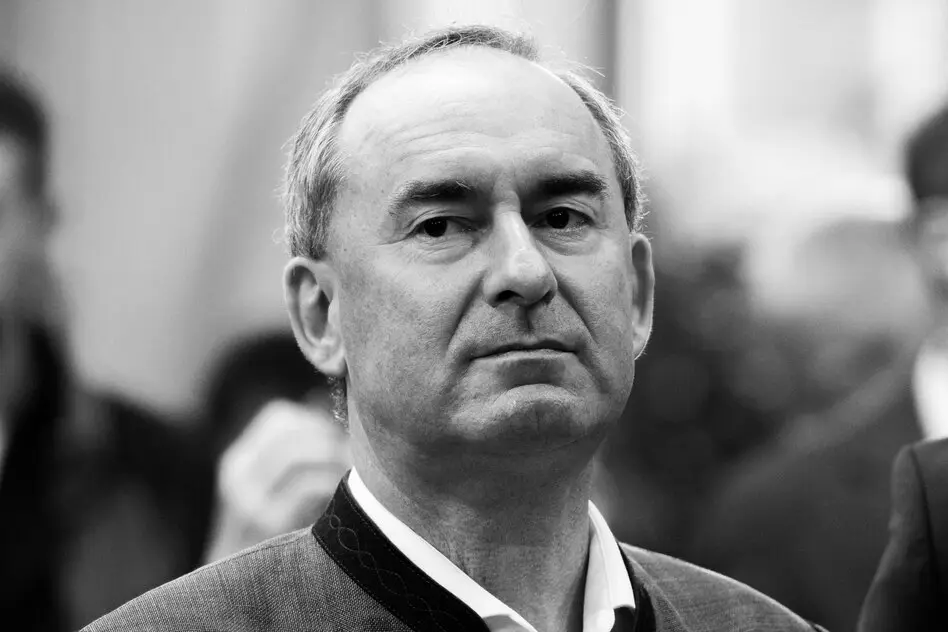
“Arguable” – it is the adjective that everyone can agree on in their reactions to the death of Bavaria’s Deputy Prime Minister Hubert Aiwanger after the initial shock. From Baden-Württemberg Prime Minister Cem Özdemir (Greens) to his North Rhine-Westphalian counterpart Hendrik Wüst (CDU), from the CSU parliamentary group leader in the Bavarian state parliament, Klaus Holetschek, to his SPD counterpart Holger Grießhammer, they all use this vocabulary to describe the deceased.
Of course you wonder what that means: controversial. Is this someone who is looking for a fight? Someone who was easy to argue with? Whose views could be debated? Or is it just a euphemism for a less friendly adjective – controversial? It is not daring to at least assume that the politicians' phrase is intended to express some distance without missing the necessary decency in the face of human tragedy.
Because of course it was a shock when the news broke on Wednesday evening that the politician had been found lifeless in a hotel room in Berlin. Aiwanger was only 55 years old and nothing was known about any major health problems. With his partner, Regensburg district administrator Tanja Schweiger, he had two school-age sons.
Aiwanger grew up on a farm in the Landshut district in Lower Bavaria, which he managed together with his parents for a long time - even during his active political career. He was involved in the Catholic rural youth movement; his political awakening experience, as he called it, was Chernobyl. He didn't go into active politics until he was 30, but then things took off even more quickly: First, he took over municipal offices for the Free Voters, then in 2003 he organized the state election campaign, and in 2006 he became state chairman. In 2008, the Free Voters finally moved into the state parliament with him as a figurehead, and 10 years later also into the state government, in which he himself took over the post of economics minister and deputy prime minister. And also that of the enfant terrible. Or to put it another way: of the controversial.
Something like the leaflet affair that shook the political landscape in the middle of the Bavarian state election campaign in 2023 must then be subsumed under the umbrella term of the controversial. It wasn't so much the leaflet itself that Aiwanger had carried with him as a student. As much as one was repelled by the pamphlet's inhumane anti-Semitism, one could chalk it up to a youthful sin, and to Aiwanger's credit he never attracted attention with any anti-Semitic statements during his time as an adult politician. But his defiant handling of the affair and his - ultimately even successful - attempt to capitalize on it in the election campaign were not only heavily resented by his coalition partner, the CSU.
Even before this leaflet affair, Green party leader Katharina Schulze had described him as a “real right-wing populist”, and Interior Minister Joachim Herrmann (CSU) compared him to lateral thinkers, Reich citizens and climate activists.
Even before the affair, Aiwanger had begun to fish more and more blatantly on the right-wing fringe during this election campaign. He was particularly remembered for his appearance at the demonstration against the traffic light building energy law in Erding, which had become famous as the heating law, organized by the - well, more than controversial - former cabaret artist Monika Gruber. There he shouted to the crowd that democracy must be taken back. A remarkable statement for the second highest representative of the democratically elected Bavarian state government.
A few months after the election, Aiwanger finally tried to lead the farmers' protests - much to the displeasure of the CSU, which accused him of "demo-hopping" and neglecting his main job as economics minister.
Despite everything, the politician was always able to make use of a certain freedom of foolishness that he was not actually entitled to by virtue of his office. How? He simply took it, his freedom. “Mei, the Hubsi,” they said. And a few days later another sow ran through the village.
However, what will remain beyond the debatable: his passionate commitment to hydrogen and wind power, perhaps also the equally passionate fight against the wolf, but above all what he has achieved for the Free Voters. He almost single-handedly brought the party, which until then had actually been little more than a conglomerate of various voter associations, into state politics.
In doing so, he relied on what had already made the Free Voters strong in the municipalities: focusing on the problems of the local people. And with Aiwanger that always meant: the little people in the country. The Free Voters have been an integral part of Bavarian state politics for 18 years. In the surveys they were recently stable at around 9 percent.
Also the fact that Aiwanger made a significant contribution to sealing the end of the CSU's autocracy in Bavaria and perhaps even took away one or two votes from the AfD: That is ultimately something that not only his political friends give him credit for.