
Germany · taz · · 1h
Heat in Colombia: Fire, earthquakes and hardly any government help in Colombia
Deutsch (original) · Auto-translated to English
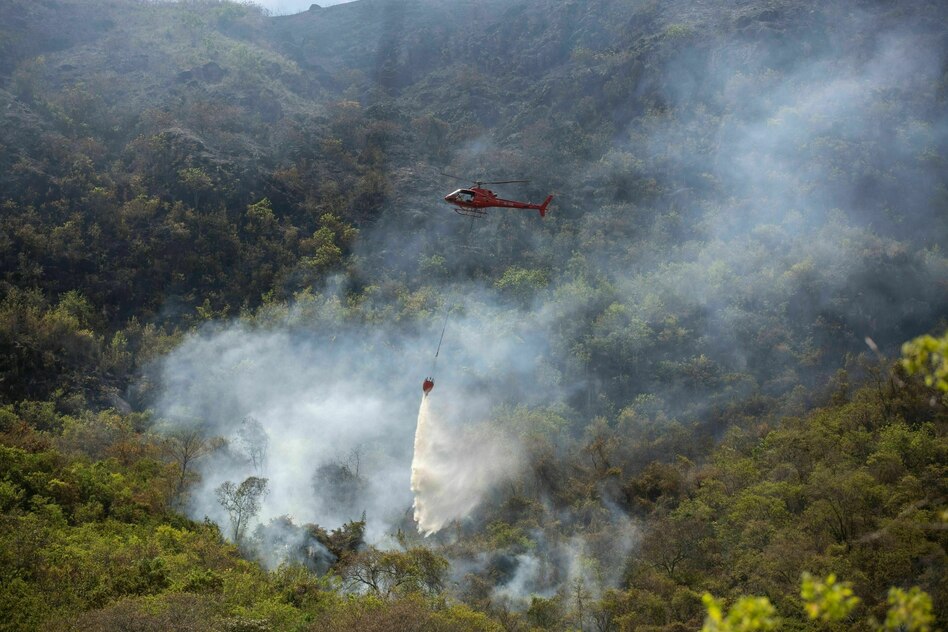
These are pictures like from hell. Animals burn, the cattle no longer have pasture or clean water. Families have lost their homes. Limes, mango, avocado, cocoa and plantains are ash. The farming families are threatened with famine after the inferno. It will take years for the trees to grow back and bear fruit again. Miraculously, no deaths have been reported so far. And the fire continues to eat away.
The scene took place about two weeks ago. At that time, the fires in the Tolima department were one of the most violent. What is bitter is that this region of all places suffered damage from the earthquake at the beginning of August. Governor Adriana Matiz called the army and air force for help as the fire burned. State fire fighters remained rare for a long time. In Tolima alone, around 50,000 hectares have now fallen victim to the flames, affecting 28,000 people.
Over 40 degrees in Germany – what was previously unimaginable is now real. The number of heat deaths is increasing and the water levels of the major rivers are falling. And we realize how ill-prepared our country is for climate change. But it affects all countries. How are people dealing with rising temperatures elsewhere? And where can we learn from them? A summer series from the taz. Published so far:
How a desert city in the USA fights the heat
[Link to post 8629168]Record heat in North Africa
Volunteer village fire brigades and farming families are largely fighting alone against the flames that are engulfing the tropical dry forest, a highly endangered ecosystem, next to their agricultural land. Social organizations such as the Cumbres Blancas glacier protection collective and the Tolima Mountain Guides Association, which maintain close relationships with farmers and provide environmental education, have been fighting alongside them for weeks.
When the earth shook with a magnitude of 7.4 on August 10th, the department of Tolima declared an emergency because the forest fires had gotten out of control. As the Baudó news agency reports, these began on June 16th. Farmers mentioned the first fires in May. But local governments did nothing. 11 of the 19 active forest fires are in Tolima. But there are also fires in Nariño, Valle del Cauca, Cundinamarca, Caldas and Antioquia as well as in the mountains above the skyscraper backdrop of the second largest city, Medellín.
It is a catastrophe that had been in the offing for months. The Colombian Institute of Hydrology, Meteorology and Environmental Studies (Ideam) had been warning since March that a "superniño" was coming, an extreme form of the El Niño phenomenon that brings extreme heat and drought to Colombia. But the left-wing government of Gustavo Petro had not invested sufficiently in prevention. The then Environment Minister Irene Vélez presented a package of measures. But it was not implemented where there is a fire today.
Eduardo Vélez, an expert in integrated disaster risk management with experience at the UN, among others, is calling for an action plan with its own budget for the multi-crisis that Superniño brings: separate pots of money for drought, fires, health and energy - instead of, as before, a series of emergency decrees that all competed for the same pot of money. There is a “culture of reaction” in Colombia. The budget and the will for prevention are too tight.
Most forest fires are caused by humans, says the National Disaster Risk Management Agency: negligence, farming practices that get out of control in extreme drought, possibly arson.
President Abelardo de la Espriella declared a state of emergency during a visit to Tolima's capital Ibagué in order to mobilize aid funds more quickly. He spoke of “criminal hands” being behind the fires. “They use fire to destroy the landscape, harass our farmers, destroy crops and animals and incite fear among the population.” Governor Adriana Matiz suspected FARC dissidents of setting the fires. In any case, gasoline and accelerant were found.
But there could also be other interests behind it, warn Senator Kevin Gómez Paz and MP Renzo García, both from the left-wing Pacto Histórico: Mining rights have been requested or granted on large parts of the fire areas or in adjacent areas.
Read the full story at the source →
Source: taz