
World · taz · · 2h
Heat in Israel: Dangerous tanning
Deutsch (original) · Auto-translated to English
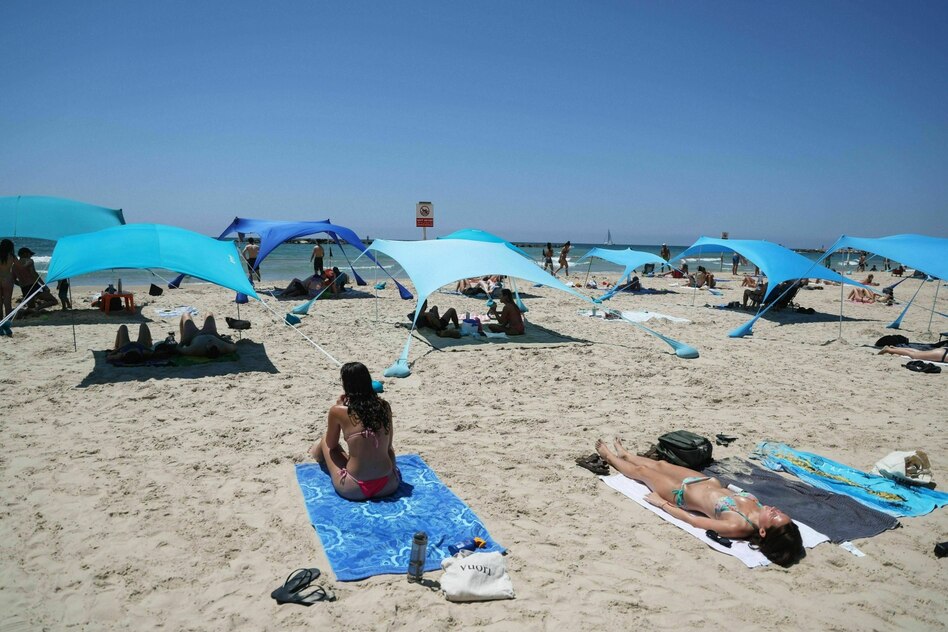
E in the afternoon at the beginning of September, 2 p.m. On the beach in Tel Aviv, the bronzed bodies of young women and men sizzle slowly but reliably under a brilliant sun. Not a cloud in sight, light breeze.
Over 40 degrees in Germany – what was previously unimaginable is now real. The number of heat deaths is increasing and the water levels of the major rivers are falling. And we realize how ill-prepared our country is for climate change. But it affects all countries. How are people dealing with rising temperatures elsewhere? And where can we learn from them? A summer series from the taz. Published so far:
How a desert city in the USA fights the heat
[Link to post 8629168]Record heat in North Africa
Waves rush at rhythmic intervals, breaking gently on the shore. Not far from the water, three long-haired women sit on their towels, their bright bikinis shining in the sun. Actually, with a UV index of 9 you shouldn't sit uncovered on the beach, but somewhere in the shade. With sunglasses, long-sleeved shirt and hat. And ideally with a sun protection lotion with a protection factor of 30 to 50 on the skin.
Canadian scientists came up with the index in the early 1990s to warn about the dangers of UV radiation. Today in Israel it is used primarily by young people to expose themselves to tanning efficiently and safely.
“Tanmaxxing” is on the rise, especially among younger generations. Quickly into the sun when it is at its highest. Sometimes without sunscreen to get tan in no time.
“Is it still Index 9? Great!” shouts 21-year-old Rona enthusiastically. The sun burns on your skin, the sand glows under your feet. The friends want to stay for two or three hours. With tanning lotion, but without protection factor. They shake away worries about the health consequences of this sun orgy as skillfully as the grains of sand from their beach towels. "It's absolutely dangerous, but I'll tell you this: I smoke too. If I get cancer, it'll be because of the cigarettes, not because of the sun."
Dermatologists in Israel, like everywhere else in the world, emphasize that the tan, which is still considered beautiful and healthy in the Western world, is more of a cry for help from the top layer of skin - and promotes skin cancer in later years. Pediatric dermatologist Efrat Bar-Ilan recently waxed lyrical about the teenage trend in the Israeli newspaper Times of Israel: "They know that UV radiation is harmful, but they can't understand the long-term health risk. They just want the instant tan, the instant glow. Everyone wants to be tan." Tiktok and apps show how it works.
A little further on the beach, two other young women are lying in the sun. One has blonde hair and porcelain-colored skin, the other is tanned a little darker. They only want to stay for an hour; they know about the dangers. “But we always use cream with a protection factor of 50,” says one justifyingly. It is “part of life” to lie in the sun.
Not everyone is taking part in the trend. Four young men sitting further back under an improvised tent don't want to know anything about it. “I go to the beach to have fun, not for the tan,” says one, who looks suspiciously bronzed.
In Tel Aviv the sun shines almost every day for four months, temperatures fluctuate between 28 and 33 degrees with humidity of up to 90 percent. The year 2025 was considered one of the warmest in the country's history, with temperatures approaching 50 degrees in the Jordan Valley.
The air conditioning is the main thing that works to combat the increasing heat; every trip to the supermarket is like a mission to the North Pole. Boarding the city buses is like walking into Frozen Elsa's castle.
Air conditioning systems like these contribute to the global warming that they are supposed to combat. According to an EU study, Israel ranked 55th in the world for CO2 emissions in 2024. Industry and transport are primarily to blame. The government wanted to end coal-fired power generation by 2026 and stop the import of cars with internal combustion engines by 2030. The first target has been postponed, the second is expected to be missed. The focus right now is more on regional wars. Which further fuel global warming.
Read the full story at the source →
Source: taz