
World taz
Historian on the multi-ethnic Łódź: “Nobody wanted to hear reports about German crimes”
Andreas Kossert follows in the footsteps of his Łódź grandmother in “Elsa’s World”. She testified very clearly to the crimes of the Germans against Jews and Poles. more...
Deutsch (original) ·Auto-translated to English
taz: Mr. Kossert, how close is the story of Elsa, your grandmother from Łódź, to you?
Andreas Kossert: My grandmother's stories from Poland were part of the background noise of my childhood. Łódź was always present, even though she was unable to save any photos or documents. That's why Łódź has always been a kind of mirage for me. Nothing more, because I only had Elsa's stories. Only now, many decades later, have I picked up her story again and researched it as a historian - the result is my book "Elsa's World".
Born in 1970, historian, political scientist and Slavic scholar, researched at the German Historical Institute in Warsaw from 2001 to 2009 and has been working at the Federal Foundation for Flight, Expulsion, Reconciliation in Berlin since 2010. He has already published a number of books about East Central Europe and German-Polish relations.
taz: Did your grandmother tell wistful stories of displaced people?
Kossert: Absolutely not. On the contrary. Although she was a wonderful grandmother in the here and now, mentally she always remained in Łódź throughout her life. But she did not cultivate a tearful sentimentality, because she had seen what was happening in Poland in the German name. What she said was not typical of her generation.
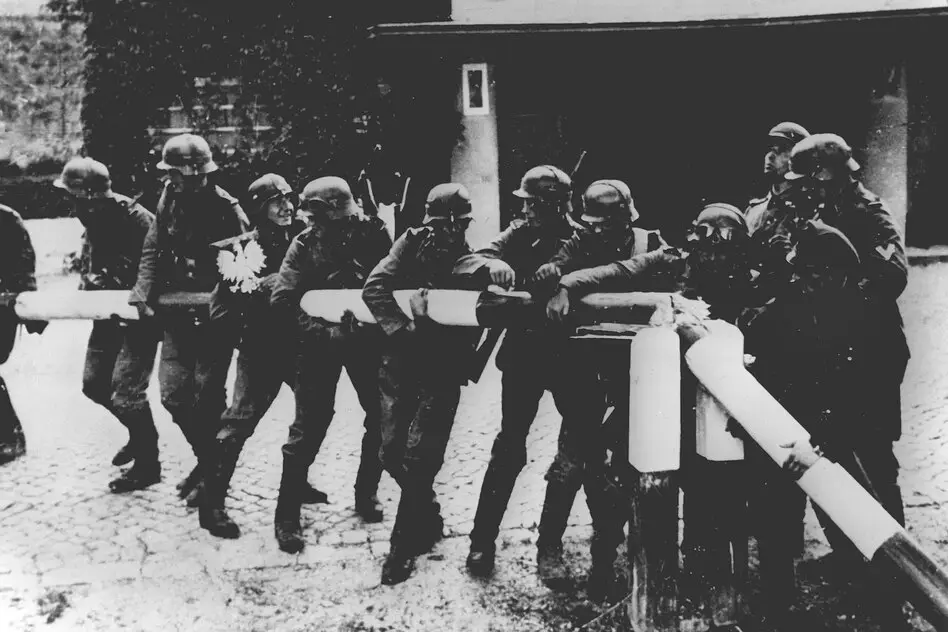
Kossert: For my grandmother - unlike the West Germans of her generation - the Second World War began on September 1, 1939 with the German attack on Poland right on her doorstep. She had to hide from German air raids; her husband, a “ethnic German” like her, initially fought on the Polish side against the Germans. And she experienced how the German occupiers turned Łódź into a center for genocide and Germanization.
Kossert: The Litzmannstadt ghetto began 350 meters from her parents' house. The tram on which she went shopping passed the “transit route” through the ghetto, passing under the wooden bridges that connected different ghetto districts. She experienced even more directly what happened to her Polish neighbors, who fell victim to the German occupation. She told quite openly that her Polish acquaintances were mistreated and refused medical treatment. But no one in West Germany wanted to hear these reports about German crimes at the time. This made her my first history teacher.
Andreas Kosserst reads from "Elsa's World. In the footsteps of my grandmother. A family story from Lodz." Siedler Verlag 2026, 414 pages, 26 euros; E-book 22.99 euros.
November 18th, 6:30 p.m., Lüneburg (East Prussian State Museum). Registration required: 04131-759950 or info@ol-lg.de.
November 23rd, 6 p.m., Hamburg (St. Nikolai am Klosterstern community center).
taz: Your ancestors moved to Łódź in the 18th century. Did your grandmother now feel like she was Polish?
Kossert: Officially she was a member of the German and especially Protestant minority. But at the same time she was so much more. My grandmother spoke Lodzer German at home, but was completely influenced by the Polish language and culture. The history of Łódź shows how difficult it is to retrospectively classify people into ethnic or national categories. There was the type of “Lodz people”: people of different origins set out to try their luck in this booming textile metropolis in the 19th century. They were suspicious of both German and Polish nationalism and were seen as opportunistic capitalists without patriotic feelings. An exciting melting pot of cultures has therefore emerged in Łódź. Until the end of her life, my grandmother loved her hometown. She remained a proud Łódź native.
taz: What remains of the former Jewish-Polish-German coexistence in Łódź?
Kossert: Łódź was a multi-ethnic city for centuries, although a multicultural explanation would be out of place. People lived together, but above all next to each other. This coexistence was destroyed by the German invasion of Poland in 1939. After 1945, Łódź became an almost purely Polish city for the first time. But over the last 30 years, Łódź has rediscovered its multicultural heritage. Łódź is suddenly cool again.