
Germany · taz · · 2h
HBO series “Youth”: relationships and menopause
Deutsch (original) · Auto-translated to English
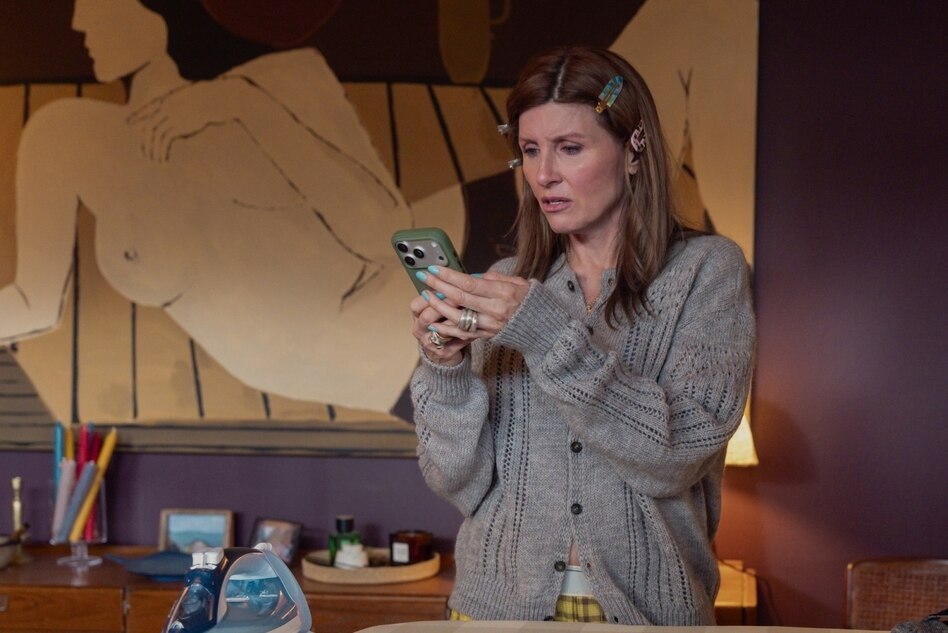
“No decade goes by as quickly as the one between 50 and 60,” it says at the beginning of the first of eight episodes of the new series “Youth”. “You have to use every single second of your time wisely.” All sorts of women are shown who are known to have achieved great things, even or especially in old age, from Ruth Bader Ginsburg to Margaret Atwood to Maya Angelou. Women that Alex (Sharon Horgan) would certainly describe as inspiring. If she didn't spend her free time watching dog, fitness and other videos on her smartphone instead.
Not that Alex - herself just in her 50s - hasn't achieved a lot in life. Things are generally going well in her job as a literary agent at her best friend Sam's (Sharlene Whyte) company, she doesn't shed a tear for her newly dating ex-husband, and even her menopause symptoms remain tolerable. In addition, his son Ruari (Aran Murphy) has just finished school and is about to move out and study. While the latter soon turns out to be a double-edged sword and Alex's parents increasingly need more support, at the same time she wouldn't mind a little togetherness and sex. However, whether ex-affair Patrick (Rupert Friend), who has so far been reluctant to commit, is particularly suitable for this is another matter.
Anyone who is familiar with the work of Sharon Horgan, not only as an actress, but above all as a screenwriter and series creator, knows about her very special humor, which is based on close observation and true-to-life dialogues. After two seasons of “Bad Sisters,” she returns to more personal inspiration and, after “Pulling” and “Catastrophe,” devotes herself to a specific phase of her life for the third time. But you are doing “Youth” an injustice if you dismiss the series as just a story about menopause or a woman in a midlife crisis.
Rather, Horgan is a master of balance. She doesn't presume to position Alex as a placeholder for all women in their fifties - and yet it is precisely through her individuality and precise drawing that she makes this protagonist accessible. She takes the experiences of getting older seriously and doesn't mince words, whether it's about urinary tract infections or the worry that the graying blind date might have too low-hanging testicles. You won't find any silly or crude menopause gags. Even the title “Youth” is full of ambiguity: the fact that Alex, on the one hand, has a hard time grappling with the loss of the lightheartedness of her younger years and, on the other hand, is actually happy to have long since arrived in supposedly calmer waters, makes her story particularly complex.
Alex’s environment is also convincingly balanced; From the back and forth with ex Patrick to the repeatedly tested friendship with Sam, every relationship is believable. The one for teenage children is particularly spacious but also attractive. Not just because such ambiguous mother-child dynamics are not often shown. But also because “Youth” uses Ruari to talk about the challenge of being young and male today. But the focus of the series always remains steadfastly on Alex. A blessing! Because such a remarkably three-dimensional, truthful protagonist, who has long been herself and is still coming into her own in the constant alternation of self-empowerment and self-sabotage, is far too rare on the screen.
Read the full story at the source
Source: taz