
Germany taz
Hamburg is looking for an anthem: new song
FC St. Pauli is currently looking for a new stadium anthem and is relying on the fans. This song contest takes a deep look into the souls of those involved. more...
Deutsch (original) ·Auto-translated to English
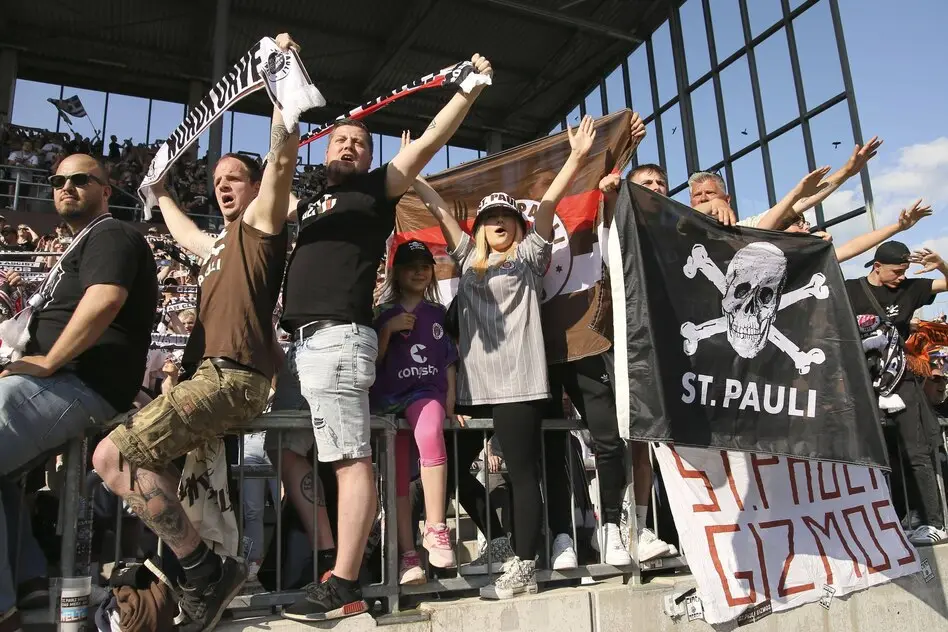
It's the last minutes before kick-off. The stands in the stadium are already full, there is this joyful tension in the air, the desire for the game that attracts people because you don't know beforehand what the outcome will be. The first bars come out of the stadium speakers, the fans hold up their scarves and then many thousands of people sing their anthem together. The TV commentators use the word “goosebumps” and keep their mouths shut. The latter is a skill that is definitely underdeveloped among TV commentators. Your silence shows how important the issue is.
Now, of all people, the FC St Pauli fans, who are so vocally committed, have lost the stadium anthem. For a long time, the 1950s hit “The Heart of St. Pauli” was sung in the Millerntor Stadium - a piece full of simple seafaring romanticism with the central insight: “The heart of St. Pauli, that calls you back / because there on the Elbe, your happiness awaits.”
The text is limited to Hamburg harbor folklore, but was written by a Nazi careerist named Josef Ollig. The FC St. Pauli Museum found out and the fans decided by a large majority: We don't want to sing the text of a Nazi poet - no matter how harmless it is.
Unlike the other clubs in the world, FC St. Pauli decided to make the search for a new stadium anthem the responsibility of the club members and season ticket holders. What's more: Anyone who wanted to could not only suggest existing songs, but also work on composing them themselves.
The number of suggestions submitted was astonishing: at the end of October, 75 previously published and 296 specially composed songs were put to the vote. The songs were published or linked on the FC St Pauli website. Unfortunately the site is now offline.
This text first appeared in wochentaz, our weekly newspaper from the left!
Every week, wochentaz is about the world as it is – and as it could be. A left-wing weekly newspaper with a voice, attitude and the special taz view of the world. New every Saturday at the kiosk and of course by subscription.
Now everyone has something to do. The members and season ticket holders should vote on a total of 371 pieces in a three-stage process - the 371 pieces become 25, the 25 become 5 and the last 5 pieces become one. The winning song should be announced at the end of November.
During the process, the rights of cover versions must be clarified and AI-generated songs must be filtered out. And on top of that, there will be a general meeting on November 14th, at which a group of “Heart of St. Pauli” apologists want to request that the old anthem be rehabilitated – and thus stall the song contest.
It is not to be expected that this proposal will pass, but that the song contest voting is based on solid knowledge of the candidates, but also not: overviewing and evaluating 371 songs is not something that even people with a lot of free time can do. One could complain about that.
On the other hand, the competition has created a treasure trove that is worth looking into: 296 self-written stadium anthems provide an insight into the souls of the fans that no opinion research institute could ever achieve. When it comes to football culture, FC St. Pauli is world class. When it comes to football, there was recently a 1:4 defeat against Magdeburg in the Second Bundesliga.
Part of world-class football culture is that people's contributions often go far beyond the limitations of the “stadium anthem” format. The women's liqueur choir, for example, made a moving declaration of need and love with the song "Haut sie weg", which the conventional fans in the Millerntorstadion would not be able to reproduce due to a lack of singing skills. The problem is similar with “Für Dich St. Pauli” by Bianka Kilwinski and Carsten Zundorf, which tends towards an art song and is performed in two voices on the piano. Or with the capitalist-critical poem “Rennpferd” from This is The Artist’s Job set to music. Equally far from good and evil from a stadium anthem perspective is Psykator’s “Millerntor Anthem” – this is electronic club music without lyrics.
But there is also a lot that is suitable for anthems. The “Monster with the Ukulele,” for example, sings in a dark, feminine voice to the gently melancholic guitar: “No place for Nazis / no room for their hatred. You can always rely on us as fans / against fascism, together hand in hand / we remain stable, we remain standing.” Commenting on his own song, the “Monster with the Ukulele” wrote: “Unfortunately, I had a cold when I recorded it and my voice is otherwise better and I didn’t have the opportunity to record the song in a recording studio.”
Something similar can be heard and read more often: on the one hand, the declaration of anti-fascism, and on the other hand, the reference to the spontaneous, unfinished, produced via smartphone. The song contest shows what is possible with home recording in times of digital music production and AI.
Dealing with AI represents a real problem for the competition: Songs composed and written exclusively by an AI were excluded from participation, as authorship cannot be determined for a purely AI song - in the worst case, writes the association, "usage rights even lie with the AI provider". AI could only be used to provide support, for example when supplementing instruments.
But how can you check who composed and wrote what? The association relies on the information provided by the participants. An AI detector will also be used. No further details can be found out.
In terms of genres, the submissions are as diverse as the St. Pauli fans. An artist named Nike Neandertal makes disco pop, Boerney makes hard rock, George Blue makes Freddy Quinn-style hits, Dr. Huhu a cover version of Beethoven’s “Joy of Beautiful Gotterfunken”. Punk rock is often represented, of course, the recorded anthem “Heart of St. Pauli” was played in a punk version in the stadium.
There are always pearls to be found lyrically: In Wasted Hours, for example, “fairness” rhymes with “awareness,” Joanna Bars writes “If your day was gray again / let the floodlight mast be your lighthouse,” Asphalt Adel sings: “We're standing here in storm and rain too / it smells like grass, stinks of life.” The list could be continued for a long time.
The really exciting question now is: What will the fans choose? Will it be an underdog? Or a song from the “already released” section – because that still exists too. For example, the nasal funk and soul character Jan Delay was suggested with “Light still burns on St. Pauli” or the indie pop sympath Thees Uhlmann with “This is football”.
One of the most refreshing suggestions is, surprisingly, a piece by Udo Lindenberg: In the 1978 song “Reeperbahn” he complained about how shitty things had become there compared to the 60s. The song would be a nice counterpoint to the common denominator of the stadium anthem genre, which is to praise one's own city - or in the case of FC St. Pauli, one's own district.
This sometimes pompous local connection is something that even FC St. Pauli fans cannot avoid. In addition to the harbor romance, it is above all the nightlife, more precisely the tolerance and openness of the individual sociotopes and subcultures, that makes St. Paulians sentimental. What can be concluded from the texts: Apparently many St. Paulians are small-town refugees who have moved here. In any case, the tenor is: Here I am human, here I can be - finally.
The song contest has been in the second selection round since November 13th. There are 25 songs left and you can vote until November 18th to see which 5 songs will make it to the final round. The final round of voting will take place from November 20th to 25th. When and in what form the new stadium anthem will be presented was not yet clear at the time of going to press.
After that, the next exciting moment will be whether the chosen anthem will be accepted in the stadium. Will the fans sing along? Or will there be criticism of the process and a boycott? Both are possible in St. Pauli's high football culture.
Transparency note: The author is a member of the table football department of FC St. Pauli. He was not involved in the song contest in any way.