
Germany · taz · · 3h
Genetic research: as complex as a fruit fly
Deutsch (original) · Auto-translated to English
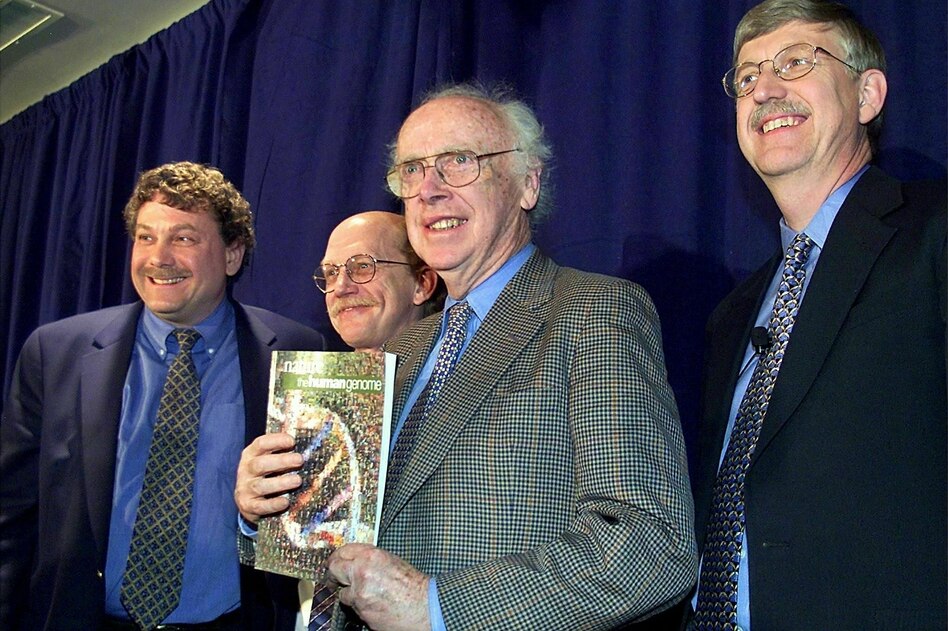
No divine comparison was too big, every earthly comparison too small, to make it clear how revolutionary the decoding of the genome would fundamentally change humans and the way we live. Looking at the human genome filled him with humility, says Francis Collins, who headed the international Human Genome Project at the time. In June 2000, he stood at the lectern in the East Room of the White House, with diplomats from Germany, France, Japan and the world press in the rows of chairs in front of him.
Together with then US President Bill Clinton, British Prime Minister Tony Blair and Craig Venter, whose company Celera was also working on the first version of the human genome in the scientific competition, they would jointly announce that they were now able to present exactly this. Finally, says Collins, we, humanity, could "take our first glimpse of our own handbook, previously known only to God."
A few months later, in February 2001, the first scientific analysis of the human genome was published in the major journals Nature and Science. Many more insights will follow. But although research has uncovered much more information about the genome over the past 25 years, we are still unable to fully read this supposedly divine manual.
The idea that our genes give us access to what holds us together deep down or that they would describe exactly which characteristics and diseases a person would develop like a manual - the genome could not fulfill that. Nevertheless, there are more and more applications of genetic engineering and in some of them the idea of a readable human being still lurks.
Like the Internet and artificial intelligence today, the genome was also a projection surface for a better future. In 2001, the researchers and the governments that funded them were convinced: their discovery, their investment, would fundamentally change the world and people, the way we live and research. US President Bill Clinton predicted that genomic research would revolutionize the diagnosis, prevention and treatment of most, perhaps even all, human diseases.
Instead, more than 40 million people worldwide now think they know that they are 10 percent Italian or 30 percent Japanese. As if one's own origins were a cake into which one had stuck flags from countries whose borders have always existed that way. For this knowledge or the search for relatives, they have willingly shared perhaps the most intimate data to which humans have gained access with private providers 23andMe, Ancestry and Co.
The interest in DNA was never limited to research; there was always a capitalist interest from companies and insurance companies - and a particularly problematic one from state authorities.
But beyond companies like Ancestry, genetic analysis has become more and more deeply embedded in private lives over the past 25 years. In the desire to obtain information about their future baby, some couples even cross oceans and pay tens of thousands of dollars. Even before it is born or inserted into the uterus, a so-called embryo screening should be able to reveal whether your child will grow up or be smart. Could it have the BRCA gene, which increases the risk of breast cancer, and what are the chances of Alzheimer's and diabetes?
You are reading a text from our future department. If you're interested in more positive perspectives, subscribe to TEAM FUTURE, the constructive newsletter on climate, knowledge, utopias. Every Thursday you will receive an email from us with strong thoughts for you and the planet.
🐾 Sign up now for the TEAM FUTURE newsletter – free of charge
Start-ups like Orchid, Herasight or Nucleus sell the promise of an optimized child and the illusion of some control over one's own life. None of the companies can make firm statements about how abnormal gene variants will actually shape the characteristics or disease at some point.
Paradoxically, the moment the researchers held the genome in their hands was the moment in which all their ideas about it collapsed. They assumed that humans, as highly complex creatures, must have up to 100,000 protein-coding genes. Instead, there are just 25,000, no more than a fruit fly.
Back then, people still believed that genes could be found for everything. For people to be tall, gay or clever. As if, like in a children's puzzle with a tangle of lines on top of each other, you could just connect the genes on the left side of the page with their respective human characteristics on the right side of the page, as long as you concentrate hard enough.
But as researchers tried to get an overview of the tangle, it became increasingly complicated. Even characteristics that they thought were easy to recognize, such as height or hair loss, are influenced by many different genes. And even if there are very clear connections between gene variants and what they trigger, they only explain part of how tall you get, when you can expect hair loss and whether breast cancer breaks out. Environmental factors that arise from one's own life are just as important; measurable from the outside in air quality, stress, diet and exercise or in the body in the regulatory pathways on the DNA, which are called epigenome.
For some genes we know specifically that their variants can increase or reduce the risk of disease. He Jiankui's story also shows how dangerous it is to try to intervene in genetics across the board when no diseases have already been diagnosed. In November 2018, the Chinese researcher announced that he had created two genetically modified babies using the Crispr-Cas-9 gene scissors. He gave them the naturally occurring variant of a gene that protects against HIV. At the time, he didn't know whether the variant would pose other health risks. Such variants are always a trade between two risks. Genetic changes that protect against one disease can in turn make people susceptible to other diseases.
Let's be honest: Human abilities in the language of biology are just enough to get a feeling for sound. It's like having a book in front of you, but only being able to decipher every tenth word. Although initial meaningful analyzes and even changes are possible, we do not yet understand the big picture.
Arguably one of the greatest achievements from the Human Genome Project itself is the progress in sequencing the human genome. While the path to the first human genome took 10 years and billions of dollars, full sequencing today takes no more than a day and costs a few hundred dollars.
It is thanks to this technological leap that researchers were able to develop a vaccine and discover new variants of the virus in a very short time during the corona pandemic. Doctors can also quickly find out which mutations can cause cancer cells to spread uncontrollably in the body. Using DNA, immune cells can then be targeted specifically to them.
Even more applications require even more genomic data. This is the only way to better determine larger connections between disease and genes and to develop new medications.
And perhaps at some point we will be able to use genetic data to preventively predict disease, as the British Health Authority's “Generation Project” and similar studies are currently trying to do. This wants to sequence the entire genome of 100,000 babies and test them for more than 200 conditions that occur in childhood. The aim is primarily to find rare genetic diseases. Already with success: Freddie, for example, was diagnosed with retinoblastoma, a rare form of eye cancer, thanks to the project. She could be treated immediately.
And yet we and the studies have to ask ourselves when knowledge does more good than harm. In most cases, the gene mutation that led to Freddie's cancer actually causes the disease to break out - but that doesn't always have to be the case. Research calls the factor that describes how likely a gene mutation is to lead to the disease penetrance. Other diseases have a much lower rate. Our handbook of life is much more of a statistics book. We must continue to endure the unforeseeable.
Read the full story at the source →
Source: taz