
Politics taz
Leaked AfD emails: what happens now
Hackers have published hundreds of thousands of AfD emails. The first allegations are being clarified, and false information is also circulating. What we know and what we don't know. more...
Deutsch (original) ·Auto-translated to English
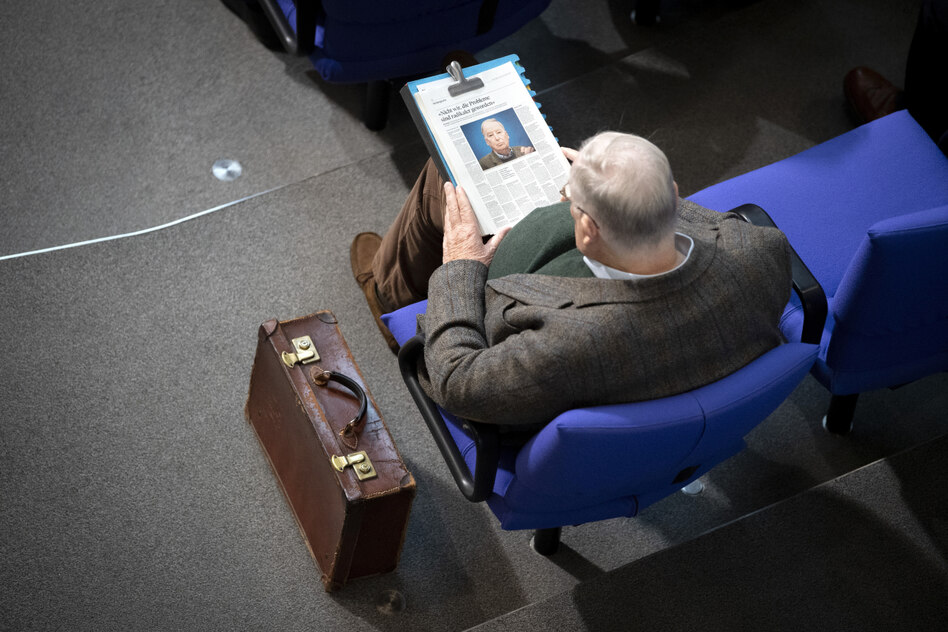
A large amount of data from the AfD was made public due to a hacker attack. Hackers gained access to the servers of one of the party's service providers. From this they published a 280 gigabyte data set that is said to contain around 420,000 emails from ten mailboxes. It's about internal communication, including accounts from the party's federal office, the Federal Arbitration Court but also from various prominent members - including Alexander Gauland, Leif-Erik Holm and Alice Weidel.
Theoretically it is possible to download the dataset. However, because of its size, this takes several hours. There is also a risk of viruses or other malware being loaded onto the computer. There are now various websites where you can search and open the data without having to download it yourself.
The published emails with their attachments date from March 2013 to September 2026 and therefore cover almost the entire history of the AfD since its creation. Much of the content shows the day-to-day business of a party. These are hotel bookings, invitations to events or press briefings. This also includes minutes of conferences, bank statements, copies of ID cards, strategy meetings and private photos.
Initial research shows that the tone, language and content of the communication fit what is clearly a right-wing extremist party: racist slogans are next to Nazi references, possible exclusions from the party are discussed, trips to Russia are planned and the handling of party donations is discussed.
At this point in time, however, only a fraction of the data has been viewed, checked and evaluated. Many different journalistic media outlets use teams to delve deeper into research. The taz also works with the data.
The AfD confirmed the leak this week and said that only a few and older mailboxes were affected. The party left questions about the authenticity of the content unanswered. She herself describes the data as “unimportant stuff” and downplays the leak.
The review by journalists and experts is still ongoing and will take some time due to the large amount of data. In any case, fake emails are already circulating and are being widely distributed. An AfD member of the state parliament from North Rhine-Westphalia is said to have written an email saying: “The birthdays of great German men like Adolf Hitler” were part of German history and “should not be taboo”. However, this email cannot be found in the data record.
The people behind the attack have not identified themselves. The hacker group calls itself “Hexane” and is said to consist of two people. In interviews they say that they were not funded by the state, did not belong to any known group or party and received no money for the attack. They didn't want to extort money with their attack, they were interested in justice.
No, the hackers committed a crime with their attack.
Although the material was obtained illegally, it does not say anything about how it can be used. Whether a use is legal depends on who it is about. Journalists are allowed to download, search and read the data. Whether they are allowed to publish it cannot be said in principle. Whether publishing information from the hack is “in the overriding interest of the general public” requires a legal decision on a case-by-case basis.
The Constitutional Court, police or public prosecutors are not allowed to use data that they have obtained illegally as evidence in court. In this case, since unknown people published the data without a government mandate, courts can generally work with them, according to various lawyers.
It is not legally clear whether private individuals are allowed to download the data.
Does the data leak provide material for a possible AfD ban procedure?
It is not yet clear whether the emails contain relevant information for a ban procedure that goes beyond what the Office for the Protection of the Constitution and the Society for Freedom Rights have collected. A few months ago they presented a report with the result: The AfD could be banned because it is directed against the free-democratic basic order.
Research in the coming days and weeks will show whether the leaks contain criminally relevant information or new, serious content for a ban procedure.