
Germany · taz · · 2h
Against cuts in care: patient advocates welcome SPD initiative
Deutsch (original) · Auto-translated to English
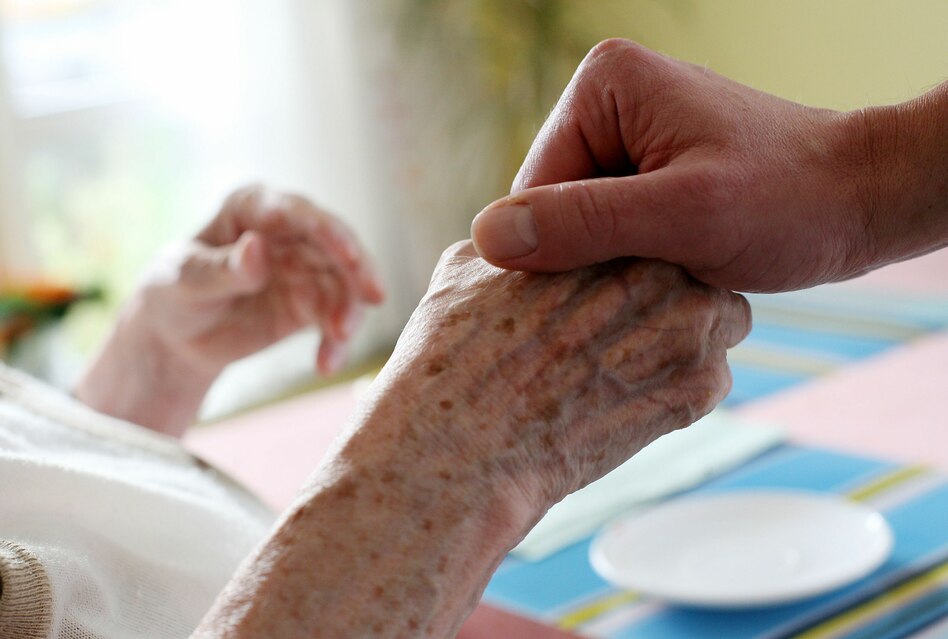
dpa / kna | The German Foundation for Patient Protection welcomes the SPD's new push against cuts in care. “It is good that the SPD is now pulling the ripcord on the planned care legislation,” said board member Eugen Brysch to the Catholic News Agency (KNA) on Saturday. Future-proof and generation-appropriate financing must create predictability: “Here, the personal contribution for pure care must be capped and the insurance subsidies for those in need of help at home must be adjusted in parallel with the cost development.”
But his party's initiative will only be credible if SPD leader and Finance Minister Lars Klingbeil follows up with concrete action, said Brysch. Among other things, the minister must repay the Corona loans amounting to 5.5 billion euros and take over the pension insurance benefits for caring relatives, which have increased to over 5 billion euros. But the federal states also have a duty: "They finally have to cover the training and investment costs. This immediately relieves home residents of 700 euros per month."
In addition, a merger of private and statutory long-term care insurance is possible in accordance with the constitution, Brysch added: "All measures together will give social care room for the next 15 years. Time enough to set up a long-term care fund similar to the planned pension reform."
SPD General Secretary Tim Klüssendorf said on Instagram on Friday evening that his party “does not accept any service cuts on the backs of people” in the care sector. This could block the cabinet decision on care reform planned for Wednesday.
The politician emphasized in his video that care should not become a financial risk for those in need of care and their families. Those who care for relatives do “incredibly valuable work for our society” under great pressure and deserve more support and recognition. There must therefore be a real structural reform with more solidarity, more relief and permanently stable financing.
To this end, the SPD is specifically proposing a care cap, i.e. a limit on the personal contribution to the costs of a place in a nursing home, added Klüssendorf: “We also want a fair and solidarity-based system into which everyone pays, or at least a fair financial balance between private and social care insurance.”
According to General Secretary Tim Klüssendorf, the SPD does not want to accept any reduction in benefits when reforming nursing care insurance. There's a lot going on when it comes to care, Klüssendorf explained on Friday evening. "There is a risk of massive cuts, especially for carers, those in need of care, but also their relatives. But we won't allow that." He emphasized: “We do not accept any reduction in services in care.”
Klüssendorf left it unclear what this means in view of the cabinet decision planned for next week to financially stabilize long-term care insurance next year.
If the SPD has its way, “then we want to noticeably relieve the burden on those in need of care in the future,” said the Secretary General. He referred to the suggestion of a care cap that the Saarland SPD Prime Minister Anke Rehlinger had brought into discussion - i.e. a cap on the personal contribution to the costs of a place in a nursing home.
“We want to prevent people and their families from being financially overwhelmed by the costs of care,” said Klüssendorf. “We also want a fair and solidarity-based system into which everyone pays, or at least a fair financial balance between private and social care insurance.”
Rehlinger had advocated capping the personal contribution for those in need of care at 1,500 euros. According to an evaluation by the Association of Substitute Insurance Funds, as of July 1st, a nationwide average of 3,364 euros per month had to be paid out of one's own pocket in the first year in the home.
The black-red coalition is currently working on a reform to cover the billion-dollar long-term care insurance deficit expected for 2027 and to avoid general premium increases. Federal Health Minister Carsten Linnemann aims to bring this draft to the cabinet next week. Details are not yet known. A draft by his predecessor Nina Warken (CDU) envisages curbs on spending and additional revenue.
Linnemann is also planning a more comprehensive care reform and has announced that he will set up a commission of experts. “Our care system, as it is now organized, is not future-proof,” the CDU politician recently told the “Frankfurter Allgemeine Zeitung”. If it is not fundamentally rebuilt, it will collapse in the 1930s, he said. Therefore, he will set up a “structural commission”. “The aim is for us to get a structural care reform in the coming year based on their suggestions.”
Read the full story at the source
Source: taz