
Germany · taz · · 2h
Refugees in Ceuta: From the beach to the port
Deutsch (original) · Auto-translated to English
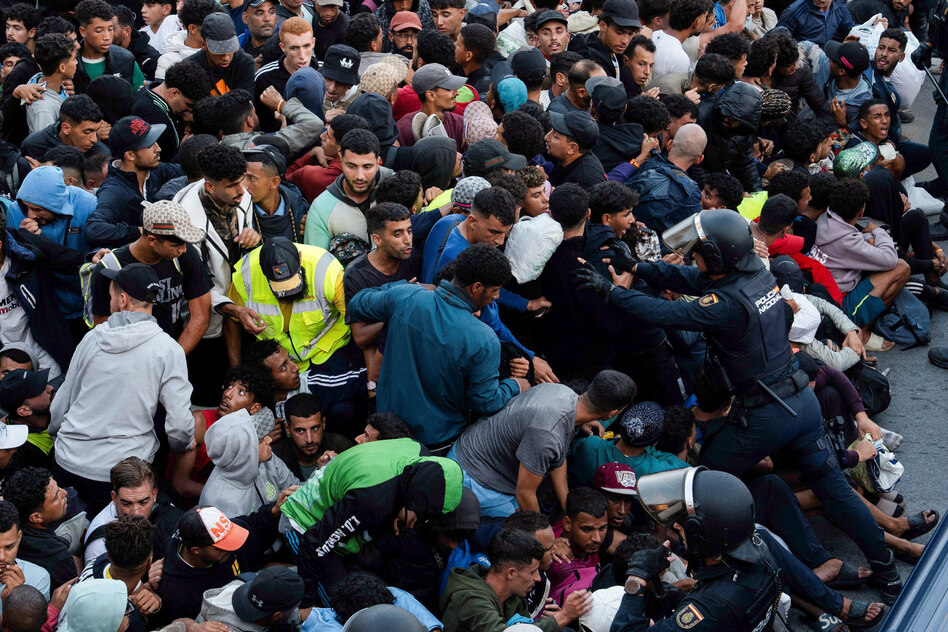
The improvised shelters that migrants had set up in recent weeks on the two beaches of Trampolín and Benítez in Ceuta were evacuated on Friday. The police escorted the migrants to a reception center in the port. Most of them swam around the border fortifications on July 30th and 31st during a rush to the Spanish exclave, coming from Morocco. The government has had tents erected at the harbor. At least 1,800 people will be accommodated there.
It is not clear whether this is enough. According to media reports, between 3,000 and 4,000 migrants have been in Ceuta for around a month. There are also minors among those to be transferred. These should be taken to separate, special accommodation.
Police divided the migrants into groups and took them on foot to the port two kilometers away, as seen on state television TVE. Things didn't always stay peaceful. The first groups in the morning clashed with the police. Dozens of migrants tried to storm the newly built reception center to secure a place. The police stopped them. Some people were injured, as videos from the regional newspaper El Faro de Ceuta show. Once they arrive at the reception center, the migrants are identified and have to go through a metal detector. Bunk beds are waiting for you inside the tents.
The paramilitary Guardia Civil police had already taken up positions on both beaches three hours before the transfer. She gathered the migrants together, later dividing them into groups and handing them over to the police. According to official information, a total of around 240 police officers are on duty.
By moving the migrants to the port, the central government under Prime Minister Pedro Sánchez wants to restore normality in Ceuta. Attempts to set up makeshift camps in empty buildings have repeatedly failed due to resistance from the conservative regional government. Madrid also complains about a lack of cooperation. The port was something of a last resort because it is under the control of the Madrid Ministry of Transport. Just one day before the transfer, the Audiencia Nacional in Madrid had rejected a police union's lawsuit against the establishment of a camp at the port. According to the union's justification, the port is considered critical infrastructure.
Alberto Núñez Feijóo, the leader of the strongest opposition party Partido Popular (PP), once again used the incidents during the transfer to criticize the government. These are not migrants, but rather people who acted “against public order and the security forces”. The government is “unable to maintain public order in a Spanish city,” he added, reiterating calls for the immediate deportation of all migrants, including minors.
The government, on the other hand, points out that deportations can only be carried out after individual examination. And that minors are exempt from this as long as their parents cannot be found. Since the onslaught, 1,800 deportation proceedings have already been initiated.
Read the full story at the source
Source: taz