
Germany taz
Consequences of global warming: It is becoming too hot for the white truffle
The rare mushroom needs very specific conditions, which it used to find in the forests near the city of Alba. But climate change is hitting here too. more...
Deutsch (original) ·Auto-translated to English
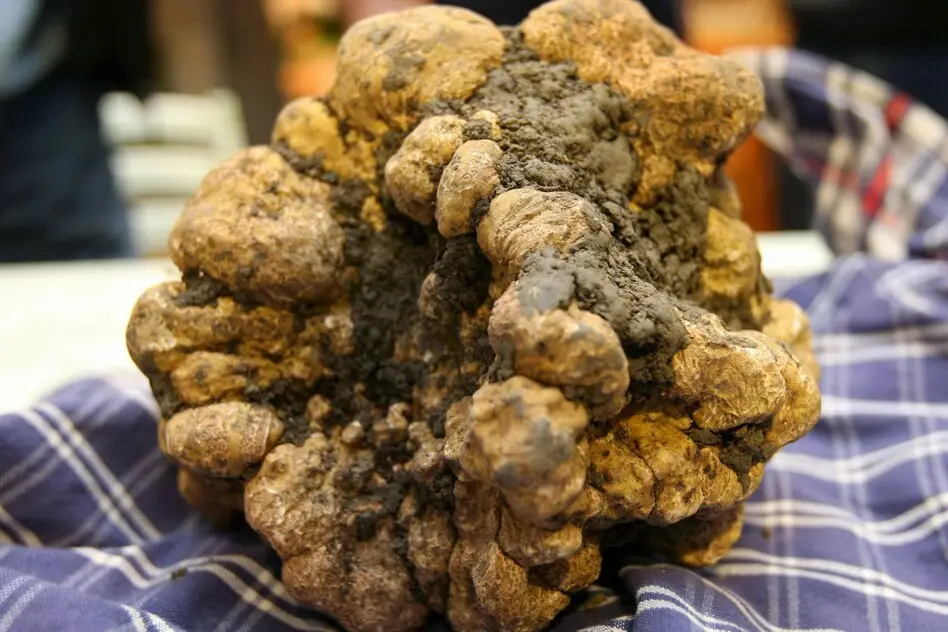
ap | With a flashlight in his hand, Tino Marolo follows his sniffer dog Stella through a dark forest area. They are looking for one of Italy's most precious culinary treasures, which grows in the ground in the hills surrounding Alba. This year the white truffle is even harder to find than usual. The season for collectors, called “Trifolau” in Piedmont, usually begins on October 1st. But heat and drought have disrupted the natural processes.
The white truffle thrives best in cool, moist soil and needs a close connection with the root system of trees. But climate change has changed the conditions in many traditional discovery areas. “The entire month of October was affected by a lack of rain in July and August as well as high temperatures,” says Antonio Degiacomi, president of the National Center for Truffle Studies. The yields were correspondingly low and many of the mushrooms found were smaller than usual because of the dry and compacted soil.
Alba is famous for the white truffle. The Italian city is currently hosting the annual International White Truffle Fair, which runs until December 6th. The director of this event, Axel Iberti, also reports that the season got off to a slow start. The situation only improved a little due to later rains. Because demand for the culinary specialty remains high, prices are around 20 to 30 percent higher than last year due to the comparatively low supply, says Iberti.
For collectors like Marolo, it's part of not being successful on every tour. “You probably come home empty-handed more often than you actually bring a truffle with you,” says the “Trifolau”. That's also what makes it so appealing: you never know beforehand what you're going to find. But successes are becoming increasingly rare. The trend toward hotter summers and less reliable rainfall has been going on for “five or six years,” says Degiacomi. And the current year particularly stands out.
This is not just a regionally limited phenomenon. A similar development to that in the forests around Alba can also be seen on the other side of the Adriatic in Croatia. “It's been getting worse every year for seven or eight years,” says Petar Alebic, who looks for white truffles in an oak forest near Zagreb. “Unfortunately, because of the drought, the truffles are becoming smaller and rarer.”
Alebic estimates that this year's harvest will be about 30 percent smaller than usual. To supplement his income, he offers truffle tours for tourists. “Drought, lack of rainfall and high temperatures significantly affect both the quantity and quality of truffles,” says Armin Mesic, a mycologist from Croatia’s Rudjer Boskovic Institute. The geographical area in which the white truffle occurs is now also shrinking.
However, experts in the Italian Piedmont are not yet afraid that the days of the white truffle, which can reach prices of up to 4,000 euros per kilo, are numbered. "I don't think we have to face extinction; we are facing a challenge," says Degiacomi. Researchers are looking for ways to counteract this with better forest management and irrigation. In Alba the focus is on the preservation and reforestation of important forests. This year the local fair also offers information on environmental education and nature conservation.
In parts of Italy's truffle region, communities have worked with truffle collectors and landowners to create new public truffle areas and plant trees that could one day support the growth of the sought-after mushrooms. From the perspective of experts, such reforestation can reduce soil temperature, maintain moisture and prevent erosion.
Unlike the black truffle, which is now partly grown in plantations, there have been no major successes with targeted cultivation of the white truffle. The yield volumes remain all the more dependent on natural factors. And over the course of autumn we will see how prices develop at markets and restaurants after the hot and dry summer. Whether future generations will have the chance to enjoy the exquisite white truffle will depend on a mix of science, conservation and the fungus' ability to adapt to a warmer climate.