
Germany taz
Film essay “Holofiction” about the Holocaust: The images report on themselves
The monumental film essay “Holofiction” by director Michal Kosakowski explores cinematic images of the Holocaust. His look is wordlessly critical. more...
Deutsch (original) ·Auto-translated to English
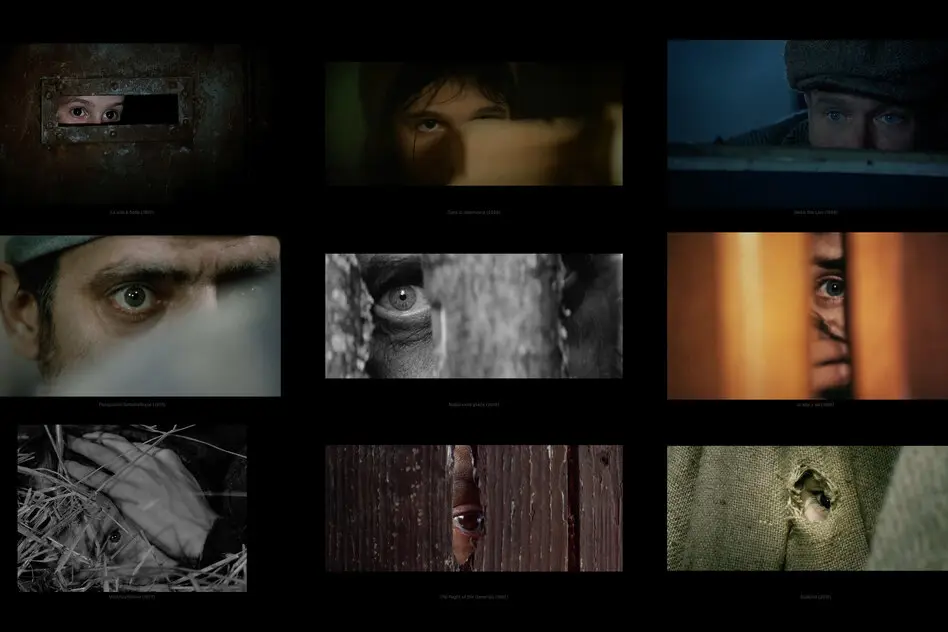
Even if the result appears spartan, this film is based on an almost monumental piece of work. Director Michal Kosakowski spent eight years researching international film archives and viewing more than 3,000 films. An unmanageable sea of images, which is suddenly given structure and regularity after the evaluation and sorting work. The films that were evaluated here tell of the Holocaust, not in a documentary way, but through fiction: “Holofiction”.
The neologism and the quote from Claude Lanzmann with which Kosakowski begins his film essay already indicate that the view of this huge collection of images is a critical one: "Fiction is a transgression. I am convinced that the representation of certain things is forbidden." With these words, Lanzmann spoke out against Steven Spielberg's “Schindler's List” and in particular against the sequence in which a group of Auschwitz inmates are forced to shower. The tension rises - and then it's just water. Suspense against the backdrop of an extermination camp.
The scene stands out because the direct depiction of mass murder was long considered taboo in cinema. Films like “Son of Saul” go very far in their reconstruction of the annihilation, but also reflect the debate about representability and modes of representation and incorporate them into their image constructions.
“Holofiction.” Director: Michal Kosakowski. Germany/Austria 2025, 102 min.
The origin of the individual shots is indicated at the bottom of the image with the film title and year of production. Furthermore, there are no explanations, no explanatory voice-over commentary. The images stand on their own and are related to each other solely through their arrangement.
The shots of “Holofiction”, which are edited at alternating tempos, sometimes faster, sometimes slower, in which images from countless films are combined over almost two hours, result in a meta-film: motifs through which the cinema tells the story of the Shoah are arranged in such a way that they are no longer about the event itself, but about the staging. Bureaucracy, raids, kicking down doors, hiding and escaping, trucks and trains, deportations, ghettos, watchtowers, barracks, the ramp, numbers on arms, laughing perpetrators, crying victims, illness, forced labor, dying.
“Holofiction” dispenses with the original sound of the film excerpts. No dialogues or noises, instead specially composed music by Paolo Marzocchi accompanies the montage. Kosakowski's montage treats all productions equally as image material: the two film adaptations of "Jacob the Liar", "Schindler's List" and "The Pianist", various adaptations of Anne Frank's diary, "Life is Beautiful" and "Inglourious Basterds" stand alongside numerous Eastern European films that are less well-known in this country, but also alongside the obscene eroticization of concentration camp guards in films such as "Ilsa - She Wolf of the SS” or “The Night Porter”.
A lasting impression: probably no other event has been reconstructed and brought into a narrative form as often using the means of genre cinema as the extermination of European Jews. The images in “Holofiction” begin to report on themselves, and the montage examines their regularity, so to speak. Kosakowski's montage does not specify the conclusions that one draws from all this.
One reading: The regularity and the endless repetition of the same motifs may represent a transgression in Lanzmann's sense. Not in the individual image of an event that evades representation, but in the incessant repetition of images that subordinate the depiction of the Shoah to the narrative patterns of genre cinema.