
Germany taz
Film “Klara and the Sun”: Making the unfathomable tangible
What is the difference between people and machines? Taika Waititi's film adaptation of Kazuo Ishiguro's novel “Klara and the Sun” tells of life with AI in rich colors. more...
Deutsch (original) ·Auto-translated to English
The best machines have always been people. They consider themselves to be unique creatures and like themselves best when they don't think about themselves. They consist of voices, role models, imitations and contradictions that they consider to be their own. They invent better and better machines, call the newest ones artificial intelligence and are surprised that they are more like them than they would like.
Taika Waititi's film adaptation of the novel of the same name by Nobel Prize winner Kazuo Ishiguro takes this contradiction further. People in this near future are pretty fucked up. They optimize their children, sort friendships based on performance and want to overcome death through artificial replicas.
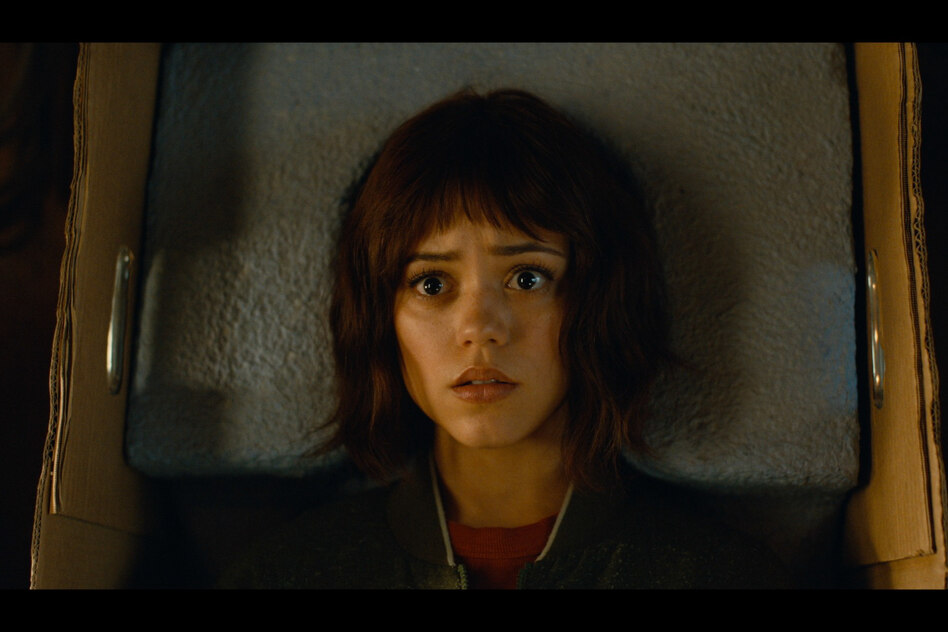
The solar-powered robots look incredibly similar to humans. Klara (Jenna Ortega), an artificial friend of type B1, is supposed to create closeness and interact “humanly”. One day, teenager Josie (Mia Tharia) spots them in the shop window and convinces her mother Chrissie (Amy Adams) to buy them. Klara moves into the family's remote house, far away from the futuristic city. She observes Josie and her family, listens to them and tries to understand their behavior.
“Clara and the Sun”. Director: Taika Waititi. With Jenna Ortega, Amy Adams and others USA/United Kingdom/New Zealand 2026, 116 min.
But there is a bigger plan behind Klara's new role. Josie is seriously ill. Chrissie turns to Dr. Capaldi, brilliantly played by a diabolically grinning Steve Buscemi. He wants to create an artificial replica of Josie. To do this, Klara's consciousness should be transferred into a body that resembles Josie. Capaldi believes that personality can be reduced to imitable characteristics. This is how the irreplaceable becomes a technical problem.
This logic is also evident in Josie's everyday life. Her mother had her genetically optimized. As an “upscale” person, Josie speaks several languages, writes scripts and draws at a world-class level. At a meeting with other “upscale” people, she encounters a grotesque group of complacent young people with absurd outfits and eccentric hairstyles. They make fun of Rick, Josie's only human friend. He builds robot birds just to play with them. Klara, on the other hand, enjoys it.
Isn't it the purposelessness that distinguishes humans from machines? At a time when the possibility of AI consciousness is being discussed, the film reverses the perspective: The uncanny thing about Klara is not how well she imitates people, but how attentively she encounters them. Compared to Klara, the “upscale” people seem as predictable as automatons.
Waititi deals with such philosophical questions casually, without reducing them to theses. The colors are so saturated that the landscape appears artificial. The wheat glows golden, the sky is as blue as in a Magritte painting. There's also the soundtrack by Michael Giacchino, whose melodies bounce around happily like in a children's film - as if they mock the tragic elements of the story. The fairytale makes the unfathomable more noticeable.
In the second third, the view of the family's fate narrows. It's just a matter of being able to somehow protect a loved one. The fact that this emotional level still carries through is also due to Jenna Ortega's brilliant acting: she embodies Klara's artificiality so subtly that she seems more like a human with flaws than a machine trying to imitate a human.
Is there a point here? What the criticism, which often calls for a flat message, criticizes as kitsch - as with the original novel - could also be read differently. The dangers of AI do not have to be told in a dark dystopia. They appear in a world in which humans first have to invent a machine to remember how they feel.