
War & Militarism taz
Film about Bundeswehr special units: Secret warriors in the ARD evening string orchestra
A documentary about the special forces command is quite bleak. The crucial question is missing: Is this association even necessary? more...
Deutsch (original) ·Auto-translated to English
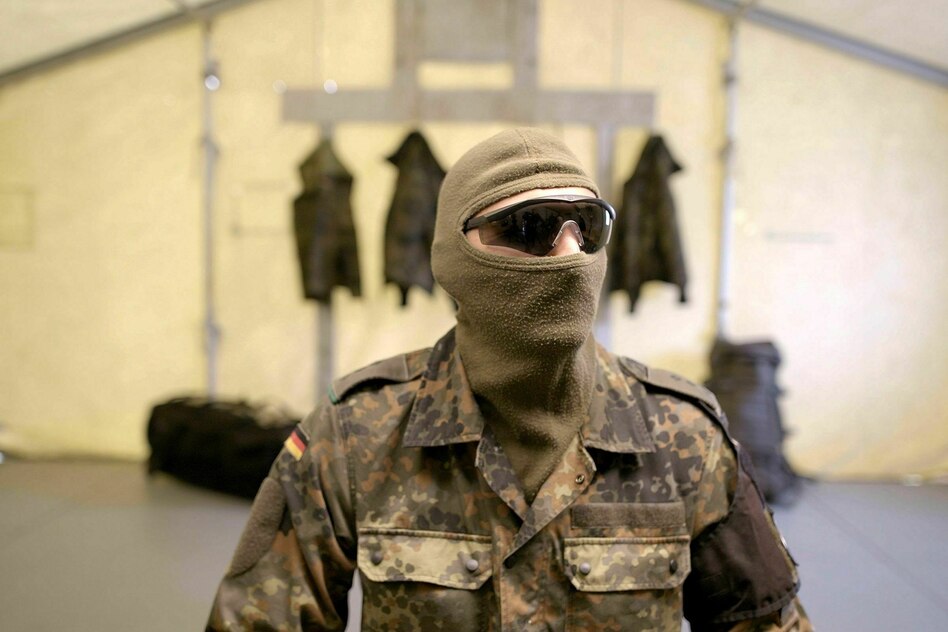
At the end of the film, the Special Forces Command (KSK) gets to prove itself again: The final scenes of the new ARD documentary about the Bundeswehr's special unit show the soldiers in the final moments of the Afghanistan mission. After German politicians had actively ignored the Taliban's advance for months, the special forces had to step in again in August 2021 to rescue international development workers from Kabul in a hasty operation.
The KSK and the Bundeswehr can be praised for having removed at least around 5,000 people from the country in these chaotic days when Afghanistan was once again handed over to its Islamist rulers after 20 years of brutal war. But one could also try to get a more comprehensive picture: Soldiers were once again sent on a dangerous mission and thousands of local workers were left behind in Afghanistan simply because the federal government did not want to seek a political solution to the looming catastrophe sooner.
You have to know that there were clear warnings, especially from the Bundeswehr, about the impending fall of Kabul, but they didn't get through to the government there either. Anyone who praises the KSK but does not mention the criticism from their own ranks is contributing to the transfiguration of history. It is more politically expedient to celebrate supposed heroes than to talk about the mistakes that seemingly made that heroism necessary.
The one and a half hour documentary about the KSK from the Mitteldeutscher Rundfunk falls very readily into this kitsch trap. The glorified Afghanistan evacuation must serve as a kind of happy ending, after the previous film passage highlights a well-dosed selection of KSK scandals and - let's call it KSK humor: A soldier reports on a superior's farewell party, at which pigs' heads were thrown into buckets because they wanted to run a "Roman-inspired" obstacle course. “In between there was plenty of mead that the company commander had to take.”
Less funny is the case of KSK instructor Philipp Schaaf, who buried 6,500 rounds of ammunition and 2 kilos of explosives in his garden in order to use them regularly for training purposes in the unit, as he emphasizes in the documentation. The documentation also mentions that Nazi songs and copies of a magazine from former members of the Waffen-SS (The Volunteer) were found on him. However, other abysses do not appear in the documentation; for example, that the KSK also worked with the right-wing extremist shooting trainer Frank T., who was associated with the Nordkreuz network.
Dark string sounds accompany the entire film and are intended to give the scenes additional gravity, but sound like an ARD early evening series. After all, the documentary provides insights into the collective psyche of the KSK, which one of the soldiers and military historian Sönke Neitzel describes as a kind of chronic cockblock: After the tough admission process and training, he was eagerly waiting for his first deployment. But at the crucial moment, one of his comrades was given priority on a mission - disappointed, the soldier turned his back on the KSK.
In the documentary, Neitzel expresses the suspicion that the KSK is a highly combat-ready force, but that it would be condemned to guarding the barracks most of the time. While he advocates letting the boys play more, the question of why this association is still needed is not even addressed in the documentary. It's a shame actually.