
Germany taz
Expert on antigypsyism: “The victims were slandered, the perpetrators remained unpunished”
A commission is supposed to deal with the injustice against Sinti*zze and Roma*nja after 1945. This continues to have an impact today, says educational scientist Jane Weiß. more...
Deutsch (original) ·Auto-translated to English
taz: Ms. Weiß, you are part of the commission that is supposed to deal with the injustice against Sinti*zze and Roma*nja after 1945 from Tuesday. Why is this necessary?
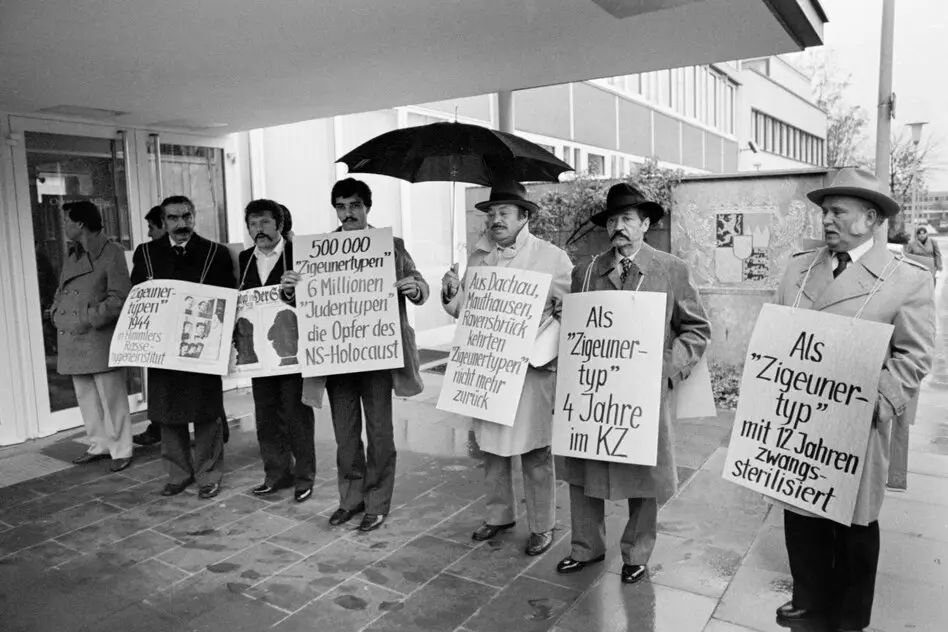
Jane Weiß: The commission is one of the most important projects of this federal government. It's about the history of injustice and its continuities to this day as well as the consequences for those affected. What happened, especially in the first four decades after the end of Nazi rule, is called the “Second Persecution” by the Sinti and Roma civil rights movement – after the first, the genocide under National Socialism.
is an educational scientist at Humboldt University and researches racism in the context of education. She was a member of the Independent Commission on Antigypsyism (UKA) and, from Tuesday, will also sit on the new commission to deal with injustice after 1945.
taz: Nazi Germany persecuted Sinti*zzes and Roma*nja throughout Europe and, according to estimates, murdered up to half a million of them. What happened after the war ended?
White: This genocide was not recognized at all until the early 1980s; instead, a classic perpetrator-victim reversal was carried out. The persecution of the Sinti*zze and Roma*nja under National Socialism was considered justified and self-inflicted. And Sinti*zzes and Roma*nja continued to be criminalized, registered by the authorities, and actively denied compensation and even fundamental civil rights, such as the return of citizenship and property. The victims were regularly slandered in court, while the perpetrators remained unpunished. There was a silence and exoneration cartel at the center of the state apparatus.
taz: What did that mean for the survivors?
White: Most of them were severely traumatized, but fought tirelessly and rebuilt their lives despite these unfair conditions. In the reparation proceedings, they sometimes faced the same officials who had previously been involved in their persecution.
White: The police remained riddled with Nazi perpetrators after 1945. They continued to monitor the Sinti*zze and Roma*nja seamlessly and without any awareness of injustice. This even went so far that they added the survivors' concentration camp numbers tattooed on their files as “unchangeable identifiers”.
taz: You are an educational scientist. What role did the education system play in the continued persecution after 1945?
Weiss: This is one of the areas that the commission will certainly address, as education plays a crucial role in determining opportunities for participation. Previous studies indicate that many children from the community did not go to school at all in the Federal Republic in the first decades after 1945 or left without qualifications.
White: That is exactly the question. There were certainly racist patterns of exclusion in the authorities. And we know that until the 1990s there was still a “scientific” view that families had no interest in their children’s education. The fact that we were dealing with a community of survivors was not addressed pedagogically. There was no sensitivity to the ongoing and passed on trauma.
White: School was not a safe place for the families. We know that teachers during the Nazi era sometimes reported children to the authorities, whereupon they were deported directly from the classroom. The same informers continued to work at schools after 1945 and the families met them again. How much trust would you have in such an education system?
taz: The universities were also deeply involved in the Nazi murderous apparatus.
White: German science contributed directly to the genocide. “Scientists” have examined Sinti*zzes and Roma*nja in a degrading way and produced so-called “racial biology” reports. These decided about life and death. A Romani grandparent already started the persecution. These “scientists” were able to simply continue their careers after 1945. There were no convictions, no revocation of academic degrees, no break with their racist and ultimately deadly theories. These thought patterns persist to this day.
White: Among other things, there is a long tradition of attributing a different intelligence to Sinti*zzes and Roma*njas. They have never been associated with reason and rationality since the late Middle Ages. With the Nazis, the argument of an allegedly “limited” intelligence then became an argument for sterilization, deportation and murder. After 1945, a change took place in such a way that representatives of Tsiganology, which was even institutionalized at universities, racistly romanticized a lack of literacy as an “anti-capitalist form of resistance”. And especially in special education, the thesis emerged that the supposedly different intelligence required different forms of schooling. And this still has an impact today, for example when we consider that children from the community end up in special education for demonstrably unfounded reasons.
taz: Were there differences in discrimination between the Federal Republic of Germany and the GDR?
White: In the GDR, survivors of the genocide since 1946 had the chance to be recognized as victims of racist persecution. However, there were special editions for Sinti*zze and Roma*nja. They had to be able to show a job. Of course, everyday racism had not disappeared either and put a strain on the families of the survivors. They were also not granted minority status, such as that of the Sorbian community. But unlike in the Federal Republic of Germany, in the GDR you could involve the state authorities, who then punished the perpetrators. We see something similar in other Eastern Bloc countries. Because Roma had often fought as partisans against the Nazis or served in the Red Army, their socio-political position after the end of the war was sometimes different than in the West.
taz: The situation of Sinti*zze and Roma*nja has at least improved somewhat today. In parts of German society there is certainly an awareness of Nazi persecution and continued discrimination.
White: The improvements we see from around the 1980s were hard fought for by the civil rights movement and its allies. Among other things, the civil rights activists occupied former concentration camps and drew attention to their demands through hunger strikes. This made it possible to bring the injustice to the media and gain a political voice. Romani Rose, Otto Rosenberg, Ilona and Reinhold Lagrene, Ceija Stojka and many other Sinti*zze and Roma*nja took this into their own hands. We build on their work today.
taz: At the end, your commission should present a report with recommendations to politicians. Can this make a difference?
White: The Commission now has to get together and determine its agenda. The political mandate is “reappraisal”, which also includes developing recommendations for the present and future. The commission should focus on the voices and perspectives of those affected. It can therefore not only be about the symbolic recognition and visibility of injustice, but also about the question of what the past means for the present and future. In the end, the federal government and society as a whole will have to be measured by what they absorb and implement.
taz: Do you have the feeling that the fight against antigypsyism is important to federal politics?
White: There has definitely been progress in recent years. The office of the independent commissioner for the fight against antigypsyism has set new accents and created a different level of public and political attention. There has been a standing federal-state commission against antigypsyism since 2024. And there are increasingly committees at state and local level in which politicians and representatives from the communities advise together and on an equal basis. Nevertheless: Racism is unfortunately omnipresent for Sinti*zze and Roma*nja.
Weiß: When we look at local events, it is very clear where the pain points are, for example most recently in the case of the Berlin CDU politician Timur Husein, who was also his parliamentary group's anti-Semitism commissioner. At the end of 2025, he publicly made deeply racist comments about Sinti*zze and Roma*nja without experiencing any consequences. That says a lot about where we are.