
War & Militarism taz
Energy crisis caused by Russia's war: Electricity companies have artificially inflated prices
A study shows that companies exploited their market power in the 2021 energy crisis. They made billions in extra profits. more...
Deutsch (original) ·Auto-translated to English
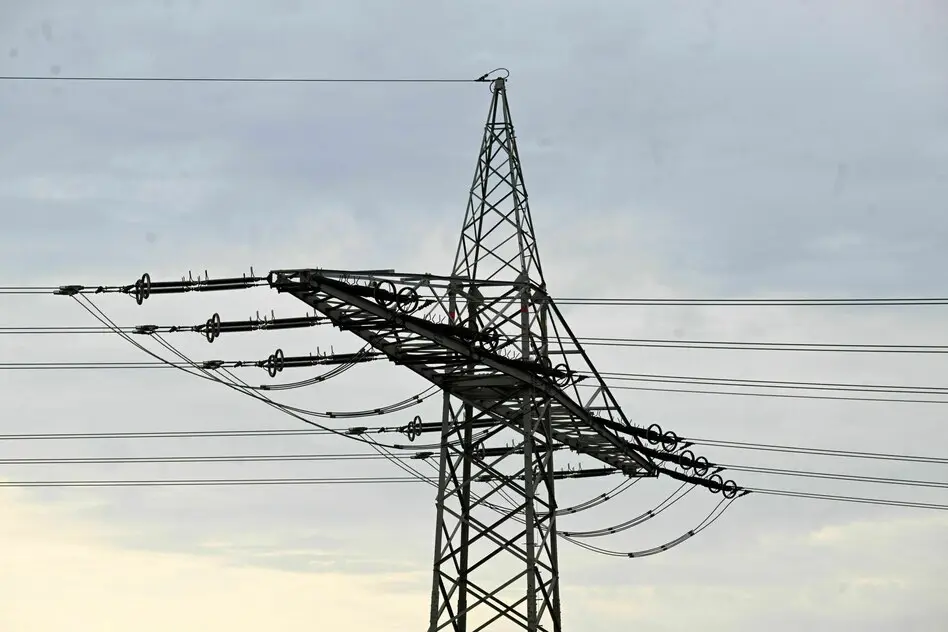
afp | According to a study, the five largest electricity companies in Germany used their market power to charge higher prices during the energy crisis of 2021 and 2022. The Ifo Institute said on Monday that the price peaks at the time could not be explained “just by higher production costs,” citing the analysis. Accordingly, the largest electricity producers “generated between 10.7 and 20.5 billion euros in additional revenue from September 2021 to the end of 2022 due to their market power.”
According to Ifo researcher Till Flade, the record electricity prices were “not just a consequence of the gas price shock, but also of a structure that allows the abuse of market power.”
For their calculation, the researchers simulated the prices for “market situations in which the prices arise under competitive conditions” and compared them with the actual prices. Both prices remained largely the same until September 2021.
But from that point on, during the crisis, that changed, the institute continued: According to the study, market prices were on average around 45 euros per megawatt hour higher than the simulated prices. “Even under the most cautious assumptions, such as significantly increased producer prices, the difference was still around 20 euros per megawatt hour,” explained the researchers.
According to the Ifo Institute, around 56 percent of conventional power plant capacity in Germany is accounted for by the five largest electricity companies RWE, LEAG, EnBW, Uniper and Vattenfall. This means that the electricity supply in Germany cannot be guaranteed for many hours without the generation of individual companies. Flade and his co-author Anna Saile from the University of Bayreuth therefore recommend expanding storage and flexibility, spreading the ownership of controllable power plants more widely and better controlling price formation.
However, the Ifo Institute pointed out that things are currently going in a different direction: the tender for the construction of new gas power plants is an example of this. The corresponding legal basis “does not contain any limit on the awards per bidder proposed by the Federal Cartel Office,” explained the researchers. The two largest companies on the German electricity market, RWE and Leag, won 94 percent of the subsidized capacities in the first round of tenders. “This will lead to even greater market concentration in the long term.”
Saile explained that distortions in the market are difficult to correct later. “It is more effective to prevent the exercise of market power through a revised market structure.”