
Germany · taz · · 3h
Impact of AI on agriculture: “Fewer and fewer people can look after more and more animals”
Deutsch (original) · Auto-translated to English
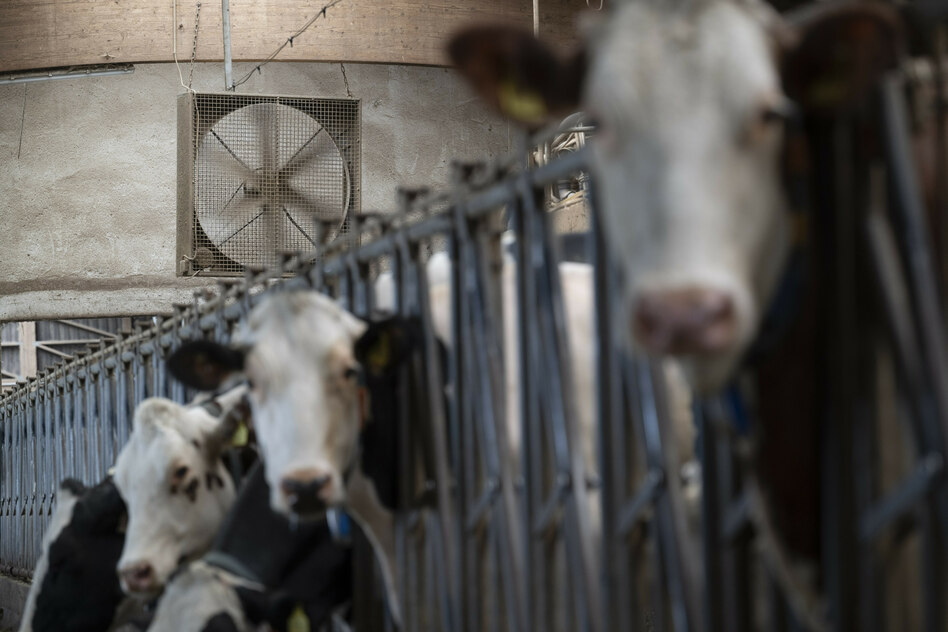
taz: Ms. Weisskopf, cows often don't have a good life in the German agricultural industry. What does it take to make things better?
Carmen Weisskopf: That's not really clear to anyone yet. The topic of animal welfare is complex and highly controversial in science. AI and automation systems that work with the CCI – the “Cow Comfort Index” of industrial agriculture – are currently being implemented in the agricultural industry. We are interested in what is written into machines, often unchecked. Nobody knows exactly what this actually entails.
50, is an artist from Berlin. Together with Domagoj Smoljo she forms the “!Bitnik media group”. The artist duo deals with data realities, surveillance and networking.
taz: Doesn't true cow comfort actually mean: living like an aurochs, free in moors and river valleys? And everything else is just a gradation of suffering?
Weisskopf: That's probably correct. But the index only looks at farm animals and comes from the dairy industry. There it means that the cow produces as much milk as possible with as little suffering as possible. She is supposed to eat, move, and lie down in certain rhythms, and the human component, the way the farmer deals with the animal, is increasingly being operationalized away through automation. Fewer and fewer people can look after more and more animals. You have to ask yourself: Is this better or worse for the animal?
Weisskopf: We can't offer solutions, but we can ask questions and examine them critically. One thing is certain: AI creates distance. The farmer sits at the iPad, sees a data comparison view between the animals and their behavioral processes, and intervenes if necessary. As an artist, I think: This needs to be questioned. From the perspective of a fundamental social debate: Which technologies do we want to use, where and how, and which coercive systems do we introduce as a result?
Weisskopf: Yes, and I find that a bit scary.
taz: The long-term project “School of Cow Comfort” at the Kunsthalle Osnabrück sees itself as “artistic field research”. How does that work?
Weisskopf: We have been conducting discussions with farmers in the Osnabrück region, scientists from AI and agricultural robotics over the course of 18 months. There are many players, with many agendas. Art can create a meeting space for a discussion that these players would not have with each other.
Weisskopf: Many are very open and have generously given us information and time.
Weisskopf: fattening children, but no cows. Unfortunately, this is still a blank space.
taz: It would make sense to also talk to animal rights groups and conservationists.
Project presentation of the “School of Cow Comfort” with the “!Mediengruppe Bitnik”, the artist Simon Weckert and the scientist Tim Römer from the University of Osnabrück: Thursday, September 24th, 7 p.m. to 9 p.m., Kunsthalle Osnabrück
taz: Then is it ironic that your website shows animals relaxing in an idyllic pasture? Because high-performance animals in particular never see such a setting and are increasingly optimized.
Weisskopf: And this technology is not developed locally, it comes from Silicon Valley. These data analysis algorithms are produced somewhere and then used by us. So we ask ourselves: Who has the competence to think about where we are currently heading on a meta-level? Belief in technology is widespread. We view this very critically.
taz: Because this increases control over the animal?
Weisskopf: Let's take the cow collar: This is a GPS geofencing collar that the farmer puts on the animal in order to save himself the pasture fence. It virtually locks it in and when it comes to the edge of the pasture there is first a beep and then an electric shock. That leaves me a bit speechless. I don’t want that for cows, I don’t want that for people – I don’t want that at all.
Read the full story at the source
Source: taz