
Germany · taz · · 2h
Egon Erwin Kisch, Prague Crimes: If it weren't true, it would be a good invention
Deutsch (original) · Auto-translated to English
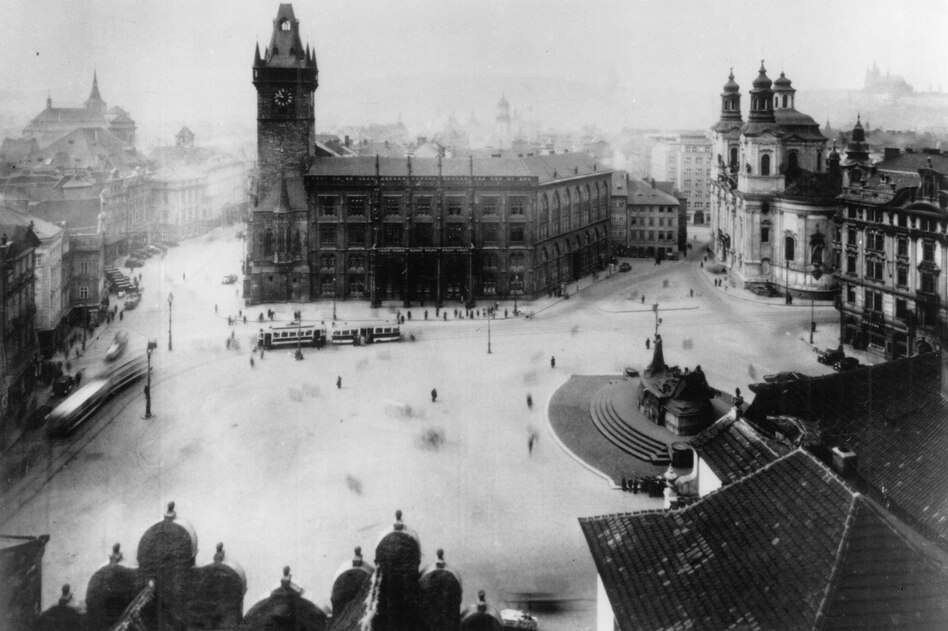
The reputation of Egon Erwin Kisch, who became famous as a “raving reporter” and was born in Prague in 1885, was based in no small part on crime reports when he was a young journalist. The fact that he was not squeamish in his work, sometimes obtained information in questionable ways and, where reality was not interesting enough, gave it the necessary color with imaginative inspiration, should be kept in mind when reading the texts in this volume. Kisch, editor Sabine Rückert quotes the literary scholar Erhard Schütz, “never, ever received the prize named after him,” which is now awarded to deserving representatives of his guild.
But viewed a century later, it doesn't really matter that much whether the heartbreaking story about an old washerwoman who despairs at the thought that her only son may have committed a robbery and who simply blurts out her tragic life story in front of the brazenly swooping in reporter contains even a shred of truth. If it didn't, it would be a very good invention; and because it was very well written, it is now a piece of literature.
But there are definitely also texts in which the author noticeably strives to be as faithful to the facts as possible and precise, especially in the long report on the case of Colonel Redl, a high-ranking officer of the Imperial and Royal Army. u.k. Secret Service, sold information to the Russians and killed himself as soon as he was exposed. In order to avoid an embarrassing trial for the corps, his former colleagues gave Redl a firearm with which he dutifully shot himself. The fact that the sensational case was not swept under the carpet was thanks to Kisch's thoroughly researched expose.
On the one hand, the reporter was keen to satisfy the sensationalism of the reading public, but on the other hand, he was always less interested in the crime itself than the circumstances under which it occurred and what it entailed. When he visits the Prague Police Museum, he notices that “everything that tempts him [people] to be a criminal rather than an innocent outcast from every pleasure” is missing there. Another time, Kisch illegally climbs over the wall to the inaccessible prison cemetery, where those who died in custody are buried unadorned and numbered, and says he is “visibly moved” about it. Then he visits one of the five executioners that existed in the Austrian Empire and gets a detailed description of his work and work ethic. A few decades later he reported on the public execution of Karl Hermann Frank, once Nazi Minister of State in the Protectorate of Bohemia and Moravia and, among other things, responsible for the mass murders in Lidice and Ležáky.
There is a huge range of topics that Kisch deals with and that Sabine Rückert has picked out of his collected works and summarized in this volume under the broad context of “Prague Crimes”. Crime, as you can see here, is a broad field, and for Kisch, who only later became a communist front-line fighter (and later a Stalinist) over the course of his life, it was probably the field from the beginning in which social imbalances became most clearly visible. Almost paradoxically, this collection of texts about the dark sides of humanity is one of the most beautiful books of this year. The book contains illustrations by Jörg Hülsmann, and its cover design essentially ennobles it as a design object. Katharina Granzin
Read the full story at the source
Source: taz