
Germany taz
Documentary “La Graciosa – Canary Dreams”: On the edge of civilization
The documentary “La Graciosa – Canary Dreams” by Karin Kaper and Dirk Szuszies is reminiscent of a former dropout paradise. There are tourists there now too. more...
Deutsch (original) ·Auto-translated to English
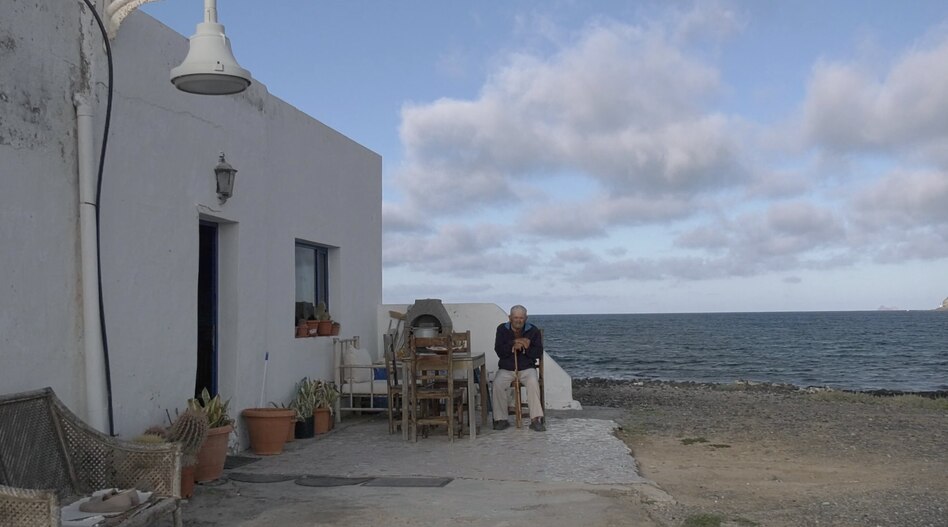
The bright brown, yellow and red island of La Graciosa lies north of Lanzarote in the Atlantic Ocean like a piece of desert that has been blown over. A few perfectly shaped volcanic cones rise on just under thirty square kilometers of sand and rocks, surrounded by cliffs and secluded bays. As on other Canary Islands, wind and sun leave only small niches for the vegetation.
Tree-like things grow here exclusively around the low white stone houses of Caleta de Sebo, the small harbor town that shapes the face of the island, which is called “graceful”, and connects it to the opposite town of Órzola on Lanzarote by a ferry.
For a long time, only a few fishermen and their diverse families inhabited the smallest of the eight managed Canary Islands. Historical photographs show how closely the women were involved in the work, mending nets together and preparing the fish catch for sale on the larger island. To this day, the approximately 730 island residents stubbornly claim their ancient art of fishing in the Chinijo archipelago, which, in addition to La Graciosa, also includes a few uninhabited rocky islands further north.
“La Graciosa – Canary Dreams”. Directors: Karin Kaper and Dirk Szuszies. Germany 2026, 105 mins.
But since the 1970s, the fishing grounds have been overfished and the ecosystem has begun to falter. The Canary Islands regional government and higher-up decision-makers declared the Atlantic on the doorstep of the self-confident Gracioseros and Gracioseras a protected area. Catching the rare shearwater birds or collecting seafood such as limpets was suddenly forbidden - reason enough for the village's impressive demonstrations against nature conservation and paternalism.
The Berlin filmmaker couple Karin Kaper and Dirk Szuszies, both known for their documentaries “We are Jews from Breslau” (2016) and “Walter Kaufmann – What a life!” (2021), repeatedly withdrew from his strenuous film career for many years on La Graciosa. The island was once a quiet paradise for dropouts on the edge of civilization. So why not document and celebrate the special atmosphere?
For a year, Karin Kaper, Dirk Szuszies and a small team accompanied the everyday life of the locals in Caleta de Sebo and collected their proud anecdotes and statements about the course of the island's history, spoken directly to the camera. How do you survive despite the hated nature conservation measures and get a piece of European prosperity?
A porker talks about the eating habits of the village community, a shop owner describes what her shop has to offer. The owner of the ferry describes the good business with day tourists who rent bicycles or cars for a few hours at the other end of the island. A history-conscious Graciosero presents the old grain mill that was used to grind the grains for the national dish Gofio.
“La Graciosa – Canary Dreams” describes the local street festivals, carnival parades and communal meals on the town's well-maintained gravel roads in ever new variations. The former mayor managed to have water and electricity pumped from Lanzarote to La Graciosa in thick pipes and cables, which is how the holiday apartment business began. An ATM should not be missing. Former, aging dropouts are committed to renovating old houses and making the first attempts at small-scale organic farming. The paradise that Karin Kaper and Dirk Szuszies hold dear has been scratched, but in their portrait the village faces the signs of crisis with a wild lust for life.