
Germany · taz · · 46m
The truth: Hollywood in the Hühnergebirge
Deutsch (original) · Auto-translated to English
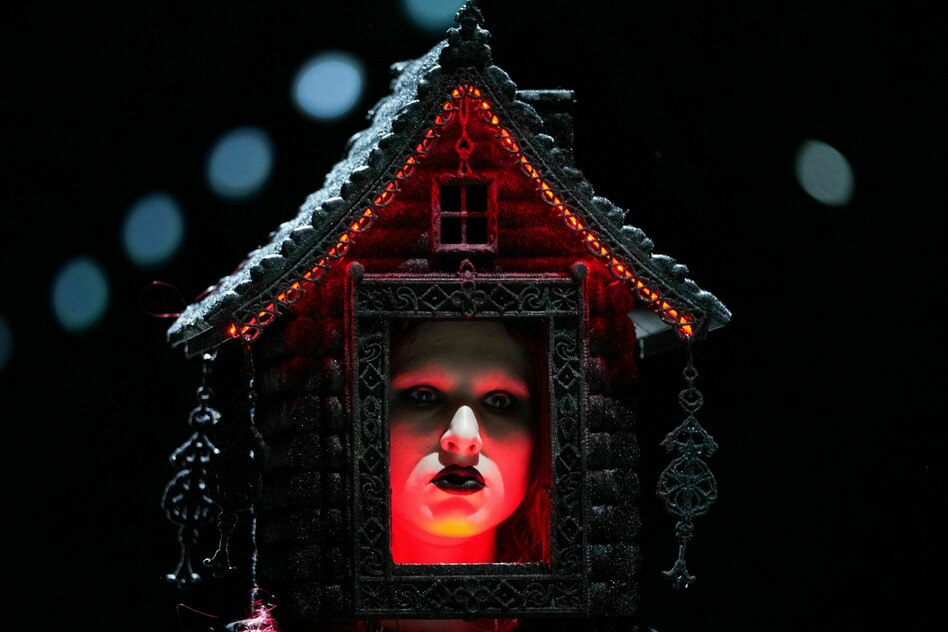
The Czech dream factory is well hidden in the Chicken Mountains in southern Bohemia. That's why we ask the talking donkey, who grazes at the entrance to the hamlet of Popelku, for directions. When we bring the animal the dragon's golden egg from the Kohout peak, he even gives us a laminated visitor pass that entitles us to enter the famous Moravia film studios. This is where the triumph of the Czechoslovak fairy tale film began, which conquered screens all over the world but divided the Slavic hyphenated country.
While Western TV is best known for the Christmas blockbuster “Three Nuts for Cinderella,” in which the starvation wages of capitalist fairy tale parks are denounced, the flicker boxes in the Eastern Bloc broadcast legendary stories from Moravia around the clock. The fairy tale program in the Warsaw Pact broadcast area was only interrupted by occasional “Swan Lake” performances.
“We didn’t even know there were other films,” tour guide Franta Mangova explains to us. "3,005 celluloid fairy tales rolled off the assembly line here every month. This made the bohemian Fairywood more productive than Holly and Bollywood combined."
A missing comma in the plans of the Czechoslovak Cultural Commission was responsible for the huge production volume - in 1953 the authority wanted to set a target of 3,005 fairy tale films. When Stalin learned of the Prague comrades' embarrassing mistake, he was torn in two with rage. His successor Khrushchev feared being outdone by the visually powerful US imperialism and sent the Bohemian fairy tale film industry into a suicidal race with Walt Disney.
“Our traditional narrative sources had already dried up in the 1960s,” says Franta. "That's why we had to stretch our fairy tales with synthetic substitutes."Nevertheless, those years are considered the golden era of CSSR film art fairy tales: from the phonetically sophisticated "Koťátko - the kitten with the diacritical paws" (1963) to the academic album "The Giant Polynomial and the Bunjakowski Conjecture" (1965) to the Czech-Chukchi epic “Tschubais und Tschuntschula” (1967), ever more extravagant artistic yarns were spun in the Moravia fairytale forest, but the chord pressure weighed heavily on the working people.
In 1968, Alexander Dubček tried to enforce a moratorium on fairy tales after the overworked witch actress Edita Brzková pushed herself into an oven. But the Russians crushed the protest with their pumpkin carriages, and “Swan Lake” was shown on TV again.
The Moravia studios continued to work under the most difficult conditions. In order to ensure the supply of fairy tale material, censorship was even relaxed in the 1970s.
“In addition to hidden criticism of the system, questionable obsessions could now be articulated,” says the guide, alluding to the successful series “Pan Tau,” in which a grown man compulsively rubs his melon in the presence of children.
But despite such mistakes, the Bohemian fairy tale film was considered in the West to be just as educationally valuable as Waldorf schools or wooden toys until the fall of the Iron Curtain.
“We had to continue producing in order to get foreign currency,” remembers Franta Mangova. When real socialism collapsed, Moravia had long since run out of happy endings. The last film to be shot was the deeply sad film “Bettelmann und Bettelmann” and then the lights went out in the studios.
The representatives of the Velvet Revolution had actually planned a transition to a pluralistic genre diversity from Bohemian Noir to Carpathian comedy, but fraternal strife and global market competition prevented the transformation. “Not even Czechs understood Slovakian neorealism without subtitles, and the Bohemian superhero film simply couldn’t catch on,” sighs Mangova. After an infamous stint as a filming location for cheap porn remakes (“Six Bears and a Clown”), the Moravia studios were finally closed in the mid-1990s.
The mythology has now taken back the studio area. “The springs beneath the Hühnergebirge are bubbling again,” says Franta Mangova. In the abandoned sets there are mermaids and mermaids, and a gnome with horn-rimmed glasses sits in a director's chair. But then the sky darkens and we have to rush back to Prague. The dragon mother from Kohout peak demands her golden egg back. Christian Bartel
Read the full story at the source
Source: taz