
Germany · taz · · 3h
German companies and climate protection: A Bayer world would be 7.5 degrees hotter
Deutsch (original) · Auto-translated to English
Fewer and fewer listed companies in Germany are on the right track to meeting the Paris climate target. This emerges from the WhatIf report by management consultancy Right, which was published on Thursday.
According to this, only 26 instead of 28 of the 71 companies examined are on course to limit global warming to 1.7 degrees - this is how Right interprets the goal agreed in Paris to keep the global temperature rise below 2 degrees in any case and, if possible, below 1.5 degrees.
For its report, Right evaluates the sustainability reports of listed companies. Based on this, it is calculated how much CO₂ the company emits per euro of gross value added - the so-called emissions intensity. A comparison with the climate neutrality paths of the International Energy Agency IEA for the respective sector then shows the rate at which this emissions intensity must decline by 2050.
This allows companies to be compared across sectors: For example, a software developer produces less CO2 than a steel manufacturer. And it is also easier for him to reduce his CO2 emissions even further. But both have to become climate neutral. The WhatIf report now measures how quickly the respective companies are up to date compared to their industry. This is translated into concrete degrees Celsius.
“This is only possible because of the EU’s sustainability directive,” says Hannah Helmke, founder of Right. This directive requires companies to disclose climate data, but was weakened by the EU Commission following pressure from lobby organizations.
According to the WhatIf report, for example, the world's largest chemical company, BASF, is on track for 4.6 degrees. This means: If every company's climate protection efforts had developed this way in recent years, the earth would have heated up by 4.6 degrees. Even worse: According to Right, BASF was still on track for 3.9 degrees in 2022, meaning the company has deteriorated from an already bad path.
BASF points out that the value chains of chemical companies are too different to be able to compare them meaningfully.
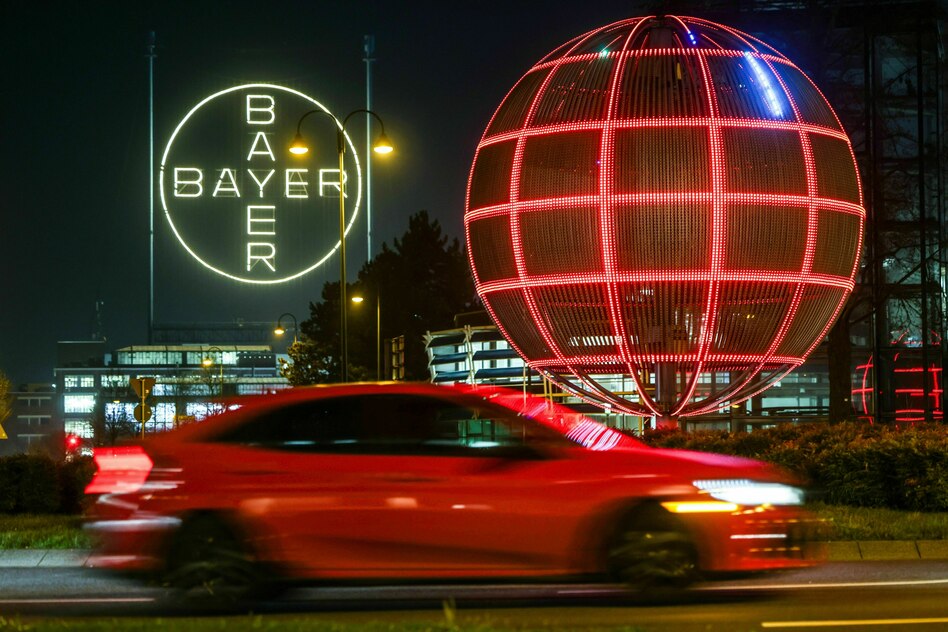
The pharmaceutical giant Bayer also stands out negatively: it is even on track for 7.5 degrees. However, when asked by taz, the conglomerate warns not to compare it with other pharmaceutical companies, as Right does: “The framework conditions of the agricultural industry, which differ greatly from the pharmaceutical sector, are ignored,” says a spokesman. Bayer receives better marks from other agencies.
Which climate goals the companies have set themselves apparently has little to do with how far they actually are with their decarbonization: 37 percent of the companies examined with a Paris-compliant target are on course for Paris, but 36 percent of the companies without such a goal also adhere to the 1.7 degree limit.
Companies with a Paris pace include Adidas, the chip manufacturer Infineon and Siemens, which separated from the gas turbine manufacturer Siemens Energy in 2020. The energy company RWE has also developed in an exemplary manner - although the limitations of the report become visible here.
The methodology has been checked by scientists and is used by the European Banking Authority, among others. But it does not reflect the fact that RWE lobbied the Federal Ministry of Economics for fossil gas power plants and against climate-friendly battery storage. The fact that RWE has been burning extremely climate-damaging coal to generate electricity for decades and therefore, according to the CarbonMajors project, alone contributed 0.37 percent to global CO2 emissions is not shown in the report.
“Although RWE has shut down many coal-fired power plants in recent years, it is expanding its gas business in the USA,” says Helmke. “We have to see whether the group stays on track.”
Those who are completely missing from the WhatIf report are banks. The financial institutions do not disclose how many CO2 emissions they enable with their loans - so their contribution to climate protection cannot be measured. According to a report by the NGO Urgewald, Deutsche Bank, for example, has expanded its business with fossil fuel companies by almost 20 percent.
Read the full story at the source
Source: taz