
Germany · taz · · 45m
Derby in women's football: The most expensive in the north
Deutsch (original) · Auto-translated to English
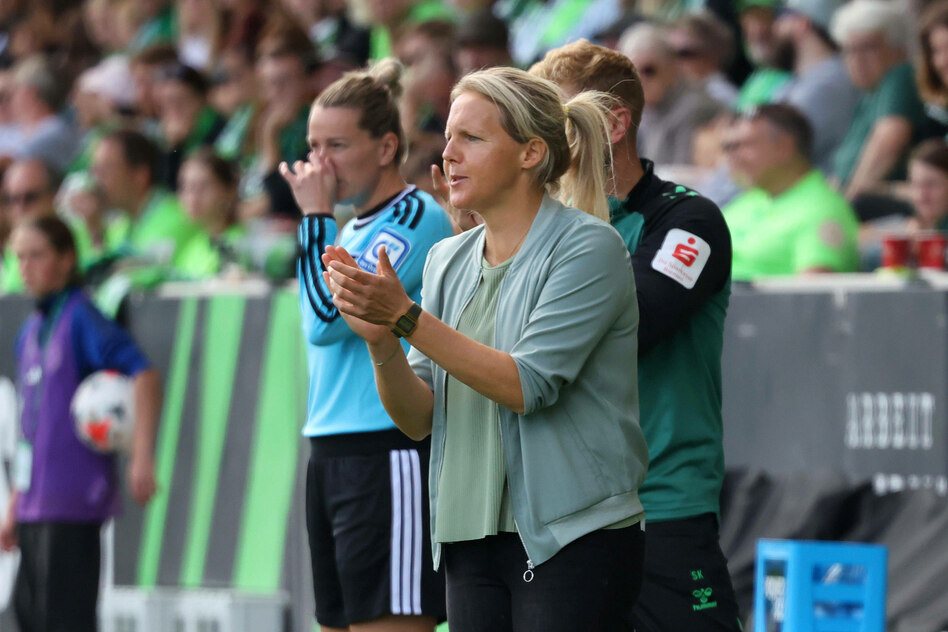
Friederike “Fritzy” Kromp comes from Würzburg, but in her second year in Bremen the coach has internalized what really counts at SV Werder: winning the northern derby against Hamburger SV. In both men and women.
25,000 tickets have already been sold when the northern rivals duel on the fourth matchday of the women's Bundesliga (Friday 6.30 p.m., Magenta TV and DAZN). In view of the magnificent setting, the anticipation increases “hour by hour,” says Kromp, and for many players, “the biggest game of their lives” is coming up. She has to somehow ensure that her voice gets through, explains the 41-year-old with a grin.
It is a challenge “to perform under the special circumstances because it is not an everyday occurrence,” explains Kromb, who is also known as a television expert. After a change with the Japanese Mei Shimada and the Belgians Elena Dhont and Luna Vanzeir, your ensemble should please “use 99 percent of the green-white energy” after a good start with two wins. When Werder unfortunately lost to runner-up VfL Wolfsburg (2:3) the previous week, 2,698 visitors watched, which is roughly the average in Germany's top women's league.
At the Northern Derby, however, the crowd is almost ten times as big. For the league, which is struggling for its reputation, such highlight games help to increase visibility and attract new audiences. The explosiveness is also increased because Kromp's counterpart Rodolfo Cardoso played for both Werder and HSV. A year ago, 37,000 visitors celebrated Werder's 2-0 home win in the Weserstadion. But there was some upset afterwards because Werder striker Medina Desic did a lap of honor with an HSV coat of arms on a pile of excrement. A shitstorm followed on social media.
You can't exactly say that there is a lack of challenges in the women's Bundesliga. Werder Bremen is also feeling this right now. Despite the increase in the budget for the women's department to 3 million euros, Lina Hausicke, the long-time captain, moved to Union Berlin at the last minute. The 28-year-old had insisted on her desire for change for weeks. Werder agreed on deadline day for a low six-figure fee. Fritzy Kromp calls the midfielder's departure “an unbelievable shame and bitter”, but it is an open secret that players at Union can earn “in completely different dimensions”.
Dominik Kupilas, Werder's new head of women's football and internationalization, feels his thesis has been confirmed that transfer fees will also "provide other economic levers" in the future. In the long term, he believes women's football has so much potential that it will also be profitable. Bremen should “be a pioneer to some extent” in this development.
Werder has been in the Bundesliga for almost 20 years, while Hamburger SV deregistered its women in 2012 for cost reasons. After the promotion in 2025, efforts will also be intensified on the Elbe.
A study by the HHL Leipzig Graduate School of Management is interesting. They have calculated that a euro invested in women's football brings on average 106 times more sporting success than the same euro in men's football. For women, the squad value is even more of an indicator of sporting success. The message for investors: In women's football, low capital investment meets high sporting impact. But apparently the word hasn't gotten around enough in Germany, otherwise there wouldn't be a risk of losing its importance internationally.
Read the full story at the source →
Source: taz