
Germany · taz · · 1h
The home visit: A wish must come to fruition
Deutsch (original) · Auto-translated to English
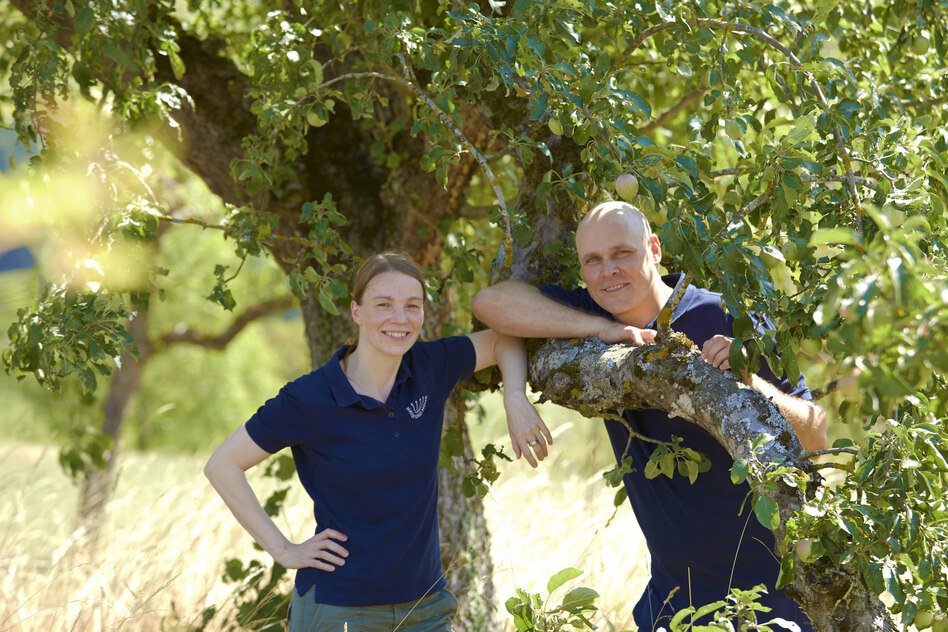
Taking a leap in life, starting something new, that's beautiful and scary at the same time. Judith and Dennis Mohr have dared.
Outside: We head to Weil in Schönbuch via congested motorways and feeder roads. The region is a car stronghold. Here, south of Stuttgart near Sindelfingen, the automobile industry has brought prosperity. In addition to vehicle production, the Mercedes-Benz research and development department is also located at the Sindelfingen site. Judith and Dennis Mohr live in Weil in Schönbuch in a semi-detached house surrounded by a tiny garden.
Inside: The apartment is still a work in progress. The “look and feel,” as Judith describes it, is not yet finished. There are unpacked boxes in the living room and a huge, carved wooden pyramid from the Ore Mountains on the living room table. “A birthday present,” says Judith Mohr. Carving, as is done in the Erzgebirge, is one of her husband's hobbies. He comes from Saxony-Anhalt and is currently learning wood turning.
This text first appeared in wochentaz, our weekly newspaper from the left!
Every week, wochentaz is about the world as it is – and as it could be. A left-wing weekly newspaper with a voice, attitude and the special taz view of the world. New every Saturday at the kiosk and of course by subscription.
At Mercedes: Anyone who works at Mercedes in Swabia has arrived in the world of prosperity. So does Dennis Mohr. In 2006 he went to the automobile company in Sindelfingen as a trainee; he trained as an industrial clerk. He stayed there in start-up logistics for 20 years. He met Judith at the company. She came from North Rhine-Westphalia and started at Mercedes in 2012 after studying industrial engineering. Two years later she became a project manager. “I was so proud to work for this global company.” When she talked about it at graduation meetings, her old classmates were deeply impressed.
The jump: The 38-year-old had purposefully built her career. “It wasn’t easy to get into a management position at Mercedes, but I had a good degree and experience abroad in Cuba and Budapest.” Those were plus points. But at some point the question of meaning arose. “I was always subject to strict procedures and rules and sat in meetings from morning to evening.” Dennis Mohr, a year older than his wife, had a similar experience: he and Mercedes had grown apart over the 20 years. "There are a lot of things in the company that are tedious and difficult. And then the point came where my wife left. Then I said to myself: Okay, then we'll just jump."
The severance payment: When, if not now?, they would have asked themselves. “I then decided in May 2025 to leave the company and become self-employed.” Your business plan: Instead of fast, now slowly. She wanted to watch it grow and ripen – in a meadow orchard. Wanted to set up a juice factory and is still there. Her desire had been maturing for a while. “It wasn’t easy for us to give up the golden cage and the security that you have at Mercedes.” But if they had thought about it, if they waited until they were in their mid-50s, then they probably wouldn't build anything, he says. A handsome severance payment made the step into self-employment easier.
The idea: The thing with the orchard has developed. “After we were in Swabia and saw the property and house prices there, it quickly became clear that a large garden was illusory.” It simply couldn't be financed. “And then we thought: If we don’t have a garden, then we at least need a good Swabian orchard,” says Judith Mohr. They bought one before their wedding in 2018: 2,000 square meters for 6,800 euros. And then it happened relatively quickly with the first harvest, the first juice. “So what do you do with it now?” That's how it got rolling.
The passion: They trimmed trees, mowed grass, harvested ripe pears and apples, and loved working outdoors. They were trained to become specialists in fruit growing and horticulture. Judith trained as an orchard teacher for school classes, initially alongside her job at Mercedes. This is also education for sustainable development, she says. "I find that much, much more meaningful than my last job at Mercedes, where it was all about cars. We have changed over time. Mercedes simply hasn't given us anything anymore."
The implementation: Unlike many others, they inherited neither a farm nor any tools. They started from scratch and worked for everything. They are now working on product differentiation. The trend towards alcohol-free is huge. "But we also make cider, this segment where there is little alcohol in it. We make fruit wines from pears and apples and brandies." Versatility is important.
The Swabians: “The Swabians are a tough nut to crack at first, but if you get involved, then everything suddenly happens very quickly,” says Dennis Mohr. They founded a fruit and gardening association for the five surrounding communities. The club now has almost 100 members, Dennis is on the board. “We were able to make contacts over the topic of fruit because there are of course points of contact.” You now feel at home in Swabia. What's annoying is the traffic and the narrowness of the metropolitan area.
Different socialization: He is from the East, she is from the West. “On the whole, this is not an issue for us,” she says. "I grew up in a traditional family in Lower Saxony. The man earned the money and the woman took care of the household and children. Things were different for Dennis, who comes from Saxony-Anhalt, because the role of women in the GDR was different. It was a given for him that I work."
The AfD: People always act as if the AfD is a problem in the East, says Dennis, because the thought of Saxony-Anhalt immediately triggers the thought of the AfD. "And when I look at my home state of Saxony-Anhalt, 43.8 percent voted for AfD. That's crazy!" The dissatisfied people first made their way in the east. But now the AfD is also at 20 percent in Baden-Württemberg. "In my view, what is happening in the East is a harbinger of what will happen here in the West, even if no one wants to hear it. I am shocked every day how people can believe these hate messages from the AfD and think that this party will sort everything out." He tries to counteract it in conversations. “But if someone is staunchly AfD, then in my view they cannot be reached for arguments.”
Distribution of tasks: He primarily takes care of production, the meadows, the trees, and processing. She is responsible for innovation and business. She is the driver, she keeps track. “If both of them did the same thing, that would be difficult,” says Dennis Mohr. But that way they would complement each other well. “Judith has a very good eye for numbers, which is what I miss.” And she says: "I think it would be nice if people didn't just recognize the monetary value. So not just the price of a product, but that there are other things behind it too, such as ecology." She becomes more and more aware of this in her work as an orchard teacher in schools. The fruit harvest is at risk this year due to the drought. More and more orchards in Baden-Württemberg are no longer cultivated. “But we want to make a living from it,” she says.
Read the full story at the source
Source: taz