
World taz
Democrats in the USA: Transferable recipe for success
The outcome of the midterms in the USA shows that people have had enough of polarization and mutual devaluation. They want problems solved. more...
Deutsch (original) ·Auto-translated to English
German politicians from all political persuasions seem to be very happy about the election results in the USA. CDU Federal Education Minister Karin Prien wrote the day after the congressional elections that the result was a “powerful vote” for democracy and then even spoke of a “morning of confidence”. The SPD politician Karl Lauterbach was pleased that the “technology oligarchs” had not managed to buy the election and that the result gave “hope for a better future”. The Green Party leader Franziska Brantner spoke of a “fantastic victory for the Democrats” and said it was “worth fighting for”.
The exuberance with which they are reacting to the result in the USA is surprising. Significant parts of the US Democrats have fought against a policy of polarization that Prien, Lauterbach, Brantner and many others in Germany also promote.
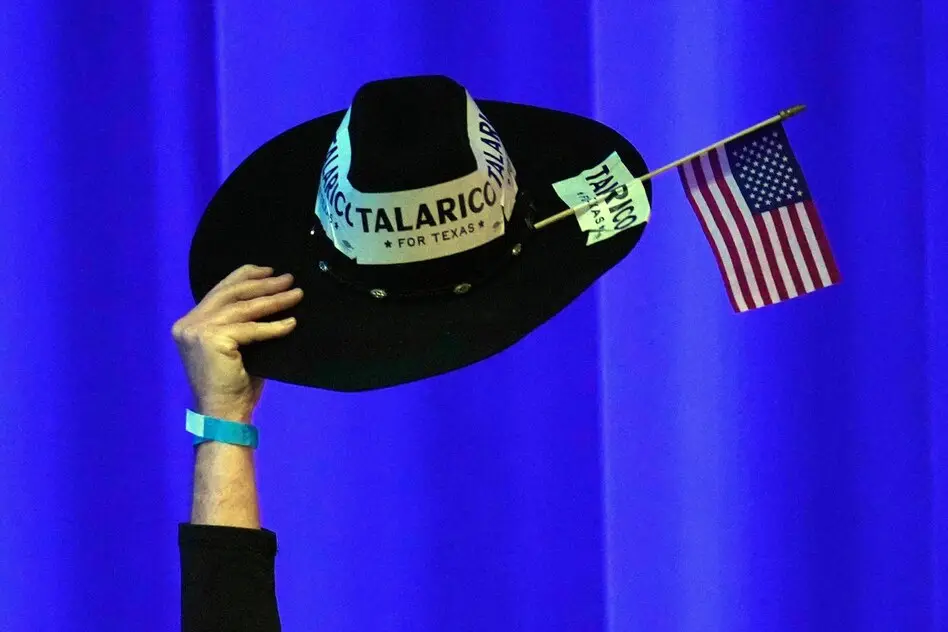
The Democratic Senate candidate for Texas, James Talarico, explained that the conflicts in the USA should not be understood in the context of left versus right, but rather that it is about top versus bottom. Wealthy people like Elon Musk benefited from left-versus-right polarization, Talarico said in an interview with the New York Times, because “our unity is a threat to their wealth and power.” Talarico, a 37-year-old Christian theologian, also praised his state's diversity during his campaign; His campaign was based on the motto “Love thy neighbor”.
The taz is an independent, left-wing and opinionated daily newspaper. We have been arguing in our comments, essays and debate texts since the taz was founded in 1979. We often cannot and do not want to agree on an opinion. That's why you'll find some completely opposing positions here - all part of the very broad left-wing spectrum of opinions.
Jon Ossoff also ran for the Democratic Party: The popular politician defended his Senate seat in Georgia by a wide margin. Ossoff campaigned primarily against corruption, against the enrichment of the powerful and wealthy and, like many in his party, advocated for “affordability”, i.e. for people to be able to afford a life with dignity. As a senator, Jon Ossoff has repeatedly voted against the delivery of US offensive weapons to Israel since 2024. In a debate during the election campaign, he said there was no doubt in his mind that the Israeli army had violated international law in its war in Gaza.
Another prominent winner from the ranks of the Democratic Party is Abdul El-Sayed. The Republican campaign against the politician, who ran and won a Senate seat in Michigan, was marked by racist and intense left-versus-right polarization. Donald Trump announced at one of his campaign rallies that the Senate candidate's name was "Adulbababababa Mohammed El-Sayed." Trump added: “He’s a jihadist.” The attacks did not only come from the Republican side: Democrats also attacked El-Sayed for his criticism of the Israeli government, which he accused of genocide. Republican Senator Ted Cruz even warned that Americans would die if El-Sayed was elected to the Senate.
Too left-wing, too migrant, too radical – here the link extends to Germany, where parts of different parties are pursuing precisely this polarization. This has been particularly noticeable since the Berlin election to the House of Representatives at the end of September, from which the Left Party emerged as the strongest force. A possible coalition between the Left Party, the Greens and the SPD in Berlin has since been conjured up as an ever greater danger for the country.
Federal Interior Minister Alexander Dobrindt indirectly called Left Party leader Elif Eralp an “anti-Semite,” the CDU posted a warning on Instagram about a “left-wing extremist coalition,” and Chancellor Friedrich Merz called Elif Eralp and her party “left-wing radicals.” For Karin Prien, the party is also “radical”.
Franziska Brantner explained about possible cooperation with the Left Party in Berlin: “Anti-Semites or people with connections to organized crime or Islamism are not allowed to support or even shape a government.”
SPD politician Karl Lauterbach signed a letter in which he and hundreds of other SPD politicians and members warn against a possible coalition. Eralp and her party are not “fit to govern”; the party is close to “clan crime,” it says. Not only that: “The erosion of the state’s monopoly on enforcement and violence is inevitable,” said the SPD people. The only thing missing is that Germans die if the Left Party is responsible.
Meanwhile, politicians from democratic (!) parties are warning about “migrant milieus” in relation to the so-called Gen Z protests. In a Bundestag debate, a CSU MP said that the protests had been hijacked by “migrant milieus, left-wing extremists, Islamists”. There was hardly any opposition from those parties that are now so happy about the Democrats' election victory in the USA.
That doesn't mean that problems - whether with the Left Party or with violence related to protests - cannot be addressed. On the contrary, it is important to address them clearly. But anyone who doesn't do this in a differentiated way, but instead uses racist or other forms of polarization, has not understood the central lesson from the victory of the Democrats in the USA: polarization is the instrument of the authoritarians.
The Republicans campaigned with nothing other than to warn against the “left-wing extremists” and the “migrants” - Democrats, on the other hand, responded to the need of many people in the population who finally want to see problems solved and have had enough of the constant mutual devaluation of the political camps.
When German politicians look at the USA, they seem to see how catastrophic authoritarian leadership is - for minorities, for the entire population, for the economy, for the world. They do not provide the service to transfer this to Germany. People in this country also want politics to finally solve problems. It seems like we can wait a long time for this.