
Germany taz
“Deepwater Horizon” disaster: Animal populations in the Gulf of Mexico have dwindled
When the Deepwater Horizon oil rig exploded in 2010, an extremely large amount of oil flowed into the sea - with devastating consequences for marine animals, as a new study shows. more...
Deutsch (original) ·Auto-translated to English
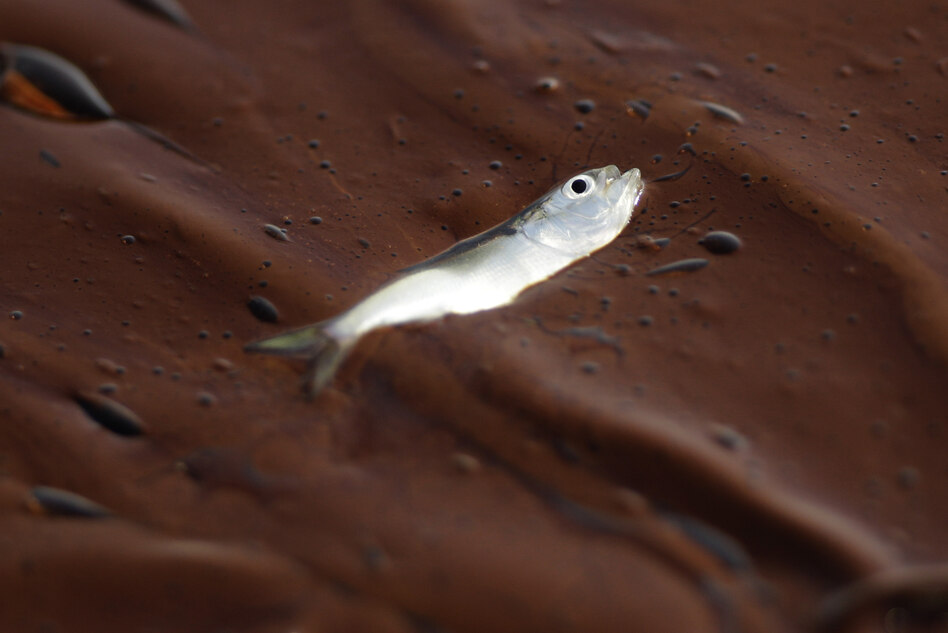
ap | In the depths of the Gulf of Mexico, populations of various marine animals have plummeted following the explosion on the Deepwater Horizon oil rig. According to a study published Monday in the journal Proceedings of the National Academy of Sciences (PNAS), the decline in populations of the animal groups studied in the area is about 60 percent.
The number of fish recorded in the area in surveys from 2015 to 2023 was on average 63.5 percent lower than in a survey from 2011. For crustaceans, including shrimp and krill, the decline was 62 percent. Populations of cephalopods, which include squid and octopuses, fell by 59.7 percent. The study makers believe that the oil spill more than 16 years ago is responsible for the decline.
Eleven people were killed in the explosion on the platform operated by the oil company BP in April 2010. According to the US Marine Authority NOAA, hundreds of millions of liters of crude oil flowed from the damaged well into the Gulf of Mexico.
Study leader Tracey Sutton, a biological oceanographer at Nova Southeastern University in the US state of Florida, says the affected ocean region was barely studied before the disaster. A research expedition in 2011 provided scientists with extensive data about the wildlife there for the first time.
The scientists examined whether natural changes in water temperature, oxygen levels or food availability could explain the decline. None of the variables did this. Things look different with the oil disaster. “So we think that’s the most likely cause of the decline,” Sutton says.
After 2015, stocks remained at a low level. Although the researchers recorded a slight increase in 2022 and 2023, this was not statistically significant and, above all, did not last.
The population of the lanternfish examined is now only a third of its original level. The krill population has declined by 72 percent. The decline among dragonfish is also significant. “These are keystone species,” says Sutton. They served as a source of food for many other animals.
The researchers also examined the marine creatures genetically. They found evidence of decreasing diversity. According to Sutton, pollutants accumulated in the eggs of animals that did not die immediately after the explosion. Subsequent generations were increasingly weakened and their ability to live was impaired.
The chemicals used to combat the oil spill could also have contributed to the damage. Both the oil itself and the dispersants used would have harmed fish, explains Isabel Romero from the University of South Carolina, a co-author of the study.
The new results clearly show that something has gone terribly wrong in this region of the ocean, Kaitlin Frasier of the Scripps Institution of Oceanography, who was not involved in the study, wrote to the AP in an email. Frasier himself published a study two years ago on whales and dolphins in the Gulf of Mexico. She found inventory declines of up to 83 percent.