
World · taz · · 1d
Debate about Thélyson Orélien: Integrity is only marginally important
Deutsch (original) · Auto-translated to English
The fact that the culture war in France is being waged with a grain of salt has become clear to anyone who enters a French bookstore, at least since the right-wing extremist entrepreneur Vincent Bolloré joined the parent company of the Grasset publishing house. While people in this country are still discussing the symbolic power of the Axel Springer Prize for the right-wing investor and Antichrist expert Peter Thiel, Bolloré has long since created facts, put unpleasant editors on the street and scared away entire editorial teams that do not correspond to his right-wing extremist worldview.
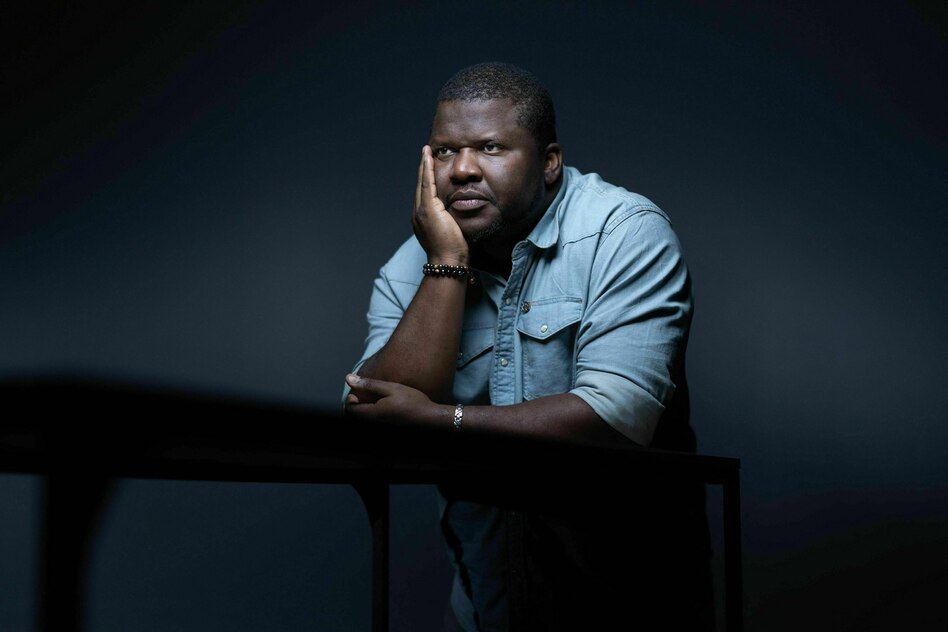
Now the fight for cultural hegemony in the Fifth Republic has a new field battle. The main actor in this round is the Haitian-Canadian author Thélyson Orélien, whose novel “It was this or die,” which was nominated for the Prix Goncourt, is currently facing an accusation of AI plagiarism, which was raised by the initially anonymous X account “Balance ton Claude.”
It is not the author himself who is said to have written his odyssey-like migration narrative, but rather an AI. Smoking Gun refers to the AI recognition tool Pangram, which comes to a clear conclusion: 94 percent of the novel is said to be of artificial origin. In the DLF Kultur interview, AI expert Moritz Metz points out that the false positive rate of tools like Pangram is in the tens of thousands, especially for long texts. Nevertheless, the German translator Jürgen Ritte is not the only one to express doubts about the plausibility of the allegations in an SZ interview. Can a Large Language Model really have duped the entire literary world (and himself)?
It is a case that is of course reminiscent of that of Jason Arday, which took over both academic and political Britain in the summer and which ended in the suicide of the presumably impostor sociology star and autistic person. The case was exploited for unfair purposes by both the right and the left, and soon it seemed that the issue was no longer about the truth of the accusations, but rather about the question: Have “woke” academic institutions allowed themselves to be blinded for ideological reasons? And did right-wing smear campaigns turn a prominent but otherwise not particularly unique case of plagiarism into an anti-woken emblem and ultimately drive Arday to suicide?
The right is also heavily involved in the Orélien case. Behind the said X account “Balance ton Claude” is, among others, the right-wing Le Figaro journalist Samuel Fitoussi. It was also Figaro that really got the debate rolling through several articles. Especially with regard to the outcome of the Arday case, one should exercise caution and check who is shooting in the direction of the suspected author and for what reasons.
However, the air around Orélien is becoming increasingly thinner. Because new revelations continue to suggest that the author was not particularly careful about authorship even before the advent of generative AI. The plagiarism allegations now go back to 2010, and new accusations have been added almost daily in the last few days. Newspaper articles, short stories, poems, there are classically plagiarized passages of text everywhere that the AI detectors don't respond to.
So far, Orélien has denied the allegations and suspects a campaign, and his publisher Grasset also speaks of fake news. Meanwhile, the author has long been experiencing his personal Waterloo. His Canadian publisher canceled the reading tour and the Prix Goncourt removed him from the longlist, according to its own statements, to protect the “integrity of the prize”.
But isn't that long gone when even a committee of so-called experts apparently can no longer distinguish between what is of human origin and what is a test tube? As with Jason Arday, this debate does not necessarily revolve around questions of the integrity of literary texts, but rather around political battle terms such as DEI, wokeness: the usual talking points. To make matters worse, some people think that in a few years no one will be bothered by the literary use of text-generating AI anyway, so why bother with the breakdown?
If the accusations turn out to be true, as is almost always the case when it comes to “artificial intelligence,” there will be one loser in particular: literature itself, including the authors who can’t help but write, who don’t care about prizes, recognition and fame, and who have to watch as the foundation on which they have founded their lives is honed by AI evangelists like Sam Altman or Elon Musk.
It almost seems as if even the most elite institutions of the literary establishment have nothing to do with the anti-intellectual counter-revolution of the AI age, even though they can no longer distinguish between what is a genuine text and what the robots say for it. The question remains: How are you supposed to sit down at your desk under these conditions without rampant depression?
Read the full story at the source
Source: taz