
World taz
Debate about “Spiegel” text about Elif Eralp: In the end everyone is as smart as before
The “Spiegel” scandalizes internal statements by the Berlin leftist Elif Eralp about the Palestine movement. The text hardly contributes to clarification. more...
Deutsch (original) ·Auto-translated to English
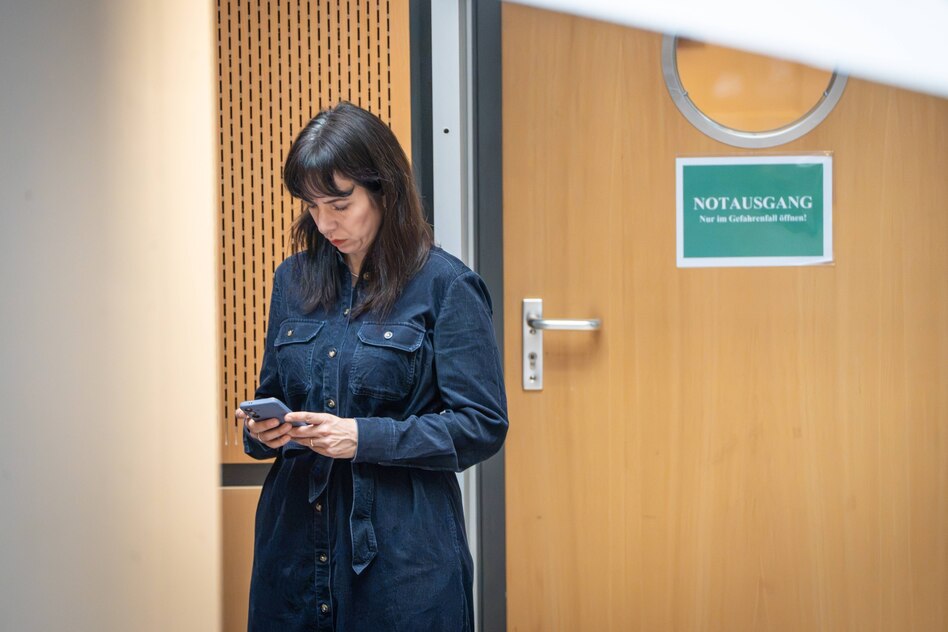
T he “scandal” surrounding Elif Eralp and her internal statements is also a scandal in the German media landscape. Because there are many different facets here, we should perhaps briefly note in advance what it is not from a media ethics perspective.
So it would be out of place to turn this into a debate about the practice of German journalists of authorizing quotes from politicians. Yes, there is good reason to find it pathetic that the German media puts up with politicians rewriting their answers in interviews or even - this is the accusation - wanting to delete an entire question.
The actual essence of the Spiegel article has nothing to do with authorization. It's more about the comments that Eralp and those responsible for the left from their close environment left in the Word document. In it, Eralp writes in response to a question about the Palestine activist Ibrahim Ibrahim, who is probably close to the PFLP, that she is “afraid of these people” and that she “cannot put herself and her family in danger for the Spiegel.”
The taz is an independent, left-wing and opinionated daily newspaper. We have been arguing in our comments, essays and debate texts since the taz was founded in 1979. We often cannot and do not want to agree on an opinion. That's why you'll find some completely opposing positions here - all part of the very broad left-wing spectrum of opinions.
These internal comments sent by mistake should be treated more like other confidential communications that end up in the hands of journalists in one way or another. Journalists then have to check this information, research it and, after careful consideration, decide whether they want to publish it.
So, should this be made public? In the Eralp case, there are a number of questions: Do you think it is news that the Berlin mayoral candidate is concerned about the well-being of her family? What exactly is Eralp afraid of? How justified is this fear? And is the public interest in finding out about these internal considerations so great that people might accept that Eralp will feel even more insecure afterwards?
If Spiegel wanted to clarify these questions, then the logical step would have been to contact Eralp again. The magazine should have enabled Eralp to take a position on these open questions. There is no mention of such queries in the text itself.
Eralp himself, so much should be said here for context, is by no means in line with the Neukölln district association on the Palestine question. Rather, like the rest of the left-wing leadership in Berlin, she is to be located in the moderate camp of the party, which repeatedly distances itself from radical elements in the movement.
The fact that she is in a clinch with them is really not big news. Der Spiegel is now turning this into a scandal, citing Eralp as a key witness against her own movement, but apparently without letting her explain her own statements in advance.
When reading the article, you immediately notice the excited, dramatic tone in which it is written. Various accusations and topics are thrown around wildly: clan crime; the gold coin robbery in the Bode Museum; burning Israel flags; certain “streets” and “milieus”; the “Turkish-Kurdish Gen-Z Mafia”; Berlin as the “capital of crime”; controversial “Gaza influencers”; the PFLP and Hamas; Hostility to Israel and anti-Semitism.
The text in the mirror has no interest in enlightenment. Rather, it is part of the campaign journalism against the Left Party in recent months. Not only the bourgeois parties, but also voices from the established media repeatedly slander the left as anti-Semitic. This went so far that a commentator in the Tagesthemen placed the party in the tradition of the perpetrators of the Holocaust.
Der Spiegel rides this wave to the point of absurdity when it compares Ibrahim Ibrahim in the text with “Voldemort”, whose name one is afraid to say. Someone who has absolutely nothing to say politically in this country is portrayed in an infantile way as absolute evil.
A scandal is created so quickly. But at the end of a long article everyone is actually as smart as before.