
War & Militarism taz
Debate: War against nature
The summit on biodiversity made important decisions, but agriculture and forestry continue to subsidize their own demise. more...
Deutsch (original) ·Auto-translated to English
Did the major nature conservation summit in Yerevan, Armenia, end with a shrug of the shoulders? The 196 member states of the Convention on Biological Diversity have agreed on a final document that contains some good things but lacks others. In its statement, the WWF paid tribute to Halloween and saw the Yerevan decisions as “more trick than treat.”
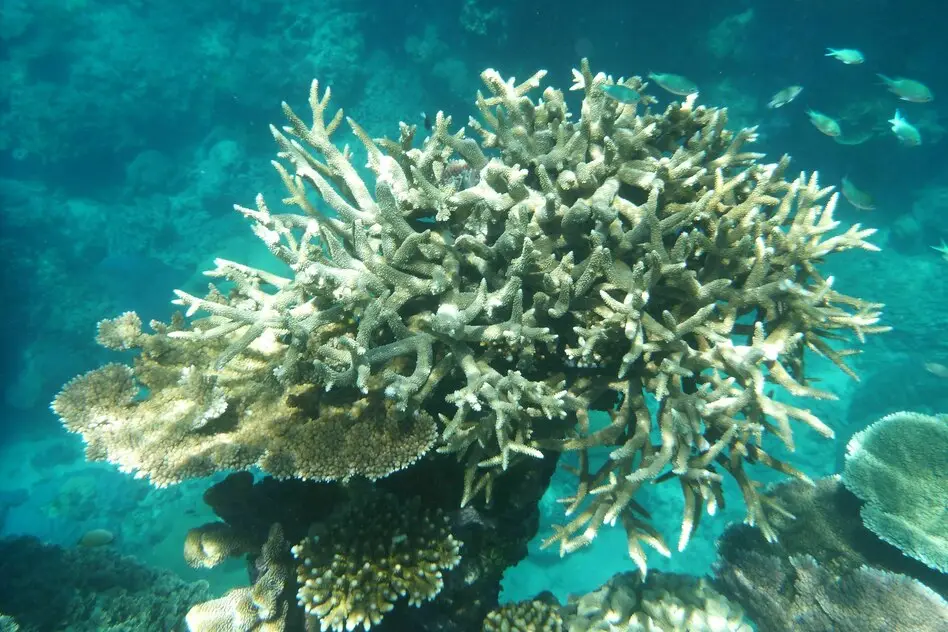
Given the problem, shrugging one's shoulders would be a disaster. According to the International Union for Conservation of Nature (IUCN), around 41 percent of all frog, salamander and toad species worldwide are threatened with disappearance, 71 percent of all cycad species are on the IUCN Red List, 44 percent of reef corals, 11 percent of birds, 26 percent of mammals.
These numbers show a collapse. Consequently, UN Secretary-General António Guterres said at the opening of the summit that subsidies for fossil fuels would amount to “subsidizing suicide” due to their harmful effects on the climate. He spoke of a “war” against nature that is not yet over.
Therefore, greater progress is needed than “at least some.” Which leads to the question: When the global community makes enormous use of resources - thousands of scientists, government employees, activists and government representatives fly not only to the summits, but also to interim negotiations; The summits each consume around 40 to 50 million euros in state funds in organizational costs alone - we can't agree on more than that, do we still need them in this form?
The Biodiversity Convention, just like the conventions on climate protection, against desertification or for the protection of wetlands - like almost all conventions on environmental protection - lack clear rules. There is a lack of authorities in nation states that can implement these rules and impose penalties if they are broken.
An example: Scientists and environmental politicians identify environmentally harmful subsidies as the main driver of the extinction of species and the destruction of ecosystems. Significantly reducing it is set out in one of the 23 goals that the Convention on Biological Diversity set itself in its “Kunming-Montreal Agreement” four years ago. Goal 18 calls for reducing environmentally harmful subsidies (financial support for environmentally harmful economies) by at least $500 billion annually by 2030.
When Bundestag member Harald Ebner (Greens) asks the federal government before the nature summit in Yerevan how far it has come in reducing harmful subsidies, he replies with an annoyed shrug of the shoulders: “There is no definition or list of environmentally harmful subsidies.” The only financial aid that has a negative climate impact is “Federal funding for production facilities for borosilicate tube glass and glass vials for use in vaccine production,” which has already expired. You can safely translate that as “we don’t care”.
Now it is not daring to claim that the finance minister would not even get a clever definition of “environmentally harmful subsidies and proposals for their dismantling” on the agenda in the cabinet, just as his party and government colleague Carsten Schneider fails to pass the “law to strengthen natural infrastructure” there. The ministries of transport and agriculture are blocking the important project, which was intended to compensate for the interventions by accelerating the expansion of transport and energy infrastructure.
And at the same time that the world's environmental scene was negotiating in Yerevan, the European Union's agricultural politicians were also negotiating agricultural subsidies for the next few years. It seems as if farmers should get less money for creating hedges or flower strips, letting cows graze in pastures or only fertilizing far away from ponds and streams. However, they should receive more money for the size of the area they cultivate.
Worldwide, agriculture and forestry are among the sectors whose actors are most stubbornly resisting ecological and social transformation. In Latin America and Europe, they are successfully lobbying against restricting the use of pesticides and fertilizers. They produce as much meat for export to world markets as possible, they convert forests into plantations where there are still forests - in Latin America, Africa and Asia - or they resist converting plantations into forests, as in Germany.
If you want to even slow down the loss of biodiversity, you have to change agriculture and forestry. There is little confusion about what this change should look like. The German Academy of Natural Scientists Leopoldina in Halle, for example, has published the necessary information in numerous position papers. It would be necessary to preserve, maintain and sustainably manage the cultural landscape – i.e. meadows and fields. And to take some areas – moors and forests – out of use and let nature take its course there.
Implementing this means a tough struggle in rural regions. It is important to convince the population that they can lead a good life as neighbors of a national park. It requires compensating farmers and giving them an appreciation for the fact that part of their land is being converted back into a bog - which their ancestors worked hard to drain. And local and state parliaments would need representatives who would put money into local public transport and bicycle parking garages instead of bypasses.
All of this is not far removed from the negotiations at the UN summit, as these reflect the otherwise hidden global supply chains and financial flows. If you order your dumpling with pork in China, you may be eating a pig from Germany fed with soy from Brazil. In order for the population of the tropics to participate in the sales that the industry of the Global North generates with raw materials from the rainforests, they need the support of the governments and civil societies from the North.
The Yerevan results are not enough, but they keep the issue in the debate. They show the public which governments at least recognize the problem - and can measure them against it, for example in Europe. They show which governments have not yet heard the sound of the global natural crisis.
This would have to be taken into account in a judgment about their reliability as a trading but also as a security partner. And the results show what needs to be done around the world - in the federal finance ministry, in the forests of North Rhine-Westphalia, in the corporate headquarters in Paris and Switzerland and between the supermarket shelves. In any case, no one can get away with shrugging their shoulders anymore.