
Germany taz
The Berlin City Palace: A sign of division
Our columnist takes a walk to the Berlin Palace. With its reconstruction, she believes, the political misery of today's Germany began to gain momentum. more...
Deutsch (original) ·Auto-translated to English
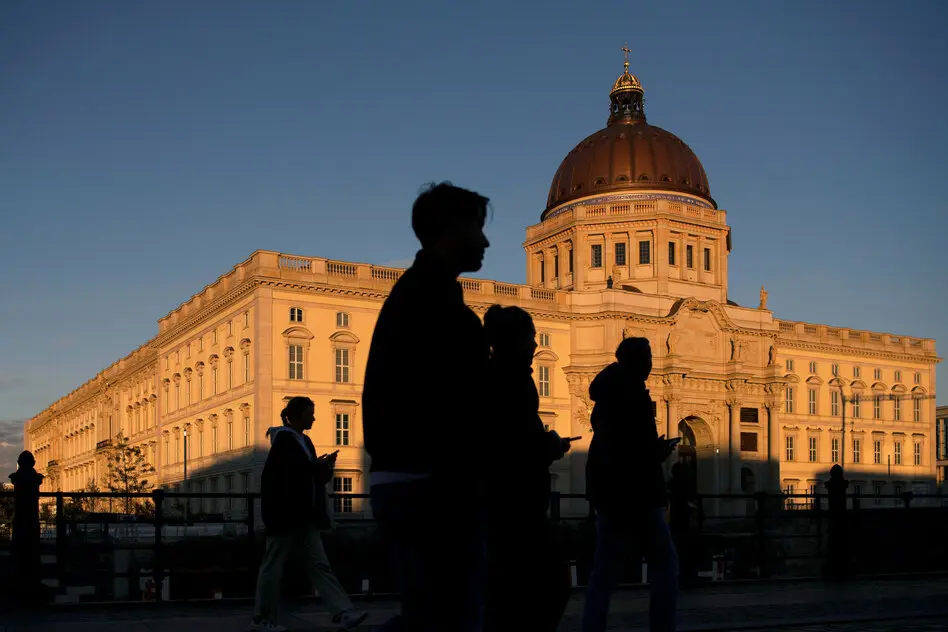
T he Berlin City Palace - also called the Humboldt Forum - is a place in the German capital that I don't particularly enjoy. During the debate about the reconstruction of the castle, when I was still an editor in the taz Berlin editorial team, I was one of the opponents of this idea - unfortunately with just as little power, money and influence as everyone else in this camp.
My compromise proposal to provide one side of the rebuilt castle with a glass front and to allow the still living Hohenzollerns, who were then fighting for the return of some of their castles, to move in there in order to at least offer the rank and file something like a “summer house of the royals” show, found little support outside of the taz.
But during a walk through Berlin's sunny autumn recently, the castle really made me laugh: it was asking me for donations with large posters! Trees are to be planted at the palace - actually a good idea: the previously bare areas around the mighty building offer the foot soldiers neither shade nor protection from wind or rain.
But I find it absurd that I should pay for it: I never wanted that piece of shit in the middle of Berlin! And today I sometimes think: With the reconstruction of the old Prussian castle, the political misery of today's Federal Republic began to gain momentum.
In the period between the demolition of the Palace of the Republic and the start of construction of the new old castle there, i.e. from 2009 to 2012, there was a meadow in the middle of the German capital; an open space that was open to everyone: young and old, rich and poor, right and left, Berliners and visitors from Germany and all over the world. You could stroll there or just lie around, drink a beer or smoke a hookah, read a good or bad book, think or talk about God and the world and even strike up a conversation with previously strangers.
And there's more: in 2012, on Berlin's 775th birthday, the capital celebrated its centuries-long history as a place of immigration and the contribution of immigrants to the city with the open-air exhibition “City of Diversity”. The Schlosswiese was a place that made a “we” possible and tangible, which three years later was the basis for Angela Merkel’s sentence “We can do it”.
This text first appeared in wochentaz, our weekly newspaper from the left!
Every week, wochentaz is about the world as it is – and as it could be. A left-wing weekly newspaper with a voice, attitude and the special taz view of the world. New every Saturday at the kiosk and of course by subscription.
A good decade later, “we” live in a society damaged by division, in which the rich and ruling, like the nobility in monarchist times, no longer know or no longer want to know the conditions under which those who have less live. At a time when immigrants on castle meadows or elsewhere in public spaces no longer only disrupt the cityscape of right-wing extremists, but also that of the Federal Chancellor, and social division into “real” and “passport Germans” as well as remigration plans lead to electoral success.
No, as much as I appreciate city trees, I don't give a cent for greenery at the city palace. Entrepreneurs, bankers and other members of the old and new nobility have donated around 120 million euros for its reconstruction, but their money is apparently not enough to provide some shade for the rank and file. I prefer to save for the day when someone collects money to tear down the castle: then I will gladly donate for a piece of meadow and even for a tree on it.