
Germany · taz · · 2h
COP bosses extend coal license: Criticism of “climate bomb” in Australia
Deutsch (original) · Auto-translated to English
A month before the start of the UN climate conference COP31, the host countries Australia and Türkiye have come under criticism from environmentalists. Unlike Brazil last year, the COP hosts currently show little ambition to reduce fossil emissions, writes the environmental organization 350.org. “Instead of leading the transition away from fossil fuels, both countries continue to expand their use of fossil fuels at an extreme pace,” criticizes Andreas Sieber, head of policy at 350.org. This year's UN climate summit will take place from November 9th to 20th in Antalya, Turkey.
Turkey, as Europe's largest coal-fired power plant operator, has signaled that it wants to expand its coal and gas power plant capacity by around 30 percent by 2035, said Sieber. At the same time, the non-governmental organization Climate Council described a new coal project in Australia as a “climate bomb”.
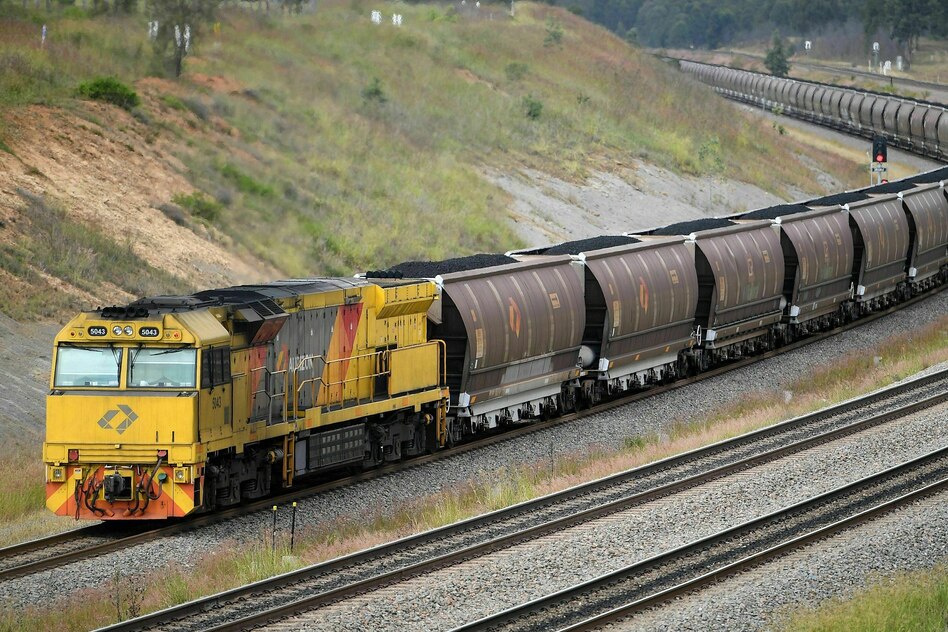
Last week, the New South Wales Independent Planning Commission approved the largest coal project in the state's history: The owners of the Hunter Valley Operations (HVO) coal mine north of Sydney estimate that the mine's 19-year license extension will result in emissions of 809 million tonnes of climate-damaging carbon dioxide.
For comparison: That's about twice as much as Great Britain emits annually. The owners of HVO are the Swiss-based raw materials company Glencore and the Chinese-Australian company Yancoal.
For Glencore, the Hunter Valley is a building block in its global coal business. In the Carbon Majors database, which records the historical emissions of large fossil fuel producers for 1998 to 2024, Glencore ranks 46th out of 178 companies worldwide with around 6.97 billion tons of CO₂ equivalents. When it comes to coal production, the group ranks 19th out of 104 producers with 2.53 billion tons.
“What New South Wales exports as coal, we import back as bushfires, floods, heatwaves and droughts,” said Greg Mullins, former New South Wales fire chief and now Climate Council member. Climate activists argue that Australia cannot rely on the fact that most of the emissions only arise in power plants in Asia - and not burden Australia's climate balance.
Science quantifies responsibility specifically. A tool developed by researchers at the Australian National University (ANU), the Carbon Impacts Tracer, translates emissions into possible concrete climate impacts. According to the calculations, these could, among other things, increase the number of people exposed to extreme heat and also increase the loss of coral on the Great Barrier Reef.
Politically, Australia is in a dilemma. The country is the second largest coal exporter in the world. At the same time, Canberra and the federal states have tightened their climate targets. New South Wales aims to reduce its emissions by 50 percent by 2030 and 70 percent by 2035 compared to 2005 levels. Net zero is expected to be achieved by 2050. At the same time, state policy allows the extension of the license for existing mines if their economic benefits are assessed as sufficiently high. HVO is the first major test of this strategy.
The state's Planning Commission explicitly acknowledged the problem in approving HVO: the mine's emissions would exacerbate climate change in the region, New South Wales and globally. Nevertheless, for the Commission, employment, regional economy and tax revenues prevailed. 1,500 jobs depend directly on HVO, and more than 800 suppliers are involved.
However, the matter has not yet been decided. The project requires approval from the Australian Federal Government. That puts the ball in Prime Minister Anthony Albanese's court. For his government, this is about more than a single mine - and the question: does Australia have to share political responsibility for the climate consequences of its coal exports - even if the emissions arise abroad?
Preliminary negotiations for the upcoming UN climate summit in Turkey began on Monday on the Fiji Islands in the Pacific. Fiji's Climate Minister Lynda Tabuya urged developed countries to support a "just transition" to renewable energy at the start of deliberations in the city of Nadi. 350.org criticized the fact that Turkey and Australia were among the few industrialized countries that have not set a date for phasing out coal.
Read the full story at the source
Source: taz