
Germany · taz · · 1h
Water crisis in Europe: Berlin and Brussels are watering down environmental laws
Deutsch (original) · Auto-translated to English
The environmental organization Greenpeace is calling on the federal government to force data center operators to use water sparingly. “The National Data Center Strategy is not specific enough when it comes to water,” says Greenpeace digital expert Linda Klapdor. “It says, for example, that data centers should rely on closed cooling circuits.”
That leaves room for loopholes. “The federal government could stipulate that closed cooling circuits must be used in regions affected by water stress,” said Klapdor. In addition, the authorities would have to monitor data center operators more closely and also sanction them if they do not comply with their legal obligation to disclose water consumption.
On Monday, Environment Minister Karsten Schneider (SPD) invited people to the “Future Water” forum in Berlin. “As a country, we have to find a new way of dealing with water,” he said in front of the EU Environment Commissioner Jessika Roswall and representatives from the environmental, economic and security sectors. “Draining water as quickly as possible and draining wet areas was the water policy of the last centuries,” says Schneider. Today the task is to keep water in the landscape as much as possible. “This means, for example, rewetting dry moors, giving rivers more space and converting forests into stable mixed forests,” said the Environment Minister.
There is currently a hard struggle in Germany and Europe about the legal requirements for these goals. Before the summer break, Schneider presented a draft law to strengthen natural infrastructure. This includes proposals for changes to the Federal Nature Conservation Act, for example, in order to give the rewetting of peatlands an “overriding public interest” and thus accelerate it.
However, rewetting must take a back seat if it collides with the construction of housing or infrastructure such as fiber optic or carbon dioxide pipes. In addition, it is still unclear when and whether the draft bill will be approved by the cabinet.
The amendment to the Water Framework Directive, demanded by the European mining industry by Environment Commissioner Roswall, appears to be off the table - at least the Swede has not yet submitted any proposals for it. However, Brussels is weakening water legislation in a roundabout way, says Raphael Weyland, office manager of the nature conservation association Nabu in Brussels. The “environmental omnibus” reform package, with which the EU wants to streamline its environmental legislation, is intended to ensure that certain industrial projects can receive “public interest” status more quickly than before. Then it would no longer be checked whether they worsen the status of rivers or groundwater bodies.
The existing, actually good water framework directive has not been properly implemented in Germany for years, says Weyland. The federal states would have to submit management plans in which they disclose how much water can be taken from or discharged from rivers. “But the plans are vague and often not backed up with money or concrete measures,” says Weyland.
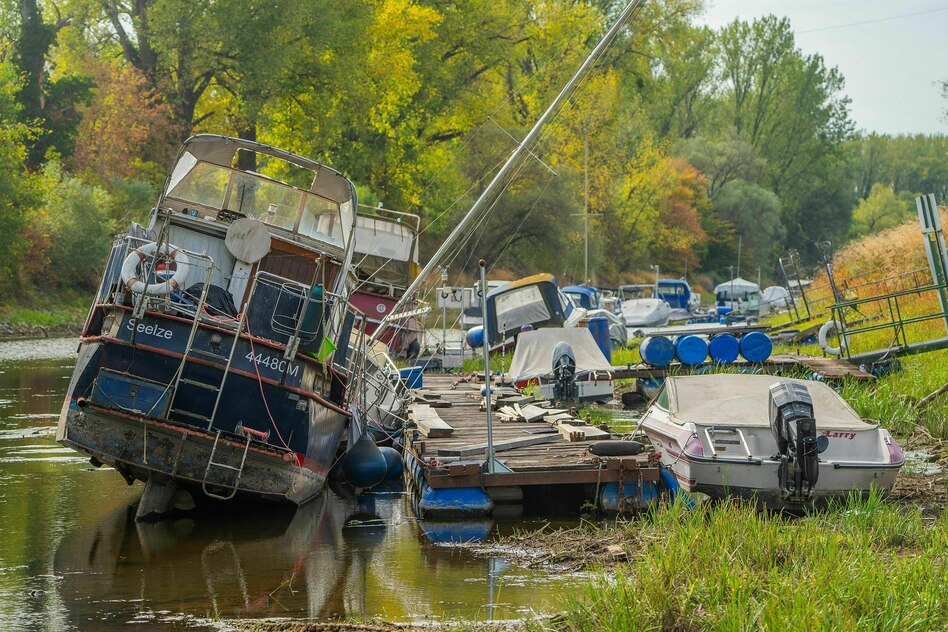
The Environment Ministry's water forum took place in an autumn with historically low water levels in many rivers. The Federal Institute of Hydrology announced in its latest low water report that the water levels on the Rhine have already reached new lows at numerous gauges. “An easing is not to be expected in the first half of October either: showers are forecast in many catchment areas in the next few days, but it rains too little and for too short a time to have a lasting impact on the water flow in the federal waterways,” said the authority.
Read the full story at the source
Source: taz