
Germany · taz · · 59m
Comeback of the sitcom with “Leanne”: humor in times of crisis
Deutsch (original) · Auto-translated to English
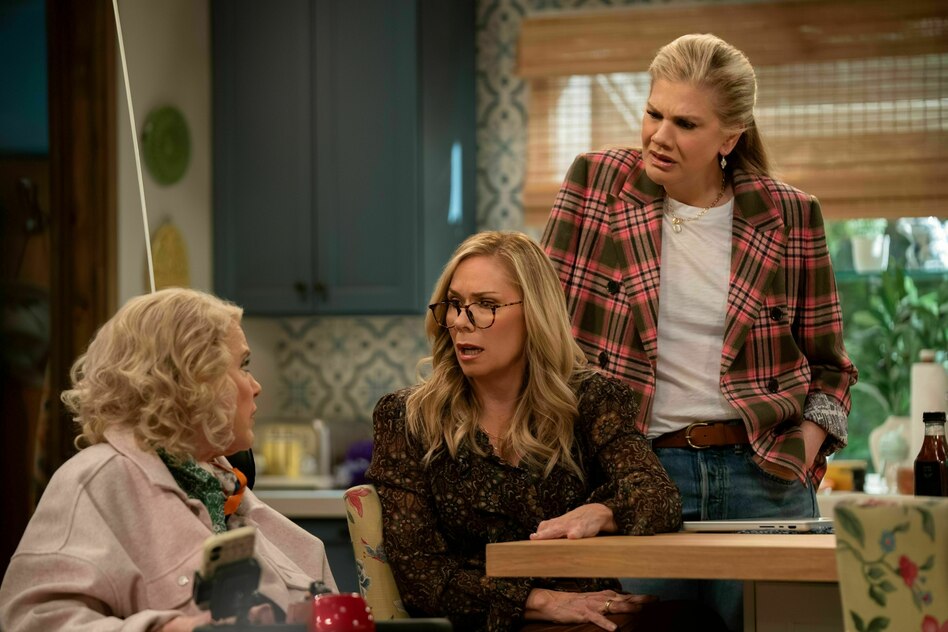
When the Primetime Emmy Awards were presented for the 78th time in Los Angeles last week, comedy series such as “Hacks”, “Widow’s Bay” and “The Bear” competed for the most important television award. All humorous series, no question. But also very far away from classic sitcoms, recorded in front of a studio audience and broadcast with laughs superimposed, which used to dominate the program and the Emmys. However, this form of comedy series has not completely disappeared, as demonstrated by the sitcom “Leanne”, whose second season has just started on Netflix.
The list of sitcoms that have made television history is long and includes series as diverse as “I Love Lucy”, “Mary Tyler Moore”, “Cheers”, “Friends” and “How I Met Your Mother”. The fact that the format became increasingly rare on screens was, however, a gradual development that began at the beginning of the so-called golden age of series around 25 years ago.
Complex, bold dramas like “Mad Men” or “Breaking Bad” were on everyone’s lips, produced by cable and pay TV networks, and everything that was regularly shown on free-to-air US television was considered old-fashioned and too aimed at the broadest possible audience. The tried-and-tested sitcom concept - filmed with multiple cameras in the studio and laughs from the audience - suddenly seemed uncool, so that even the major networks eventually started trying other comedy series. “The Office”, “30 Rock” and even “Modern Family” relied on a different look and more biting humor, even if “The Big Bang Theory” also ensured ratings at the same time.
This trend intensified in the streaming era, because people wanted to do everything a little differently than on normal television. And so they focused even more on productions that didn't fit into conventional boxes, on high-concept ideas and cross-genre ideas. The boundaries between comedy and drama became more and more mixed, also because classic time constraints (almost half an hour for a comedy, around 60 minutes for a drama) had become obsolete.
Media attention and awards have recently only been given to series that were light-hearted and amusing, but could hardly have been further from sitcoms. Not just the already mentioned “The Bear” or “Hacks”, but also “Marvelous Mrs. Maisel”, “Emily in Paris”, “Only Murders in the Building” or “The Studio”.
However, the sitcom was never completely buried. In the USA, “The Neighborhood” only ended in May after eight seasons (and until the end it had more viewers on CBS than “NCIS” or “Elsbeth”), while “The Upshaws” about a black working class family ran on Netflix for five years. And “Leanne” can now also be seen there, a classic sitcom that is reminiscent of the 90s hit “Roseanne” in many ways.
The series owes its title to the comedian Leanne Morgan, who has become popular in the USA in recent years, and based on her own life and her persona, she now tells the story of a religious southern housewife, no longer very young, who is currently separating from her husband and is otherwise busy with her sister, her parents and the adult children. “Leanne” is produced by Chuck Lorre, who started out on “Roseanne” and was later also behind “Two and a Half Men”, “Big Bang Theory” and “Mom”.
And everything looks just as familiar: a living room setting with a sofa in the middle, the outside of the house is shown between the scenes and after the punchlines the actors leave enough time for the audience to laugh. The humor in this family sitcom is rather harmless and a bit under-complex. But in this familiarity, thanks also to Morgan as the protagonist, it seems somehow modest and likeable, almost decelerated.
Signs that the sitcom is regaining ground are increasing. At Disney+ they tried “Mid-Century Modern”, there were spin-offs of “Big Bang Theory” and a new edition of “Frasier”. And in October, a highly anticipated relationship sitcom called “Newlyweds” starts in the USA, prominently starring Téa Leoni, her husband Tim Daly (who also appears in the new “Leanne” episodes) and Jamie Lee Curtis, who also produced the whole thing.
There are a few reasons for this small comeback, starting with the need for more humor in times of crisis like the current one, which may not be fully satisfied by a series about the stress in restaurant kitchens. In addition, it can currently be observed in Hollywood in general that the trend is moving away from experiments and overly progressive stories and there is a conscious attempt to appeal to a more conservative audience outside of the metropolises.
And then of course there is the general issue of nostalgia, which there is really no way around in the entertainment industry. The audience currently likes to be reminded of how they used to feel in front of the television, and this not only includes familiar faces, but also reliable narrative structures like that of a sitcom. Streaming services in particular have long since realized that the most-watched programs on their platforms often include more than just the latest prestige projects. “Friends”, “Two and a Half Men” and “Seinfeld” are still the absolute best sellers, and redirecting from there to similar but new series with just a few clicks seems a promising tactic.
Netflix and Co are currently operating on two tracks. For example, when “A Different World” starts in a few weeks, the late sequel to the sitcom “College Fever” that aired from 1987 to 1993, there is hardly anything visually reminiscent of the original. And there's no laughter to be heard either.
Read the full story at the source
Source: taz