
Germany · taz · · 1h
Chaos in Yemen: The bloody return of the Houthis
Deutsch (original) · Auto-translated to English
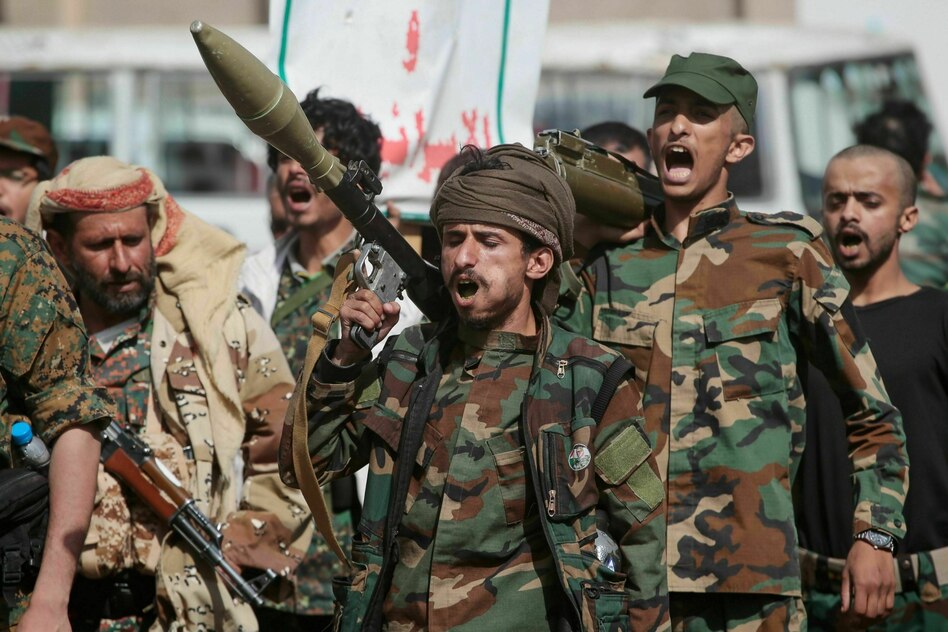
A video is currently going viral on social media: It shows a man in a dry desert landscape in front of a rudimentary stone hut. He tears a larger-than-life portrait from some kind of billboard; with a lot of strength and bare hands. It shows Abdulmalik al-Houthi. The organization that has been shaking up Yemen with violence and political influence since the early 2000s is known by his last name - the Houthis, official name Ansar Allah, "Help of God".
The video showing the tearing down of his portrait was reportedly shot these days in al-Jawf governorate, on the border with Saudi Arabia. Since 2020, the area has been under the control of the Houthis, who wrested it from Yemeni state forces in battle.
They are now marching back into al-Jawf. So far - according to their own statements - with some success: According to the Yemeni state army, they have regained the al-Yatmah area in the al-Jawf governorate. Elsewhere, the Houthis are gaining land and wresting it from the government and armed groups affiliated with it. The war in Yemen was largely frozen for years. Now it's back, in full swing. This has to do with the war in Iran and shifting balances of power throughout the region.
But first things first: The conflict in Yemen, which continues to this day, began in 2011. At that time, the wave of the Arab Spring rolled through the Middle East. In Tunisia and Egypt, for example, there were large protests that led to the fall of the respective regimes. This is also the case in Yemen. President and dictator Ali Abdullah Saleh was driven from office after 33 years. A transition process was announced and was expected to last four years. In 2012, his deputy Abd Rabbuh Mansour Hadi took over as interim president.
When the Arab Spring began in Yemen, the conflict with the Houthis was already blazing on a smaller scale. The organization was founded in the northwestern highlands of Yemen in the 1990s. That's where the al-Houthi family comes from - and that's where the country's Zaidi population lives. The Zaidis form a branch within Shiite Islam. The rest of the country is now predominantly Sunni. Initially, “Ansar Allah,” as the Houthis are officially called, was considered a Zaydi-Shiite renewal movement.
But the Houthis soon asserted claims to control over parts of Yemen that extend beyond their tribal area. And even the two holiest cities in Islam: Mecca and Medina in Saudi Arabia. Starting in the early 2000s, the group built up an armed wing - and then fought battles with Saleh's government for years. A connection to Iran already existed: leading members of the Houthis took part in military training in the Islamic Republic as early as the 1990s.
The fall of Saleh marked the beginning of the rise of the Houthis in Yemen. At that time, the military split up; some parts remained loyal to Saleh, others loyal to the interim president Hadi. The state armed forces were therefore enormously weakened; Armed groups, such as Al-Qaeda in Yemen, seized the opportunity. Likewise the Houthis, who brought more and more areas under their control.
In 2014 the tide finally turned. Saleh, who had fought against the Houthis for years, allied himself with the Houthis. Military units that were still loyal to him now fought on their side. The army collapsed and shortly afterwards the Houthis captured the capital Sanaa almost unhindered. Interim President Hadi fled. And the Houthis took over other areas, such as the important port city of Hudeida on the southern coast. It built parallel structures, including a political cabinet, and became a state within a state.
From March 2015, a coalition led by Saudi Arabia intervened in the conflict, with air strikes against Houthi positions and a blockade of Yemen. Countries such as Egypt, Jordan and Qatar were also involved. The United Arab Emirates also played a leading role. In addition to its air campaign, the coalition built a force of loyal officers.
The United Arab Emirates also supported the so-called “Giants Brigades” militia, which quickly became the strongest anti-Houthi ground force. Fighters from the south of Yemen in particular gathered there - some with separatist beliefs.
For years, Yemen was divided into two states, the Arab Republic of Yemen in the north and the People's Democratic Republic of Yemen in the south - and some, especially in the south, still want the division back to this day. This is also why the anti-Houthi forces never developed into a truly united front. Later, the desire for separation was formalized and the so-called Southern Transitional Council (STC) was founded in the south of the country. It was supported by the United Arab Emirates, to the displeasure of Saudi Arabia.
But the situation also remained complicated on the Houthis' side: in 2017, Saleh's alliance with the Houthis collapsed and the ex-dictator was killed in Sanaa. In 2018, the tide in Yemen could have turned against the Houthis. The Giants Brigades marched toward the coastal city of Hodeidah, which has been held by the Houthis since 2014. The coalition supported the advance, as did the government. And then the international community made what many Yemen analysts considered a fatal mistake.
Led by Britain, it put Saudi Arabia, the Emirates and the Yemeni government under massive pressure to end their campaign against the Houthis in Hohdaidah. The United Nations finally brokered the Stockholm Agreement, which temporarily ended the conflict over Hodeidah in 2018 - in favor of the Houthis. From 2022, a UN-mediated general ceasefire was in effect.
Analyst Baraa Shiban later wrote: As a result of the Stockholm Agreement, the Houthis were able to consolidate their position along the west coast and continue to receive weapons from Iran. In the past, these were often delivered by ship. The Houthis would also have benefited financially from continuing to hold the port of Hodeidah. This “did not cause them to change their militant course,” he noted.
Fighting is now taking place again on this very west coast. This round of escalation began in mid-July. At that time, the government used an airstrike on the runway to prevent an Iranian plane with a Houthi delegation and, according to reports, weapons on board from landing in Sanaa. The Houthis reacted promptly and fighting between the two camps began. And while government forces are currently making progress in the north of the country on the border with Saudi Arabia, the opposite is happening on the coast.
The west coast is probably the more geopolitically relevant front. In the very south, only a narrow strip of water separates Yemen from Djibouti and Eritrea on the other side. This approximately 30 kilometer wide strait is called Bab el-Mandeb. It is the gateway between the Red Sea and the Gulf of Aden, which ultimately flows into the Indian Ocean.
It has gained strategic importance in the war between the USA and Iran. The Strait of Hormuz, a strait between Oman, the Emirates and Iran, remains at least partially blocked. And thus the export of oil, gas and fertilizer from the Arab Gulf states fell significantly. An alternative route for exports from Saudi Arabia is the port of Janbu on the Red Sea; from there the route leads to the world market through Bab el-Mandeb.
Since the attack on the Iranian plane in mid-July, the Houthis have been blocking Saudi Arabia-related ships from entering and leaving Bab al-Mandeb. To do this, they primarily use drones; Between the Houthis and the land in front of Bab el-Mandeb was territory previously controlled by the Giants Brigades.
But now it is reported that the Houthis have taken the city of Mokkah and are marching further south. According to analyst Mohammad al-Basha, on Thursday afternoon they captured the Al-Omari base, a strategically important military base and airfield about 30 kilometers north of Bab el-Mandeb. If you keep moving forward like this, you'll soon find yourself sitting right on the edge of the strait.
The Yemeni government recently announced that the decision had been made to wrest the capital Sanaa from the Houthis. Yemen will be liberated, military spokesman Majid al-Nuzaili recently wrote on On Tuesday, for example, more than 70 people, including women and children, were injured in the south of the kingdom.
So why, with all this determination, do the Houthis appear to have the upper hand again? This year there actually seems to have been a consolidation among the anti-Houthi forces: at the end of December last year, a conflict broke out between the Emirati-backed Southern Transitional Council (STC) and its affiliated groups, and the anti-separatist groups supported by Saudi Arabia. It ended with Abu Dhabi withdrawing from the Yemen conflict and the STC being dissolved. However, the Emirates continue to emphasize their solidarity with Saudi Arabia.
Groups such as the Giants Brigade were brought under the command of government forces. Saudi-funded and trained groups like Nation's Shield should take control.
But the friction between the separatist and pro-government troops remained. Analyst Mohammad al-Basha wrote on X on Thursday: Troops from the north had been detained by separatists. Voices from Yemen that reach the taz also say: The quality of the fighting units varies greatly and there can be no talk of a united army.
The Houthis continue to advance on the coast. Government troops in the north. Meanwhile, the civilian population is suffering. The Houthis have attacked several times in recent camps for internally displaced people, and at least three children have died. Since 2014, more than 150,00 people in Yemen have died in this war. Around 4.5 million are internally displaced. Almost half of the population is considered to be at risk of hunger - the trend is increasing, also due to the renewed fierce fighting.
Read the full story at the source →
Source: taz