
Germany · taz · · 1h
Bundeswehr deployment in Iraq: Soundless end to the second largest foreign deployment
Deutsch (original) · Auto-translated to English
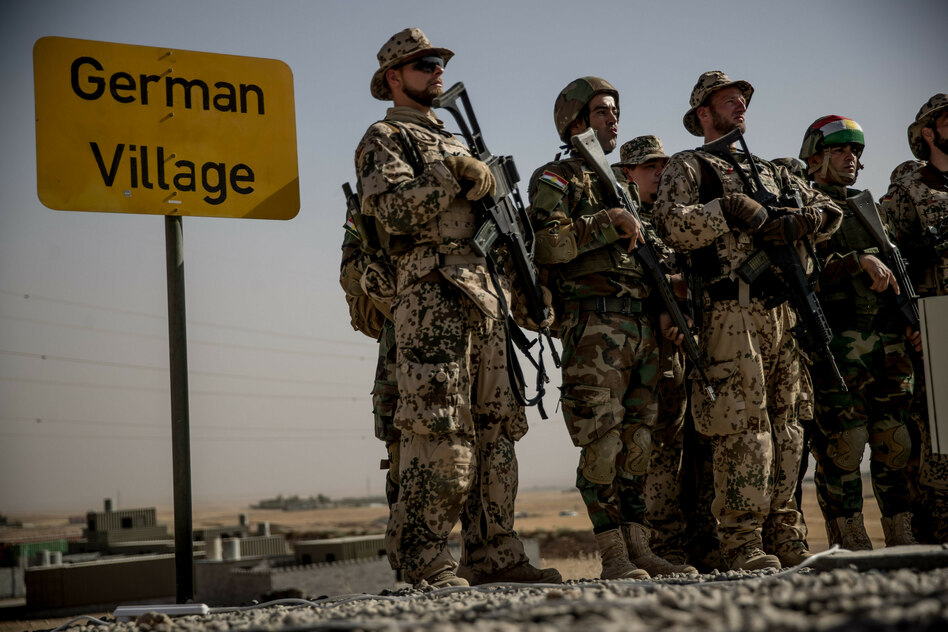
In the shadow of the US withdrawal from Iraq, the German armed forces have also ended their deployment in the country. On Thursday, the Defense Ministry announced that the last 28 soldiers had been flown out. “The Bundeswehr has fulfilled its mission there in the Kurdistan region,” said a spokesman on Wednesday. The withdrawal follows the Iraqi government's wish that all foreign troops leave the country, the Defense Ministry said.
The US also ended its mission in Iraq, which it had conducted intermittently since 2003, on Wednesday. Iraq celebrated the withdrawal of troops as “International Independence Day”. Prime Minister Ali al-Saidi spoke of a “new phase” for the country.
The Bundeswehr has been involved in the US-led anti-IS coalition in Iraq since 2015. Up to 500 soldiers from Germany supported the international alliance in the fight against the jihadist militia from the base in the Kurdish city of Erbil and from a logistics center in Jordan - most recently primarily with reconnaissance flights and aerial refueling of combat aircraft. In previous years, Germany also played a prominent role in training and arming the Kurdish Peshmerga fighters, who played a central role in the fight against IS.
It was only in January that the Bundestag extended the mission in Iraq for another year. With an upper limit of up to 500 soldiers, this was the second largest mandate for the Bundeswehr - slightly smaller than its participation in the NATO mission “Sea Guardian” in the Mediterranean.
But after the attack by Israel and the USA against Iran, the positions of Western troops in the region increasingly came under Tehran's sights. A French soldier was killed in a drone strike on a camp near Erbil. Since then, the international presence in the region has been massively reduced.
According to the government in Baghdad, October 1st marks the beginning of a new era in the country: Prime Minister al-Saidi once again demanded that weapons in Iraq should only be available under state control in the future. A corresponding plan with agreed deadlines for disarming the militias should be implemented by June 30, 2027 at the latest.
Actually, the powerful militias allied with Iran should be disarmed and integrated into the state security apparatus parallel to the US troop withdrawal. The Secretary General of Iraq's Kataib Hezbollah, Abu Hussein al-Hamidaui, called on all fighters on Wednesday evening to stop all military operations. Attacks on enemy aircraft that violate Iraqi airspace are excluded. He described the withdrawal of US troops as a victory for the “Islamic resistance movement”.
Kataib Hezbollah is linked to Iran and is considered one of the most powerful armed groups in the country. The militia had previously threatened new violence: it would overthrow the government of Prime Minister al-Saidi "by all means" if it acted against the "interests of the people," it said on Wednesday.
The horror scenario of new armed conflicts between Iraqi splinter groups and their masterminds, which range from Iran to Russia to Turkey and other NATO forces, remains in the air. With their brutal war against Iran, the USA and Israel have weakened their capacities in the region and also lost moral and military authority. Iran could try to take advantage of the power vacuum. The Revolutionary Guards puffed themselves up on Thursday and described the US withdrawal as a “historic victory”.
There are therefore concerns that smaller ethnic groups in multi-ethnic Iraq could be further disadvantaged after the withdrawal of international troops. “A complete withdrawal of international forces could be perceived as a signal, especially by religious minorities, that they will no longer enjoy international military protection in the future,” said the Federal Chairman of the Central Council of Ezidis in Germany, Irfan Ortaç, to the taz.
In August 2014, the Islamic State invaded the Sinjar region of northern Iraq and began a massacre of the Ezidis living there. “More than twelve years after the genocide, a significant part of the Ezidi population continues to live as internally displaced persons who cannot return to their home region,” said Ortaç. He also demands: “Security must not be permanently delegated to militias or other non-state armed groups.” The Iraqi state must enforce the state's monopoly on violence and ensure reliable security structures for the Ezidis as well.
Ortaç praises the Bundeswehr’s commitment on site. “It helped to convey a feeling of security, especially after the genocide against the Ezidis and during the fight against IS.” This was a prerequisite for humanitarian organizations to be able to carry out their work.
Kurdish military commander Sirwan Barzani expressed concern about the withdrawal of the US-led coalition. “We have no means to protect the airspace over Kurdistan,” he told AFP. However, the Peshmerga remained ready to combat any threats, he stressed. “The capabilities and experience” of the Kurdish armed forces have “significantly improved thanks to the training, support and armament provided by the coalition.”
The Peshmerga play a special role in the country as a kind of regional guard and are also partially integrated into the command structures of the Iraqi army. They are also recognized as the armed forces of the autonomous Kurdistan Region in northern Iraq. Disarmament of the units is therefore not up for discussion.
Kassem Taher Saleh, who sits in the Bundestag for the Greens and comes from the Kurdish town of Zaxo, warns of a power vacuum in the region in view of the international troop withdrawal. “IS could gain strength again, Iranian militias and regional powers like Turkey could expand their influence and, in the worst case, new fighting could break out,” he told the taz.
He considers it a “fatal mistake” that the Bundeswehr is withdrawing from Kurdistan. “We as Europeans must finally pursue an independent policy in the Middle East instead of following the USA, which is making the region increasingly unsafe under Donald Trump.”
The foreign policy spokesman for the SPD parliamentary group, Adis Ahmetović, stated that the military withdrawal should not be “a political withdrawal”. “Our responsibility to Iraq and the autonomous region of Kurdistan remains.” However, it is important to respect the Iraqi government's wish for an end to the international military presence.
The defense policy spokesman for the Left Party, Ulrich Thoden, described the withdrawal of the Bundeswehr from Iraq and Kurdistan as “overdue”. “The security situation is significantly more stable than in the rest of Iraq and a training mission cannot last forever,” he told the taz. “The federal government has a responsibility to support the economic development of the autonomous region much more than before with funds from the Ministry of Development.”
Read the full story at the source
Source: taz