
Germany · taz · · 2h
Federal government plans new tax: The plastic tax is coming, the plastic industry is going
Deutsch (original) · Auto-translated to English
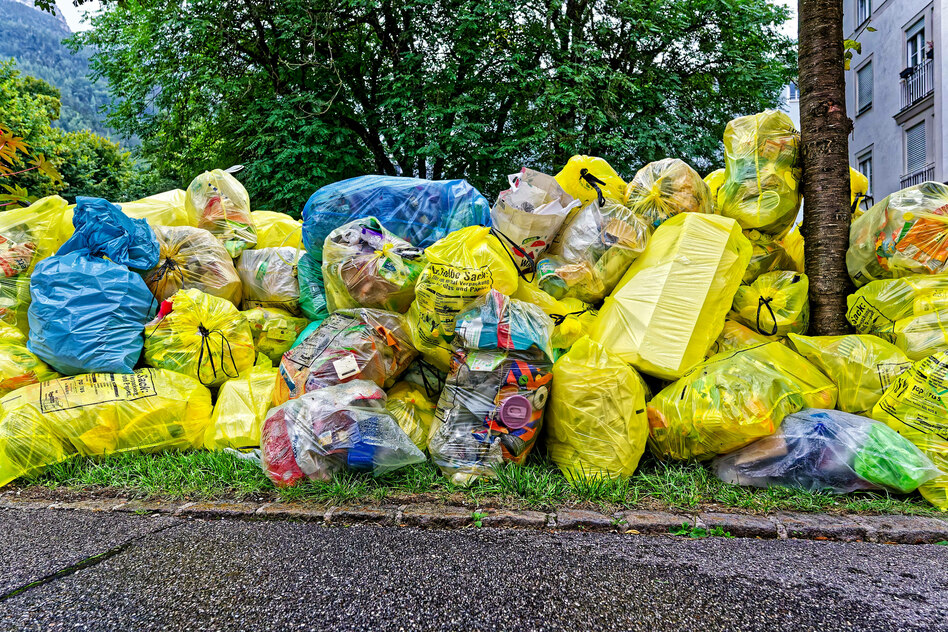
With a new tax on plastic packaging, the federal government wants to raise 670 million euros next year, and 1.5 billion euros annually from 2028. This emerges from the draft for the Plastic Packaging Tax Act, which is to become part of the federal government's budget law. The tax should be levied from mid-2027 and amount to 550 euros per ton of plastic. For a two-gram yoghurt cup with a cardboard coating that would be 0.11 cents per cup, for a margarine cup it would be 0.99 cents, and for a shrink-wrapped cucumber it would be 0.17 cents.
The draft from the Ministry of the Environment is expected to be approved by the Cabinet shortly. It is based on an EU requirement: Since 2021, member states have had to pay for non-recycled plastic packaging. Some countries pass the amount on to the manufacturers of plastic packaging; Germany pays around 1.4 billion euros annually from tax money. The traffic light government had already wanted to change this. Finance Minister Christian Lindner (FDP) never presented a draft law, but only announced it for 2026. There he is now.
The government assumes that companies will pass on the costs to end customers. Plastic films and composite packaging such as certain cardboard boxes with a plastic content of at least five percent should be recorded. The tax is intended to relieve the burden on the household, but also reduce waste.
In Germany, around three million tons of waste from plastic packaging are generated every year, according to a government paper on the draft: “If this amount were loaded onto a freight train, it would be as long as the route from Flensburg to Sicily.” While laws have reduced waste in the landscape, “generating enough demand for recycled plastic remains a challenge,” the paper said. One reason for this is that plastic, which is mostly made from petroleum, is still comparatively cheaper than European recyclates.
These should therefore be exempt from the new tax from 2028, and a regulation is being worked on. The Federal Government hopes that this will improve the competitiveness of recycled plastics in Germany enormously. Henning Wilts, circulation expert and member of the management of the Wuppertal Institute, does not share this hope. “The amounts are not high enough for that,” he says, “Plastic made from petroleum still often remains cheaper.” It would have been much more important to provide the recently revised packaging law with an ecological steering effect and to create additional demand for recyclates.
“If companies had to pay significantly higher fees for the disposal of packaging that is difficult or impossible to recycle, they would change course,” says Wilts. However, the legislature waived this. A plastic levy at EU or UN level as part of the plastics agreement would also have made sense. “This would have enabled recycling capacities to be built up in the Global South,” says Wilts. The German plastic levy in this form is only suitable for helping to finance the budget.
The fact that the levy on composite packaging starts with a plastic content of five percent could even be ecologically counterproductive: “This is how plastic-coated packaging is promoted,” says Wilts. “You can only burn them.”
Eight lobby associations from large industrial sectors - such as the Federal Association of the German Food Industry, the German Trade Association, but also the German Customs and Finance Union - had already tried to prevent the plastic tax with a letter to Chancellor Karin Warken (CDU) when the plans became known on Friday. They criticize the fact that the new tax is being decided as part of the budget in a rush procedure, without the usual parliamentary procedures and opportunities for public participation. They also see high bureaucratic burdens on customs and companies.
These are under extreme pressure in Europe. According to the Plastics Recyclers Europe association, around 300,000 tons of plastic recycling capacity across Europe will have been lost due to plant closures in 2024, more than twice as many as in the previous year. This development intensified in 2025, with the number of plant closures increasing by 50 percent. In total, Europe has lost almost a million tonnes of plastic recycling capacity since 2023, particularly in Germany.
This development follows the decline in plastic production in Europe. According to the Plastics Europe trade association, the continent's global market share fell from 22 percent in 2006 to 12 percent in 2024. Production has moved to Asia, predominantly to China. Less production of plastics also means lower demand for recyclates.
The recycling association bvse therefore calls for long-term, reliable sales markets and framework conditions that, above all, strengthen the competitiveness of recyclates compared to virgin materials. However, the EU is only planning a means of doing this, using quotas for recycled material, from 2030.
Read the full story at the source
Source: taz