
Germany taz
IPO of the AI company Anthropic: A lot of risks
AI company Anthropic's upcoming IPO could break records. And will the age of Big Tech finally become that of Big AI? more...
Deutsch (original) ·Auto-translated to English
The document that could herald the upheaval begins not with words, but with three images. You can see half of a petri dish, a fossil and an astronomical map. If the message doesn't immediately make sense to you, Anthropic explains directly below what this rather unusual entry into a stock market prospectus is supposed to symbolize: "We believe that AI is one of the most important technologies in the history of humanity." Bam! On the other hand, what else is an AI company that is about to have a historically large IPO supposed to write?
Over $1 trillion, up to $1.4 trillion, maybe even $1.75 trillion - the estimates of what Anthropic can expect as a starting valuation open up new dimensions. The first day of trading is expected to be November 19th. Anthropic, which is best known for its language models and AI assistants under the name Claude, plans to raise around $64 billion with the shares sold. This means that the forecasts are only slightly below what the space company SpaceX achieved when it went public in the summer.
But it is not just a new financial dimension that is at stake here. But also about a new dimension of market power. An idea of what consequences this could have was observed this summer. The US government ordered Anthropic to block its powerful models “Fable 5” and “Mythos 5” from foreign users and employees – for national security reasons. For Anthropic, which sees itself as a good AI company committed to the common good and wants to be seen that way, implementing this instruction would have seriously damaged its image. It therefore argued that it was not possible to distinguish between domestic and foreign users and quickly blocked access for everyone.
This text first appeared in wochentaz, our weekly newspaper from the left!
Every week, wochentaz is about the world as it is – and as it could be. A left-wing weekly newspaper with a voice, attitude and the special taz view of the world. New every Saturday at the kiosk and of course by subscription.
The episode was almost half a year ago. The excitement about what consequences it would have had if the models had been on the market for some time and companies and states had relied on being able to access them has died down somewhat. But Anthropic's upcoming IPO raises the question again. After Big Tech, is a Big AI emerging here - with all the negative consequences that such power brings with it?
"Anthropic always acts as if they are different from the others. That may be partly true, but essentially it is the continuation of the Big Tech principle," says Joris Kanowski, a consultant at the Center for Digital Rights and Democracy. With “different than the others” he alludes to the history of Anthropic. The company was founded in 2021 by former OpenAI employees. They wanted to present an entrepreneurial alternative. “Our mission statement is to responsibly develop and maintain advanced AI for the long-term benefit of humanity,” says the current non-profit report.
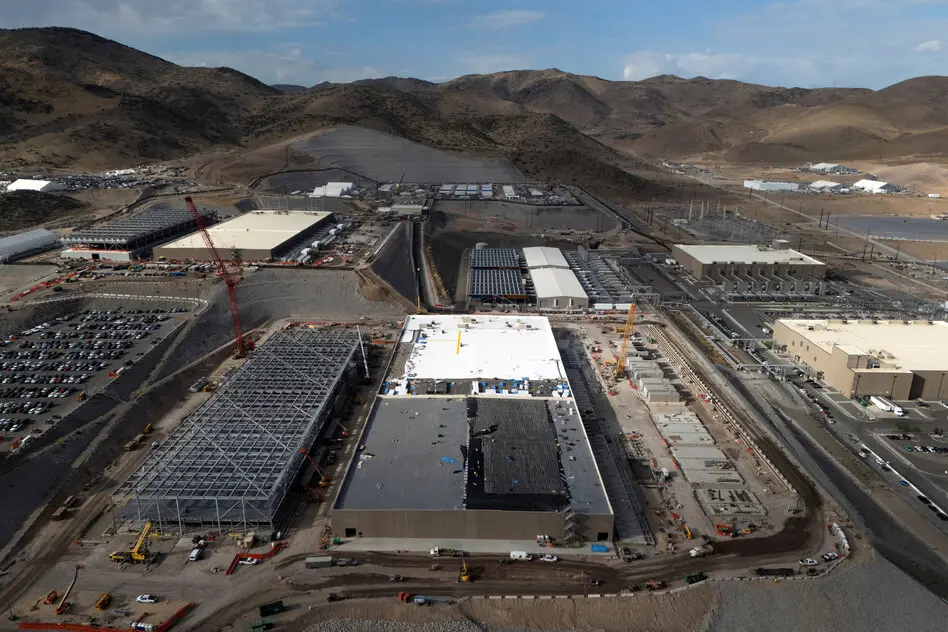
Sparks of this idea can be seen, for example, when the company opposes the US government's use of Anthropic's systems for mass surveillance and autonomous weapon systems. Nevertheless, Anthropic is intertwined with large tech companies such as Amazon, Nvidia and Google. And it is under pressure. According to its prospectus, it has already purchased computing power and infrastructure worth several hundred billion US dollars for the coming years. The money has to come in first.
“I think Anthropic is trying to do something similar to Google, whose ecosystem you can't get out of,” says Kanowski. “And with AI it gets even worse.” Because with it the dependencies can become even greater. If people use AI chatbots in everyday life to understand official letters and file tax returns, companies program their software with AI assistants, AI is in all smartphones and networked devices and doctors use it for documentation and diagnostics - then there is quickly a problem if this suddenly breaks down. For example, because the corresponding AI model is blocked for use abroad due to pressure from the US government.
The good news: This development is by no means inevitable. While the search engine market is maximally concentrated and Google holds around 90 percent, the market for AI models is still comparatively open. On the one hand, there are the large US providers such as Anthropic and OpenAI, which dominate with extremely powerful models. On the other hand, there are also Chinese companies such as Deepseek and Moonshot AI that are pursuing an alternative approach. Their models are partially public and can therefore be operated and used independently of the original provider, which enables price competition.
And then there are European providers such as the French Le Chat from Mistral or Apertus from Switzerland. The latter is an open source model that institutions and private individuals can not only operate themselves, but in which the training data is also open.
“We have to ensure that the market for AI models remains open,” says Joris Kanowski. It won't be a sure-fire success. After all, US providers have a great interest in concentration. The less competition, the more likely you are to make a profit. And the more likely there are lock-in effects. This means that users who have once placed their bet on the corresponding provider find it difficult to get out again. A problem that authorities and companies that work with Microsoft products are familiar with today.
The current political changes in the USA could now slow down the growth, which is currently designed for maximum potential. In the midterm elections, Democrats won majorities in numerous previously Republican-governed states. And they are more critical of the excesses of tech growth than the Republicans. As a result, the stock market prices of many tech companies fell in the days after the election, but have since increased again.
Political pressure to ensure more regulation comes from a protest movement against data centers that is forming in many states. “Politicians cannot close their eyes to this pressure,” says Kilian Vieth-Ditlmann from the NGO Algorithm Watch. A first step in regulation would be clear rules for the construction of data centers - for example regarding location, power supply and sustainability. He assumes that this would also curb the market dominance of tech companies when it comes to AI. Even if Vieth-Ditlmann, like Joris Kanowski, believes the model market is still somewhat open, given the economic importance of the companies, that is no longer the case.
According to analyses, tech investments, especially the construction of data centers, now make a significant contribution to economic growth in the USA. This dominance can become a risk if a bubble arises here. And there are some signs of this: the close interconnection of many corporations, for example. For example, Nvidia, the market-leading manufacturer of high-performance chips, is not only a supplier for Anthropic, but also an investor and customer of AI services. If one player in such a structure falters, it can affect the entire industry. And that's what he's doing right now. On Thursday, Nvidia boss Jensen Huang, who is accused of having an affair with a suspected spy from China, resigned from his post.
Even against the background of a possible bubble, Kilian Vieth-Ditlmann is critical of German plans to quickly build data centers: “There is a strong fomo in Europe right now.” A fear of missing out, of not being there when the AI boom creates economic growth, jobs and prosperity elsewhere.
If. After all, says Vieth-Ditlmann, being fast also involves risks; if, for example, excess capacity arises in data centers that cannot be refinanced: “We don’t have to repeat the mistakes of the USA.”
A financially closely interconnected industry, mutual dependencies, the risk of bubbles, immense investments, cyber attacks by AI agents, political imponderables and now a suspected espionage affair - a lot of risks. Anthropic also lists the dangers of the technology in general and the risks for the company in particular in its prospectus for almost a hundred pages. After the slight stock market turbulence as a result of the midterms, there was already speculation as to whether Anthropic would postpone its IPO. The argument against this: It could be that market conditions will no longer get any better. Perhaps the IPO also heralds the following upheaval: the beginning of the end of the great AI hype.