
World · taz · · 1h
Brics Summit in Delhi: A Brics Summit with Explanation(s)
Deutsch (original) · Auto-translated to English
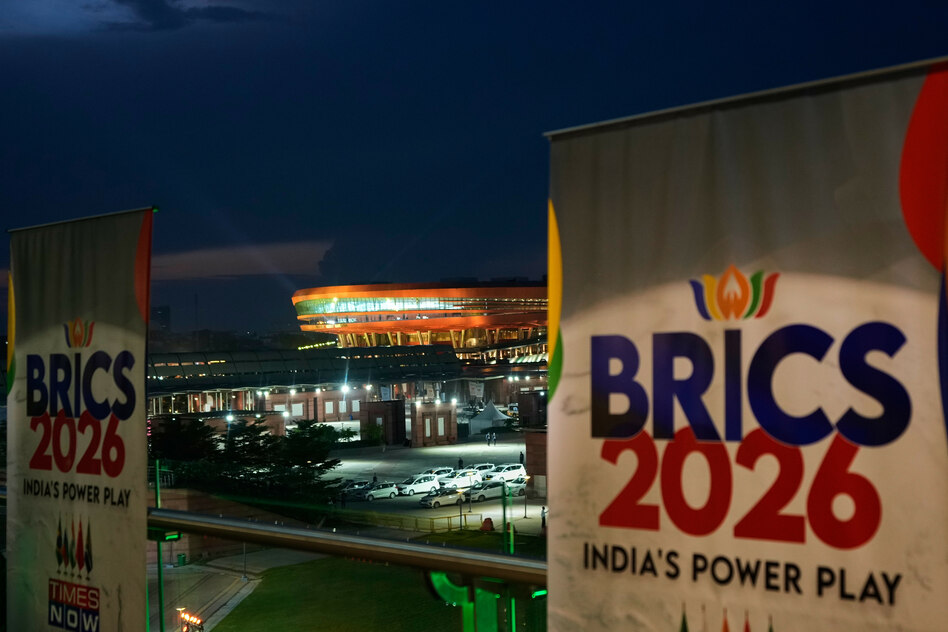
taz India's capital Delhi is shining in blue, yellow, orange, green and red this weekend. The Bharat Mandapam conference center is also wrapped in the BRICS colors, where the red carpet is rolled out for the heads of state and government of the leading emerging and developing countries as well as their partners and guests.
On Friday, Prime Minister Narendra Modi received Iranian President Massoud Peseschkian and Russian President Vladimir Putin for bilateral talks. The eagerly awaited meeting with China's head of state Xi Jinping followed on Saturday. Both agreed to further expand economic cooperation and exchange.
At the inauguration, Modi said Brics was now on the verge of “growing up”. He proposed a mechanism to follow up on decisions beyond the annual presidency, as well as a reform roadmap until the next summit, which will be held in China. The Brics are “not directed against anyone,” emphasized the 75-year-old. What is now crucial is to translate the group's consensus more clearly into concrete results.
One of the group's central demands for years has been a reform of international institutions. The Global South is at the forefront of crises, but last when it comes to decisions, Modi said. The “pyramid of privileges” he describes must become a “platform of partnership”.
The 45-page “New Delhi Declaration” published on Saturday afternoon shows how far the consensus extends. In it, the Brics members are “deeply concerned about the escalation of tensions in the Middle East/West Asia.”
At the same time, they demand more say for emerging and developing countries and an international order in which power is distributed among more states. Specifically, they are pushing for reforms of the UN Security Council and international financial institutions. India and Brazil, for example, have been striving for permanent seats on the Security Council for years.
The Brics want to stand for leadership when it comes to future technologies. Xi called on BRICS countries to lead innovation-driven development and promote cooperation in the development and use of AI. At the same time, he opposed protectionism. In less than two weeks, Xi is scheduled to travel to Washington, where he is scheduled to meet customs advocate Donald Trump.
On the other hand, the Brics are taking a clear stance on the war in Gaza. They affirm the two-state solution and demand a “sovereign” and “viable” state of Palestine. In the case of the Iran war, however, the actors remain unnamed in the declaration. The group includes states with different interests in the conflict: Iran, Saudi Arabia and the United Arab Emirates. Representatives from Iran and the Emirates nevertheless met for talks on the sidelines of the summit.
The relationship between India and China remains a benchmark for cooperation within Brics. Both states have become closer politically over the past two years, but economic mistrust is still deep. In 2022, Indian financial investigators seized millions of dollars in assets from Chinese smartphone manufacturer Xiaomi. Shortly before the summit, Beijing called for a “fair, just, transparent and non-discriminatory” business environment after an Indian authority recommended new investigations against Xiaomi.
The Brics can agree on the claim to shift the balance in the international order. It remains more difficult to reach a consensus about what this should look like. The summit ends on Sunday.
Read the full story at the source →
Source: taz