
Germany · taz · · 2h
Brenner Base Tunnel: Bavaria is fighting for the railway line through the Alps
Deutsch (original) · Auto-translated to English
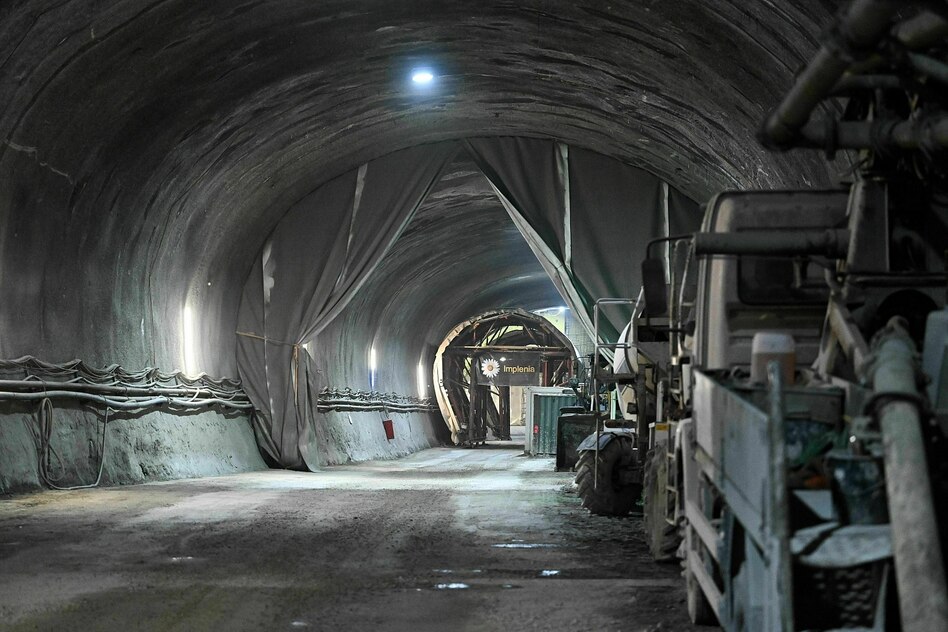
One thing is very important to Gerhard Müller: “I’m not against the Brenner Base Tunnel, we all want to put a lot more traffic on the rails.” So that the Alps are no longer overrun and suffocated by avalanches of cars and trucks on the Brenner as before. The civil engineer and retired railway planning chief calls the project a “milestone”.
Large pipes are currently being drilled under the mountains, from Innsbruck in the north to Franzensfeste in South Tyrol. The four tracks will be 55 kilometers long and passenger and freight trains will run on them. The goal: a fast connection from north to south, to Italy. The route is scheduled to be in operation from 2032 and the total costs are currently estimated at 10.5 billion euros.
What is increasingly confusing, however, is what the German contribution actually looks like. A new four-track line is planned from Innsbruck to Munich, which is referred to as the inlet and outlet. The project was formally agreed between Italy, Austria and Germany in 1994. However, nothing has happened on the German side so far, not a gram of earth has been moved yet.
The federal government, as the client, and its various transport ministers have hardly addressed the project. The railway plans, makes designs, but nothing gets going. As things currently stand, the route could be completed in 2043, eleven years after the actual Brenner Tunnel. “But nobody believes that anymore,” says Müller. It will take decades longer, “and then there might not be any money left for it.” The estimated costs for the route from Innsbruck via Rosenheim to Munich are currently 16.2 billion euros.
And so, during a conversation at home in Rosenheim, Müller explains what he and others in the region imagine as an alternative. He looks closely and goes into detail. According to Deutsche Bahn's assumptions, 400 trains should ideally run on the route every day in the future; currently there are 150. "Under certain conditions, these 400 trains can also be allowed to pass on the existing double-track routes," says the 78-year-old.
The prerequisite is their “training”. This means, for example, additional passing tracks or better noise protection for residents. Now it gets complicated: Not all trains want to go to Munich and from there. Some are heading towards Salzburg. If the previously non-electrified single-lane route from Rosenheim to Mühldorf were to be expanded and renewed, this traffic could be diverted there to the east. “That would cost 400 or 500 million euros,” estimates Müller.
The civil engineer admits to one single disadvantage. Passenger trains could not run at the planned maximum speed of 230 kilometers per hour on the old routes, but only at around 160. “That would be a loss of time of at most 15 minutes,” he says. Freight trains don't go that fast anyway.
Müller advises the resistant initiatives, especially from the Inn Valley, such as the “Inntal Citizens’ Forum”. For a long time, these were seen as associations of those affected who only opposed the large new building out of their own interest: because farmers would lose their land and would have to be compensated because local tourism would come under the radar. Müller considers these objections to be quite relevant. In a construction project, however, the advantages would have to outweigh the disadvantages, and he doesn't see that as the case here.
In Bavaria, state parliament member Florian von Brunn (SPD) has taken on the issue. He was a supporter of new construction, but is now rather skeptical. Von Brunn says: “First you have to do what is quicker and what is needed anyway.” By this he means modernization, noise protection and the expansion of the Mühldorf route. You can then decide “whether an additional new line is really necessary”.
Read the full story at the source
Source: taz