
World taz
Brazil after the runoff election: Lula's victory crashes Brazil's stock market
The Brazilian financial markets are reacting almost panicked to the election success of the left-wing president. That's not new. What can we expect now? more...
Deutsch (original) ·Auto-translated to English
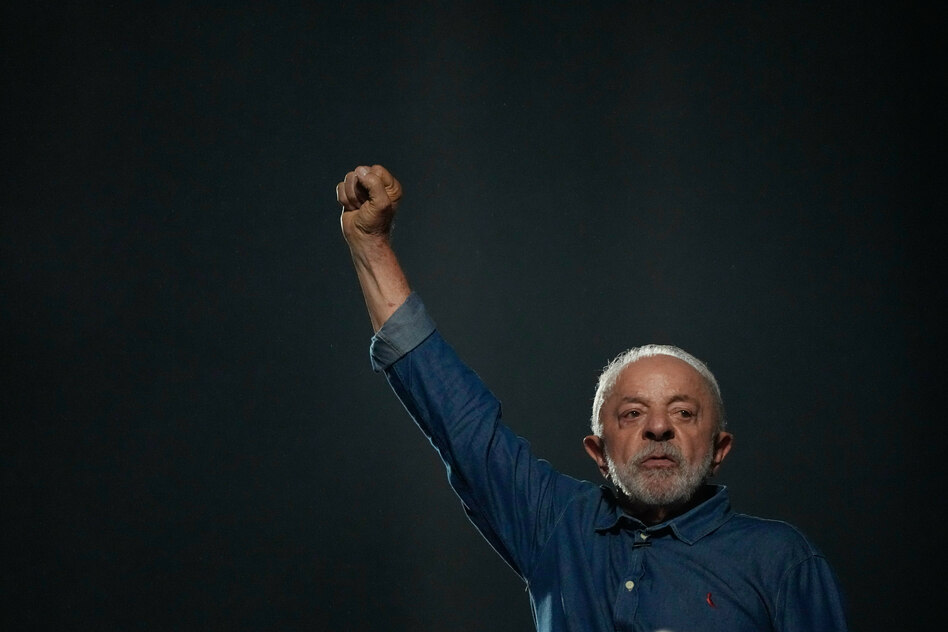
While some Brazilians are still firing the last shots after President Lula's surprising victory, the Bovespa leading index fell by up to around 17 percent on Monday. The São Paulo Stock Exchange, BR3, responded with an automatic trading halt for the first time since the Covid pandemic. The country risk rose as did the values for future interest rates, the dollar exchange rate reached a daily high of 5.60 and retailers such as Magalu and Vamos temporarily lost more than half of their value, Vamos up to almost 57 percent. Some commentators call the crash “historic,” others see it as a shock reaction.
“The biggest stock market crashes have always happened in situations of increased uncertainty, when international events provoke strong market movements to avoid risk,” explains Einar Rivero, partner of the financial consultancy Elos Ayta, in an interview with the financial platform Neofeed.
After Flávio Biolsonaro's victory in the first round of voting, the share prices of the oil company Petrobras, among others, rose because lower environmental regulations for oil production projects would have been expected under the ultra-right. The autocrat had promised to reduce the budget deficit, privatization and lower taxes, but had not presented any concrete plans for implementation.
Lula's surprise success, from which more environmental protection and government intervention can be expected, was frustrating for players in the financial market. In view of the announced billions in social spending, there is also growing fear that the president could lose control of the national debt. According to figures from the central bank, it accounted for 81.9 percent of gross domestic product in June 2026.
Monday's near-panic market reaction is reminiscent of 2002, when labor leader Lula became president of Brazil for the first time. At that time, no one believed that the left had a solid economic policy; there was talk of national bankruptcy and radical reforms. When his victory was confirmed, the Bovespa index value fell by 4.4 percent, and the euro doubled in the election year to a record value of almost 4 reais at the end of October.
Lula initially commented ironically: “I have never seen such a sensitive market,” then days later wrote an open letter to Brazil's elite in which he promised fiscal discipline and a moderate financial policy. The stock market then recovered quickly and the price of the real rose by almost 100 percent under Lula.
The next second biggest crash came after the election of Dilma Rousseff in 2014. Even after Jair Bolsonaro's victory in 2018, which was expected to be economically liberal, prices fell in the short term.
Now, as in 2002, investors are doubting Lula's fiscal discipline. High national debt, expensive election promises and high interest rates are seen as risk factors, but the conservative deputy Geraldo Alckmin is also seen as a positive sign. Whether and how quickly investors' confidence in Lula, who is no longer so left-wing, will grow again will depend largely on what his budget plan looks like and who he appoints as finance minister.
Incidentally, investors can also be wrong: During Jair Bolsonaro's term in office, the announced economic miracle did not materialize, and even before the Covid pandemic, GDP grew only minimally. And Lula's first and second terms in office did not lead to the feared national bankruptcy, but rather to one of the country's most stable and successful phases. The Petrobras chairwoman believes that the fall in the price of her company's shares is at least a result of speculation. It is not based on the foundation of the group. Magda Chambriard recommends: “Now is the time to buy stocks.”