
World · taz · · 2h
Zimbabwe's mineral resources: The lithium beneath their land
Deutsch (original) · Auto-translated to English
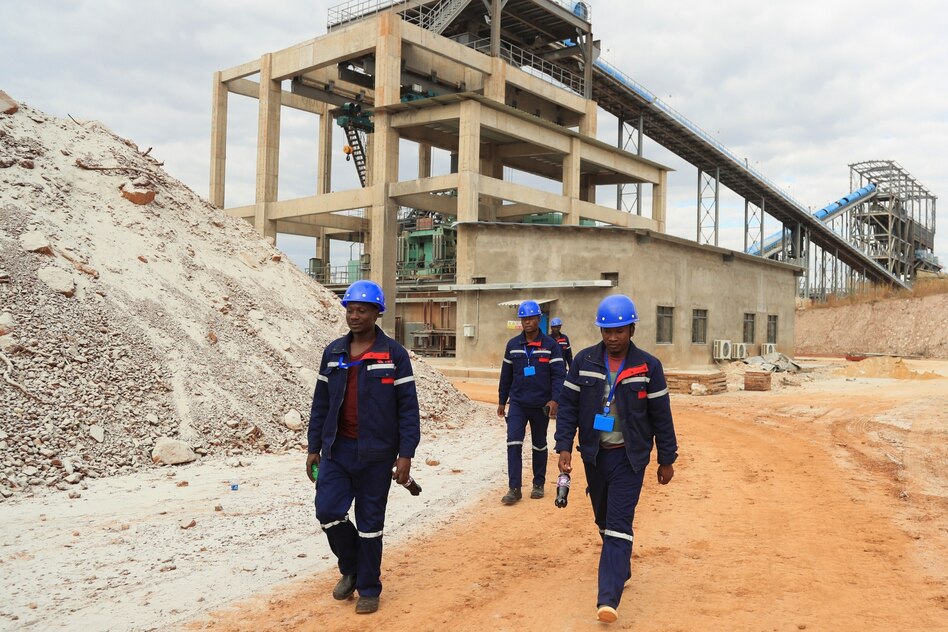
After the school bell rang, John Tauya made his way to his home village of Mukwasi in Manicaland Province, in the far east of Zimbabwe. He was looking forward to warm corn cobs and pumpkin leaves with maize porridge, called sadza in the local Shona language. Afterwards he wanted to rest in his hut. But when the student reached his family's property, all he saw was a pile of rubble.
There was nothing left where the house had stood. “It felt like a part of me had been ripped away,” he says later. Strangers told him he was on “private property.” John left without knowing where to find his parents, from whom he hoped for an explanation.
In Zimbabwe, the government is increasingly issuing so-called Exclusive Prospecting Orders (EPOs). They give mining companies or individuals the exclusive right to explore for specific raw materials in a defined, often vast, area. The abbreviation EPO sounds harmless, but for the affected village communities the effect can be similar to that of an atomic bomb. In a very short space of time, hopes, homes and livelihoods can be wiped out.
Colleagues from 16 African countries are taking part in the 5th Africa workshop of the taz panter foundation. This also creates a 64-page, elaborately designed magazine. It can be ordered by email to stiftung@taz.de with the subject “Africa Magazine” and your name and postal address. Thank you!
The magazine's texts also appear here on taz.de.
Would you like to support the taz Panter Foundation:
• or via the foundation’s account details:
China's green transition has brought numerous Chinese mining companies and investors to Zimbabwe. The African country has large reserves of raw materials, but at the same time state structures are weak and corruption is widespread. With EPOs in hand, Chinese companies are looking for metals, minerals and other raw materials such as lithium. If they find what they are looking for, they can build mines. Even where people have lived and farmed for generations.
This is exactly what happened at the Sabi Star mine, a multi-million dollar lithium project in Manicaland. For the mine, 41 families from Mukawasi Village were evicted from their ancestral lands, without prior warning or public notice. One of them was the family of John Tauya. He was about to complete his first school leaving certificate and then wanted to go to secondary school. But after the Chinese company behind the mine, Max Mind Investments, evicted his family in 2022, his future was uncertain.
"I had been preparing for the final exams and hoping to do the Advanced Level afterwards. But all my effort was in vain because I had to drop out of school," said John.
The 41 displaced families initially slept on a wasteland next to the local councilor's house in the neighboring town of Murambinda. "I was happy with what little we had. But now I can't be that anymore," says John, and during a visit he shows the reporter the miserable conditions under which the families now live.
In 2025, Zimbabwe accounted for around 10 percent of global lithium production. In February 2026, the government in Harare banned the export of lithium concentrate. The government wanted to keep the raw material in the country in order to benefit from further processing. As a result, there was a sharp increase in lithium prices and share prices on the Guangzhou Stock Exchange in China. At the same time, there was growing concern that the global supply of the raw material that is important for batteries could become scarcer.
On the Guangzhou Futures Exchange, the price initially jumped by 6 percent to 177,000 yuan per ton and then further to almost 210,000 yuan (around 27,000 euros) by May. But so far the export ban seems to exist primarily on paper. EPOs continue to be awarded and Chinese companies are expanding their facilities. Trucks with unprocessed lithium are still observed on the way to the border - the raw material is then supposed to reach China via neighboring countries.
Support the taz panter foundation and its international projects with a donation. Learn more
Max Mind Investments is a subsidiary of the Chinese group Shenzhen Chengxin Lithium Group. The company initially promised the villagers that it would build them houses with 5 rooms after the resettlement. In fact, they were relocated to small residential plots of around 300 square meters. They lost 5 hectares of agricultural land. Their sources of income and livelihoods have been destroyed: gardens, wells and boreholes as well as chickens, goats and cows.
John's family received compensation of $1,000 per child and $1,500 per adult. Families received an additional $20 for each tree lost. Damaged livestock stables were not compensated at all, nor was the exhumation of their ancestors' graves.
The money soon ran out. The higher cost of living in the city drained the family's savings and eventually forced John to drop out of school. Many of the villagers were forced to sell their remaining livestock. This further exacerbated their economic hardship.
Emerson Njanjamangezi, once a well-known journalist in the country and now spokesman for the Sabi Star mine, left questions about this unanswered.
The displaced residents contacted Parliament through the NGO Buhera Residents Network Trust. They complained that lithium mining affected their communities in key areas of life - water supplies, health, access to land and the exercise of economic activities. They presented maps, laboratory data, photographs and statements from residents.
Panas Muteera from Mukwasi Village pointed out the enormous dust pollution at a hearing. “Sometimes around 100 trucks drive on the road every day,” he said. The houses are covered with dust. "Children and the elderly wake up coughing and with headaches. Most schools are right on the street." Added to this are the regular explosions. They caused cracks in the houses and made many buildings unstable. At the same time, water shortages are becoming more severe, especially during the dry season.
"Our wells are about 40 meters deep, the mine's shafts go down more than 200 meters. In the dry season, our boreholes dry up as the water flows into the mine," said Muteera.
The former mining minister Polite Kambumura referred to an agreement with the mining company to fill at least 80 percent of the jobs with locals. “But they don’t stick to that,” said Kambumura.
The delegation that heard the residents' petition did not address the complaints but praised the mine's corporate social responsibility measures, such as the establishment of a clinic, wells and housing in Murambinda. Many Zimbabweans are becoming increasingly concerned that Chinese investors are being given preferential treatment over the local population.
Read the full story at the source
Source: taz