
Germany · taz · · 1h
“Bitter balance sheet” for marine mammals: Whale sanctuary in the South Atlantic fails again due to blockade
Deutsch (original) · Auto-translated to English
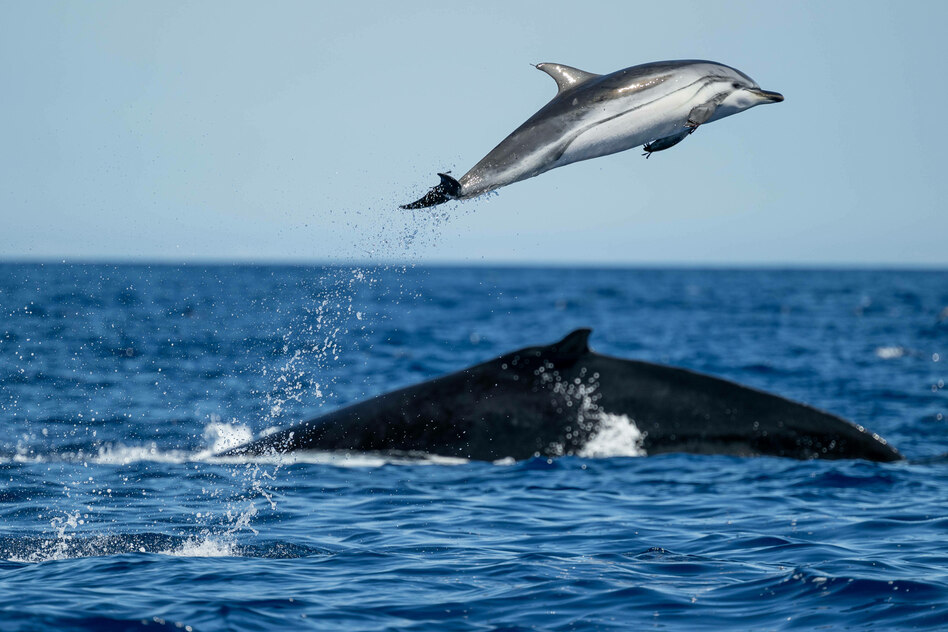
dpa | The establishment of a new whale sanctuary in the South Atlantic failed again at the International Whaling Commission (IWC) conference in Hobart, Australia. The proposal put forward by Argentina, Brazil and Uruguay at the end of the 1990s fell short of the required three-quarters majority by four votes, as participants reported. It would have been the third protected area for whales in the world, after one in Antarctica and one in the Indian Ocean.
Germany voted for the protected area. Important other supporters such as Finland and Luxembourg were not on site on the island of Tasmania, while the opponents maintained their blockade, said the environmental organization Greenpeace.
“The planned protected area in the South Atlantic – more than twice the size of the USA – would have taken marine protection an important step forward and provided the momentum for further protective measures,” said Franziska Saalmann, marine biologist at Greenpeace, who accompanied the negotiations on site. “This conference could have been a historic success on the 40th anniversary of the whaling moratorium,” she emphasized.
But even in the 80th year of the IWC's existence, the global protection of whales is being slowed down by the same countries - including Norway, but also the Ivory Coast and several Caribbean countries.
After leaving the IWC in 2019, the whaling nation of Japan, according to environmental organizations, forged an alliance of several African and Caribbean states that now represents Tokyo's interests in the commission.
“It is outrageous that whaling nations and their supporters continue to block this proposal in a region where they do not even hunt whales themselves,” said Matt Collis, an expert at the International Fund for Animal Welfare (IFAW). For more than two decades, a minority has been opposing the will of the majority of the neighboring states.
Around 300 delegates from more than 60 member states had discussed the protection and use of whales since Monday. The commission, which includes a total of 89 countries, was founded in 1946 - originally to regulate the heavily industrialized whaling industry and to preserve stocks. Despite the global moratorium on commercial whaling that came into force in 1985/86, Norway, Iceland and Japan have continued to pursue commercial hunting.
Norway emphasized again that whales must fundamentally be usable. The Icelandic government, however, recently announced that it would present a bill next spring that could permanently end commercial whaling in Icelandic waters.
On Wednesday, Switzerland had already withdrawn a resolution it had introduced to protect dolphins and small whales - even before the working group that had already been set up could negotiate changes to the text.
“Switzerland’s behavior is absolutely incomprehensible and a serious blow to species protection: the resolution would have easily achieved the required majority,” said marine protection expert Mona Schweizer from the animal protection organization Pro Wildlife. The reasons for the withdrawal remained unclear.
Greenpeace spoke of a “completely incomprehensible step”. Over 100,000 dolphins and small whales are killed every year through targeted hunting - because the moratorium on commercial whaling only applies to large whales. Nothing will change in that regard. “This is a bitter balance for an anniversary year,” emphasized Pro Wildlife.
Read the full story at the source
Source: taz