
World · taz · · 59m
Bonding behavior: Smooching is king
Deutsch (original) · Auto-translated to English
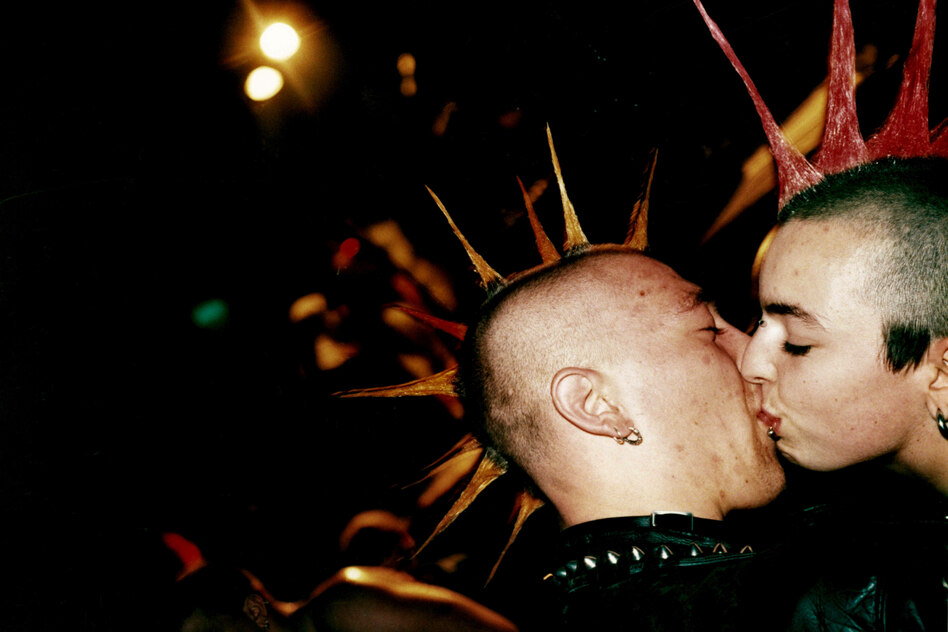
Love always goes hand in hand with vulnerability. This applies not only to species with couples therapists, but actually to everyone who gets closer. Anyone who exchanges affection also shares viruses, body fluids and the risk of someone biting.
Still, creatures around the world risk affection that goes far beyond the act of reproduction. A new study wants to find out why and looked at kissing.
This text first appeared in wochentaz, our weekly newspaper from the left!
Every week, wochentaz is about the world as it is – and as it could be. A left-wing weekly newspaper with a voice, attitude and the special taz view of the world. New every Saturday at the kiosk and of course by subscription.
To do this, we first have to answer what a kiss actually is. Scientists classify it very romantically as non-hostile mouth-to-mouth contact within the species, in which lips and mouths move but no food is exchanged.
In their study, the researchers first show kissing macaques, wolves, polar bears and prairie dogs and then focus on our evolutionary branch. What can be found in scientific literature about kissing? And what do species that kiss each other have in common? Gorillas smooch quite rarely, humans and chimpanzees frequently, and bonobos smooch remarkably sexually.
What otherwise unites all of these species is a diverse diet, parental pre-chewing (“kiss-feeding”) and a relationship system in which females do not necessarily commit to one male. Systems in which it is worthwhile for men to invest in a good relationship in addition to sex in order not to get lost in the competition.
The fact that species that are particularly closely related to each other also share a penchant for kissing (or not) also leads the researchers to suspect a genetic origin. They place this in the common ancestor of the great apes, sometime around 16.9 to 20.5 million years ago.
From this period it can also be concluded that Neanderthals probably gave each other kisses.
“We are so focused on penises!” says Mathilde Bridle, the study’s lead author. And emphasizes the importance of researching other sexual behaviors as well. Simply because the scientific idea of biology and relationships also has an impact on society.
You are reading a text from our future department. If you're interested in more positive perspectives, subscribe to TEAM FUTURE, the constructive newsletter on climate, knowledge, utopias. Every Thursday you will receive an email from us with strong thoughts for you and the planet.
🐾 Sign up now for the TEAM FUTURE newsletter – free of charge
Whether in the form of advice books, comedy sets or podcasts in which men assure each other that they are alphas: when sex is reduced to an act of reproduction, it influences how seriously we take other needs for closeness or forms of relationships that do not require penetration at all. On top of that, it contributes to a worldview in which men's reproductive success is actually complete with ejaculation. The current study shows that the bar has been set this much higher for at least 16 million years.
Read the full story at the source
Source: taz