
Germany · taz · · 3h
Balance sheet of the German Basketball World Cup: Detached from the base
Deutsch (original) · Auto-translated to English
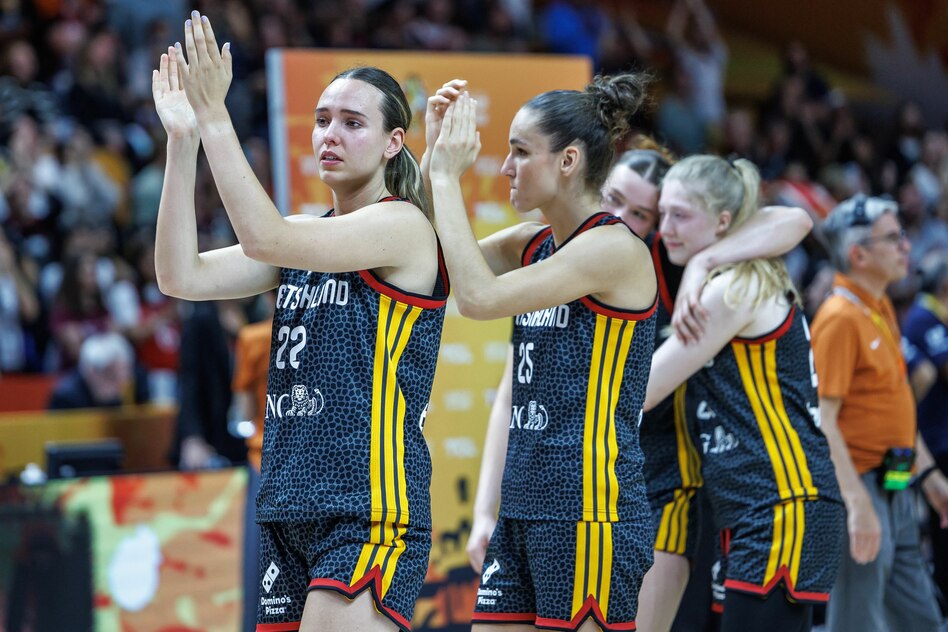
There was an atmosphere at this World Cup that made you dream. Even on Saturday after the clear semi-final defeat against France (64:86), the 12,000 spectators were torn from their seats seconds before the end. They said goodbye to the German team with a standing ovation in the sold-out arena at Berlin's Ostbahnhof. And it was no different on Sunday, when the German basketball players clearly missed out on the bronze medal against Spain by 58:81. Grandstand guest Friedrich Merz, the currently very shaken Chancellor, said that he would like this atmosphere for the entire country.
However, the wave of euphoria was built up through extraordinary successes. As hosts, the DBB team only took part in a World Cup for the second time and confirmed the rapid positive development of the last few years by reaching the semi-finals for the first time. The developmental steps within the tournament and the wave of enthusiasm were meant to lead to the medal, and so the tears and frustration of the German basketball players after the game contrasted with the historically unique result and the positive mood of the audience.
Bringing all this together wasn't easy for the protagonists afterwards. But the experiences of the past ten days helped to overcome the first big disappointment. Over 230,000 people attended this tournament in Berlin and brought a completely new dimension of enthusiasm to German women's basketball. When asked about this, Marie Gülich also started dreaming a little: "It was so good to have these people in the hall. I hope that this energy simply spreads to the outside world. Above all, young girls are motivated to get into basketball and hopefully also into competitive sports."
However, how this can be achieved in view of a domestic first league that hardly generates any attention or spectators, in view of popular sports clubs that would currently not be able to cope with a rush of interested parties, is the big price question.
National coach Olaf Lange didn't want to be dazzled by the dream scenery at this World Cup and the celebrated German successes on Sunday, even a few minutes after the final siren. When asked about possible positive effects on the Bundesliga, the assistant coach, who works in the North American WNBA, stated: "I was last in the league from 1995 to 2002/2003. Back then we had better structures in the top clubs than today. It's now 2026. That says it all." The medical care for the players is catastrophic and the BBL is far behind. "That's why I have to make sure that our top players go abroad. And as long as nothing happens in the league, it's very difficult to maintain the success we're currently enjoying."
With just a few sentences, Olaf Lange had ripped everyone out of their dreams, and perhaps that was exactly his intention. He has to further develop the national team and the young talent that is available. The successes of the last few years, that was his clear message, are not the fruits of long-term, broad-based work in German women's basketball.
They came about independently of the grassroots thanks to a random accumulation of highly gifted players such as Leonie Fiebich, Nyara and Satou Sabally or the still young Frieda Bühner, all of whom have contracts in the WNBA.
Only three Bundesliga players were nominated for the German World Cup squad. Alexandra Wilke, who plays for the village club Rutronik Stars Keltern, also had difficulty classifying the possible effects of this successful World Cup on German basketball on Sunday. On the one hand, she expressed her hope that the team could have created role models for more young talent and perhaps more attention for the league, but on the other hand, with regard to its need for change, she explained: "I don't even know where to start." She mentioned the lack of financial strength for years and the resulting too small league (ten clubs) as well as the lack of attractiveness of a competition that has no relegations.
The disillusioned national coach Olaf Lange is preparing for further spaceship work with the national team away from the base. However, he still sees further growth potential to bring German basketball women even closer to the top in the world. He wants to convert the frustration over the significant defeats against France and Spain into positive energy. It was important, he explained, to “cultivate a little” the pain that the players would feel. It could be a kind of fuel to get better.
Read the full story at the source
Source: taz