Politics · taz · 7h
Berlin election on September 20th: The race for the Red City Hall
Deutsch (original) · Auto-translated to English
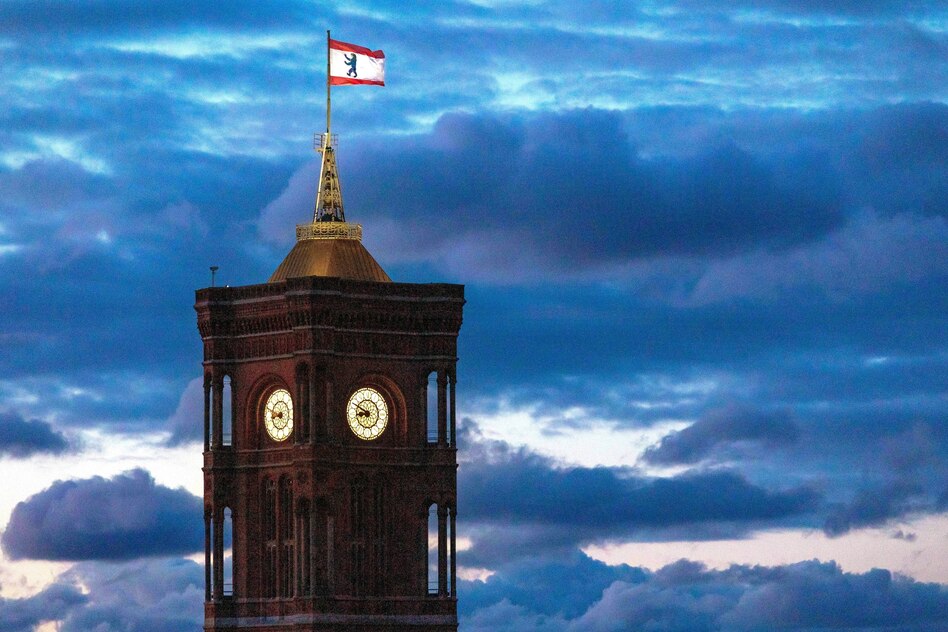
If the Berlin election was recently overshadowed by the decision in Saxony-Anhalt, it has been over since Sunday: the final spurt towards the future House of Representatives has begun - and the taz gives an overview of the possible scenarios after September 20th.
In the most recent two surveys, the CDU is again leading, ahead of the Left Party and the AfD. However, the distances are so close, at a maximum of 21 percent for the Union and 19 and 18 percent for the pursuers, that no reliable prediction can be derived from this - all the more so because of possible measurement inaccuracies of up to three percent.
However, it can be said with a certain degree of certainty that the SPD will have nothing to do with the election victory. Two out of three survey institutes recently saw it at only 12 percent or less - only one recently measured 15 percent for the SPD. But if a victory for the SPD becomes unlikely, there is a risk of further losses. Because then their swing voters could at least be tempted to give their vote more weight: to bring another party to the top or keep it there.
The worse the SPD performs, the fewer demands it can make in coalition talks. The Left Party and the Greens need them for a left-wing alliance. But it will be more difficult for the SPD to stick to its top candidate Steffen Krach's "no" vote to the expropriation of large real estate owners if these two parties in particular are successful and can see this as a voter mandate.
The central question with regard to expropriation is therefore: Will noise in the SPD still have anything to say after what is expected to be the historically worst result in Berlin - the benchmark is 18.4 percent by 2023? Because he, and not the election program, opposes expropriations, which are an essential prerequisite for the Left Party to take over government.
Expropriation as a solution – or the end of red-red-green?
Tue., September 15, 2026, 7:00 p.m., taz canteen: Registration
The rent crisis is shaping the election campaign, but the question of socialization is dividing the parties. Almost a week before the Berlin elections on September 20th, we are looking into the questions: How can the SPD, the Left and the Greens pull together without ignoring the democratic mission of Berliners? Does the question of expropriation lead Berlin into a political dead end from which only the conservatives ultimately benefit? And what does expropriation actually bring?
Sebastian Schlüsselburg is a member of the House of Representatives, formerly for the Left, since 2025 for the SPD.
Katrin Schmidberger is a member of the House of Representatives and spokesperson for rent policy for the Alliance 90/The Greens faction.
Rouzbeh Taheri is the Neukölln direct candidate of the Left for the House of Representatives. He was co-founder and spokesman for the Deutsche Wohnen & Co Expropriate initiative.
Admission free. Seat reservation required
Participation in the taz canteen (Friedrichstraße 21) is only possible with a ticket booked in advance. We therefore ask you to register. Places are limited, entry is free. Access to the event is barrier-free. In addition, the event will be broadcast live.
Krach is nominally SPD state chairman, officially elected in May - but without house power in the party. But the actual leading man is Raed Saleh, who has led the SPD parliamentary group in the House of Representatives for 15 years, longer than any other state parliamentary group leader in Germany. If he says: We'll form a left-wing alliance, even if the coalition agreement says something about expropriation, then that's what will happen.
Because Saleh is a go-getter and is unthinkable as the powerless head of the smallest opposition faction, there is a lot to be said for this scenario. Then it would only be open whether such a left-wing alliance would be led by Elif Eralp (Left Party) or Werner Graf (Greens). It would be a first for both parties in Berlin - they have already appointed prime ministers in Thuringia (Left Party) and Baden-Württemberg (Greens).
But this would only remove one of the obstacles to a left-wing alliance. Another is the fundamental willingness to take over government. The leadership of the Left Party wants to legitimize itself as close to the grassroots as possible. However, it is not certain whether there will actually be a majority in favor of a membership decision given the many new members - the party has more than doubled in size since the end of 2024. Because the Left Party, as the leading force in a new Senate, would also have to draw up a budget for which billions are currently missing and cuts that have been widely criticized so far would be unavoidable.
However, the publicly discussed point with a view to a coalition is: The Greens and the SPD, after many worried-sounding but not exclusionary words, will ultimately have to decide whether they can deal with the anti-Semitism present in the Left Party or not. This is more in focus than ever after the recent incidents at the Neukölln Left Party with statements that were classified as anti-Semitic.
“The least we can do now is make it public that the Left will not tolerate members who propagate violence against Israel and want to erase the country from the map,” said SPD member Krach in response to the incident. Graf demanded for the Greens that Eralp must “make it unmistakably clear that her distancing applies to the entire left in Berlin and what consequences she now intends to draw.”
Eralp's hope at the moment can only be that an incident like the one in Neukölln does not happen again before the election. Otherwise, the public pressure on the Greens and the SPD, and presumably also from the federal level, is likely to be too great for an alliance with the Left Party. In the nation's most widely followed political podcast, “Power Change,” the Neukölln incident alone was considered important enough to influence the formation of a government in Saxony-Anhalt.
The only coalition option beyond the AfD would then be a Kenya coalition in the party colors black, green and red - but not automatically. In any case, the CDU and SPD are likely to go along with this because their key forces fundamentally want to (co-)govern and the alternative would be new elections.
For the Greens, however, the Kenya option depends on whether they are ahead of the CDU on election evening and can therefore claim the post of head of government. If that is the case, the party left, which dominates the Berlin state Greens association, will probably not be able to oppose a majority of the green-black-red coalition led by Werner Graf.
A Green party has never been the governing mayor, and even if the coalition agreement requires compromises, the top position opens up unprecedented opportunities. The CDU would also be more communicable because the decisive partner would not be the previous town hall boss Kai Wegner, who is burdened by a number of missteps, but rather Stefan Evers, who has suffered better. As a party leftist and possible future head of government, Graf is exactly the right person to convey this. His co-top candidate Bettina Jarasch as Reala would have a harder time getting the party left to form an alliance with the CDU for the first time.
But if the CDU is ahead, the situation will be difficult - or even more difficult. Elect a CDU member as head of government when Graf recently said in the taz interview: “I’m running to send the CDU into the opposition”? Graf would almost only have to appeal to the democratic responsibility of his party friends in order to justify such an alliance.
Because if neither a left-wing alliance nor a Kenya coalition comes into being, the only option would be new elections. However, it is not the parties in the center that are likely to benefit from this, but rather the Left Party and the AfD. The Greens are already hearing about a possible test.
Read the full story at the source →
Source: taz