
Germany · taz · · 2h
Authority grants permission: In search of mineral resources in the Harz Mountains
Deutsch (original) · Auto-translated to English
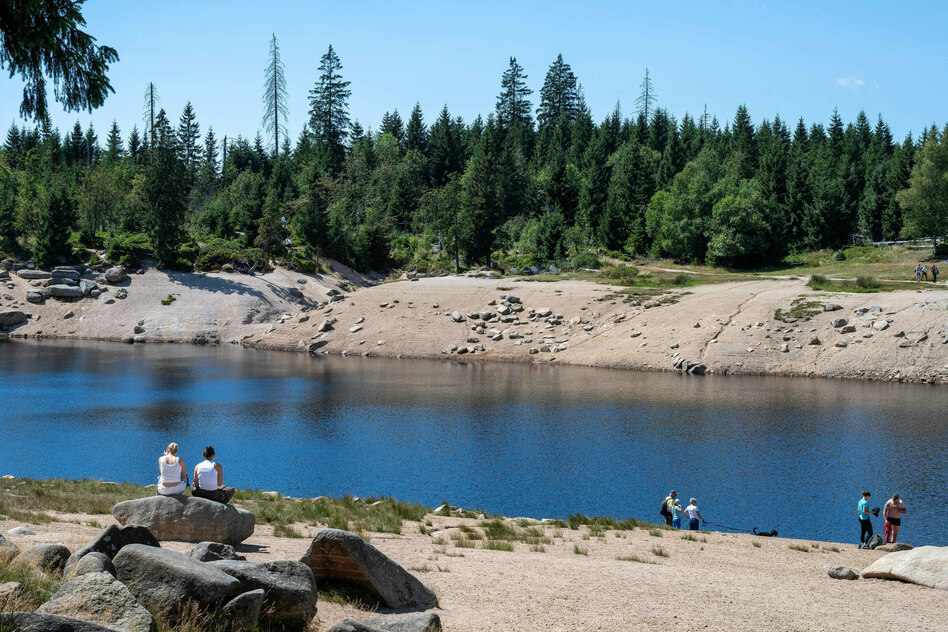
The Harz was once a gold mine. For more than 1,000 years - and until the middle of the last century - miners extracted valuable ores in the mountains. The princes in Hanover and Braunschweig in particular used the proceeds to illuminate their stately homes. The decline began after the Second World War, and in the end only a few mines were open to tourists.
Could there now be a revival for mining in the Harz? Last week, Lower Saxony's State Office for Mining, Energy and Geology (LBEG) issued a so-called exploration permit to a company from Freiberg in Saxony. Beak Consultants GmbH will be able to search for mineral resources in the western part of the Harz over the next four years.
The area mentioned in the mining German permit field covers an area of almost 500 square kilometers, including the cities of Osterode (in the south), Bad Harzburg (in the northeast), Goslar and Langelsheim (in the north) and Seesen (in the west). The mining town of Clausthal-Zellerfeld with its technical university is located in the middle of the permit field.
According to the LBEG, the approval is valid until September 14, 2030 and relates to around 50 raw materials, such as aluminum, arsenic, lead, chromium, iron, gold, lithium, phosphorus, platinum, mercury, silver, bismuth, tungsten, zinc and tin. In mining law, an exploration permit is permission to search for certain materials and substances in a specified area. Technical measures or even funding are not yet associated or approved. Such activities require operating plans under mining law, the approval of which requires, among other things, a separate participation procedure.
Beak doesn't initially want to mine mineral resources; rather, they are primarily pursuing scientific purposes. Together with project partners, new methods are being tested to detect mineral raw materials deep underground. Among other things, measurement flights with helicopters are planned to collect geophysical data from the air. Beak wants to analyze the data obtained using its own AI-supported software and then create precise maps.
Environmentalists from the region are also relaxed. “This is more of a research project in which techniques for mineral prospecting in areas with known deposits are calibrated and further developed,” said geologist Friedhart Knolle from BUND Westharz to the taz. “It has no immediate ecological impact.”
It remains to be seen whether classic underground mining will return later if the search teams find what they are looking for. There are significant hurdles to a real restart. Large parts of the historic mines and facilities are under strict protection; the former Rammelsberg silver mine and the Upper Harz water shelf - a gigantic system of ditches, ponds and underground watercourses artificially created by miners from the 16th century onwards - are even part of the UNESCO World Heritage Site.
In addition, the Harz is now an important tourist region, and large parts of it belong to a national park. A new large-scale mining operation would probably meet with resistance from the population. And: The development of new, deeper shafts and tunnels would be extremely capital-intensive and would only be worthwhile if world market prices were consistently high.
Read the full story at the source
Source: taz