
Germany · taz · · 35m
New EU directive in force: climate neutral? Only with proof
Deutsch (original) · Auto-translated to English
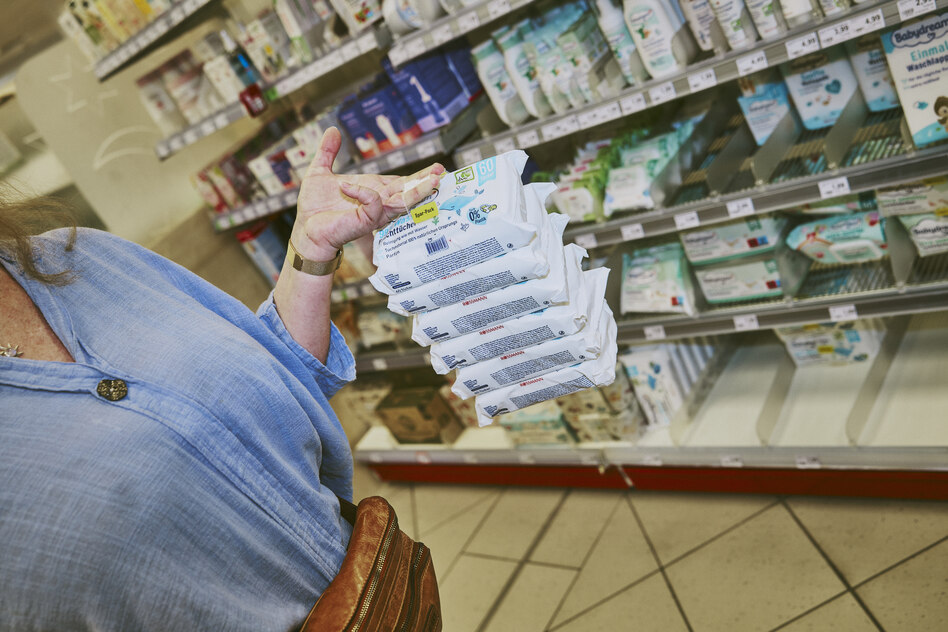
From now on, cheating will be expensive: Anyone who advertises products with attributes such as “recyclable”, “sustainable” or “climate neutral” must prove that they are undoubtedly recyclable, sustainable or climate neutral. If they don't, the advertising company faces fines of up to 4 percent of annual sales. Even self-conceived environmental seals and advertising tricks such as “climate-neutral flying” or “manufactured with green electricity” are becoming expensive: from September 27th, the rules of EmpCo, the EU directive Empowering Consumers for the Green Transition, will also apply in Germany.
This directive goes back to a study from 2020: At that time, the EU Commission examined how well-founded “sustainable” product information is. At that time, 230 “environmental labels” were in use, many of which the retailers simply came up with themselves. The commission considered more than half of the advertising claims on products to be misleading, and 40 percent were unfounded or unsubstantiated. But without reliable help in the fight for buyers' favor, it is difficult to make an informed purchasing decision.
That is why the EU decided on the EmpCo Directive in 2024. The aim is to protect consumers from misleading environmental statements so that they can really make an environmentally friendly purchasing decision. In order to incorporate this into national law, the German legislature changed the competition and consumer protection laws accordingly at the beginning of the year.
This means that advertising with terms such as “recyclable” is now prohibited if the entire product cannot actually be recycled. If you want to use terms like “sustainable,” “climate-neutral,” or “environmentally conscious” in your advertising, you have to include in the same commercial or advertisement what makes the product environmentally conscious or sustainable.
It is now also forbidden to use the term “climate-neutral” if a product only becomes one through the purchase of CO2 certificates: This affects, for example, Lufthansa, which has been advertising CO2-neutral flying since 2022 - although it continues to predominantly use fossil kerosene. Product seals that are not issued by independent organizations or government bodies are also prohibited. Equally vague promises for the future – for example “We will be climate neutral by 2030”.
So is environmental and climate protection really important when shopping? Unfortunately not automatically. A “Green Claims Directive” was actually supposed to be passed at EmpCo: With this, companies could have had their advertising claims independently checked in advance for their green content. The Council of the European Union, i.e. the member states, stopped this directive, citing too much bureaucracy.
This led to uncertainty in the sustainability industry: the first providers prefer to play it safe in view of the threat of penalties. In the past, a manufacturer of certified fairly produced organic clothing advertised its products as “recyclable” – because they were made from pure natural fibers and could therefore actually be recycled. Now the company says it “thinks in cycles.”
So can the “Federal Association for Sustainable Economy” still call itself that in the future? “Yes,” says its spokesman Joscha Frost to the taz: “We don’t sell any products and, as a non-profit organization, we don’t fall within the scope of EmpCo.” However, Frost admits that some member companies are having problems implementing the EmpCo. In fact, there is great uncertainty in parts of the industry. The Federal Association of the Energy and Water Industry, for example, believes that the term “green electricity” may no longer be used in the future because it has not yet been legally defined.
Alexander Karasek, spokesman for the green electricity provider “Green Planet Energy” contradicts this to the taz: “We show very thoroughly, for example, on our website where our green electricity comes from.” Sven Kirrmann, spokesman for the green electricity provider Naturstrom, also thinks the EmpCo is “fundamentally a good thing”. The directive also causes more effort: “We have to clearly demonstrate in our advertising where the electricity offered comes from.” However, this can also be an opportunity: “We hope that more wheat will be separated from the chaff,” says Karasek.
However, it may still take a while before the innovation reaches the shelves: the Bundestag has passed a regulation on old goods stocks. A transition period applies to these.
Read the full story at the source
Source: taz