
Germany taz
Labor market in Germany: Number of unemployed academics reaches record high
Those who have studied still have a relatively low risk of becoming unemployed. According to the employment agency, artificial intelligence will revolutionize the world of work. more...
Deutsch (original) ·Auto-translated to English
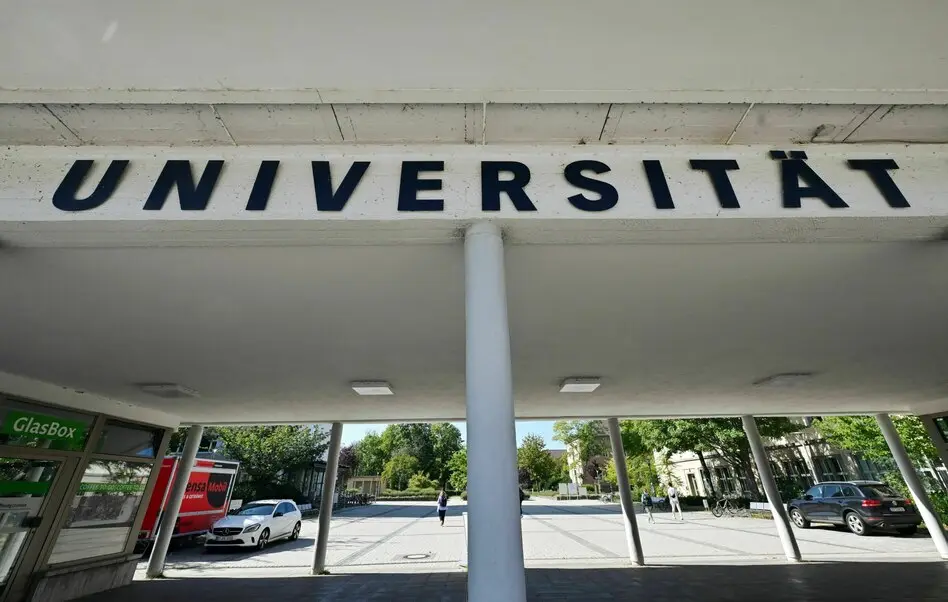
dpa | Unemployment among academics in Germany has reached an all-time high. The number climbed to 372,000 in August 2026, said the Federal Employment Agency in Nuremberg. The number has risen continuously over the past five years. Younger graduates under the age of 30 are particularly affected.
Nevertheless, education remains largely a safeguard against unemployment. At 3.3 percent in 2025, the unemployment rate among academics was only around half as high as in the general population. For people with a completed vocational qualification it was slightly higher at 3.6 percent, but for people without a vocational qualification it was over 21 percent, according to the Federal Agency.
Statistics show clear differences in the disciplines affected by unemployment. While teaching graduates were hardly unemployed in 2025 at less than 2 percent, graduates of humanities courses were unemployed at an above-average rate of 4.6 percent, and the rate for engineers was also above average at 3.8 percent.
According to the employment agency, the main reasons for rising unemployment are the tense economic situation and the increasing use of artificial intelligence. Young people in entry-level positions are particularly affected by this. In principle, however, it can be assumed that AI will not displace entire professions.
The head of the Federal Employment Agency, Andrea Nahles, expects artificial intelligence to revolutionize the labor market in Germany. “We predict that around 800,000 jobs in Germany will be lost due to AI in the next 15 years, but a similar number will also be created,” Nahles told Handelsblatt. "Some industries are hit harder by the cuts, such as service providers for companies, analytical jobs at insurance companies and banks. I would still like to see more investments in AI in Germany - but only if they bring productivity, not because it's chic."
The job cuts do not generally affect highly qualified people, said Nahles. "In the USA there was a shock study about young academics. Here too, academics take longer to start their careers and may not get their dream job - but they still have far better chances than everyone else." However, not all of this can be attributed to AI. "The weak economy plays a role here. On the other hand, professions that can use less AI, such as crafts, are proving to be quite robust."
Here the core of the work remains human craftsmanship. "Even semi-skilled and unskilled people still have a chance because it is sometimes not worth replacing them with AI. But here too, the following applies: In principle, no one is immune anymore."
Due to demographics, Germany is losing around 500,000 net workers per year. Net immigration is currently lower than it has been for a long time. “That’s why we also have to attract skilled workers from countries outside the EU,” demanded Nahles. "For this we finally need the promised work-and-stay agency that makes us competitive with other immigration countries. We have to become more modern, more digital and faster."
But the condition is “courage to find a central solution,” she said, referring to the dispute in the coalition and between the federal and state governments over the design of the planned agency. "I'm disappointed that the 550 immigration offices nationwide are apparently supposed to be protected. But they were never intended to be a welcome center for international specialists. They do a good job, but that's not what we need in competition with Canada."