
Germany · taz · · 2h
Antifascism in lawless spaces: Difficult legacy, harsh present
Deutsch (original) · Auto-translated to English
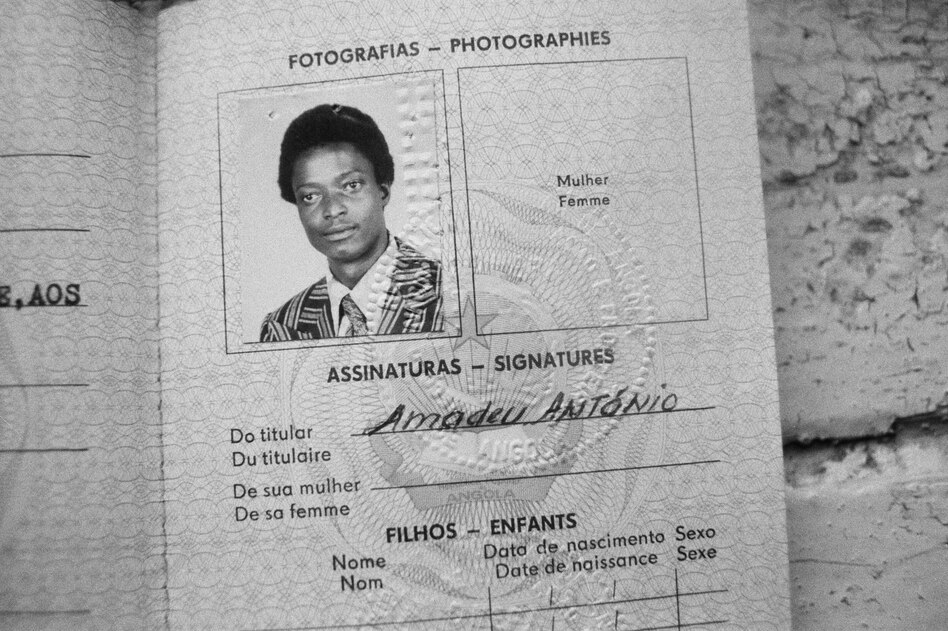
Amadeu Antonio came to the GDR in 1987 with 103 other Angolan contract workers. In the “socialist brother country” he worked in the VEB slaughtering and processing combine Eberswalde. After the “reunification,” Antonio was one of the first nationally known murder victims of right-wing extremist violence in unified Germany.
A mob of young men led by local neo-Nazis brutally beat Amadeu Antonio on the street in Eberswalde in November 1990. He died of head injuries. His two Mozambican companions narrowly survived the attack.
The attack on the contract workers in November 1990 was arbitrary. Three armed civilian investigators observed the event. They didn't intervene. Nor were there any police forces who could have been called at a short distance away. The civil investigators were later investigated, but the proceedings were discontinued. Six of the Nazi thugs involved were charged with bodily harm resulting in death – not murder. The court sentenced some of them to a maximum sentence of four years in prison.
Art, anti-fascism, autonomy and the welfare committee tour. Discussions and music with Isabelle Graw, Schorsch Kamerun, Masha Qrella, Ilko-Sascha Kowalczuk, Andreas Fanizadeh and representatives of the clubs Conne Island and About Blank in the taz-Kantine, Berlin.
An event in collaboration with the n.b.k. and the exhibition “Projections on the East”
“When the n***a was lying on the ground, someone jumped on his head,” is how one of the defendants described the events in front of the court in Frankfurt/Oder: “So three or four steps up and then full speed.”
Amadeu Antonio, recruited as a guest worker by the GDR, was 28 years old. His death marked the start of a series of racist murders, attacks and arsons after reunification. They culminated in the terrorism of the National Socialist Underground (NSU).
The national ethnic network, which emerged from the Thuringian neo-Nazi scene, shot nine civilians and a policewoman in various places in the Federal Republic between 2000 and 2006. Their victims were small business owners with a Turkish or Kurdish background and a Greek citizen.
The NSU also carried out the nail bomb attack in 2004 with seriously injured people on Keupstrasse in Cologne-Mülheim as well as other attacks and armed robberies. But for years investigators were unable to recognize the NSU as such. They attributed the series of murders from 2000 to 2006 to the milieu of the migrants themselves.
A thesis that only collapsed when the terrorist organization's main killers, Uwe Böhnhardt and Uwe Mundlos, were caught after a bank robbery in Eisenach on November 4, 2011. Authorities say they committed suicide. Her accomplice Beate Zschäpe is still in custody today.
Böhnhardt and Mundlos had already attracted attention in the 1990s for making bombs and spray-painting swastikas. They were once stopped in their car by the police in their Thuringian homeland. They were there equipped with axes, throwing stars, gas pistols and knives. In the autobiographical report “Hundeheimat”, Don Pablo Mulemba, born in Eberswalde in 1995, tells how right-wing extremist violent criminals hunted him in the car or bus in Cottbus as a teenager for no reason (Verlag Rowohlt Berlin, 2026).
Don Pablo Mulemba attended the sports boarding school in Cottbus from the age of twelve. His father had been friends with Amadeu Antonio in Eberswalde. He also worked as an Angolan contract worker in the slaughter and processing combine. There he also met Don Pablo's East German mother Jana.
In “Hundeheimat” the author tells in one scene how his parents, friends and his sister were attacked in their own apartment in Eberswalde. That was in 1991, a year after the murder of Amadeu Antonio, Don Pablo himself had not yet been born.
"Suddenly a baseball bat eats its way through the thin apartment door. The door breaks. One person puts his foot in the door (...). Now they are standing in the hallway. Three masked men with their combat boots. Two armed with a baseball bat, another with a knife. From the lower floor you can hear the voice of a very drunk neighbor who is manically screaming 'Foreigners out, Germany the Germans!' through the stairwell and makes the exceptional situation even more confusing."
Don Pablo's father and the friends present had fought in the Angolan civil war. They were militarily trained and managed to defend themselves against the attackers. The murder of Antonio had already made it clear to them that, in case of doubt, they would have to protect themselves.
An anti-racist foundation has been named after Amadeu Antonio, who was murdered in Eberswalde, since 1998. It is also repeatedly the focus of violent right-wing extremists. One of her freelancers, Heike Kleffner, managing director of the Association of Advice Centers for Those Affected by Right-Wing, Racist and Anti-Semitic Violence. V., spoke in a speech in Berlin's Columbia Theater at the end of July about civil courage and the need for an anti-fascist stance that is independent of state organs.
The occasion was a (concert) evening with Danger Dan and Igor Levit, which was about solidarity with the musicians canceled by ZDF and the song “Keine Angst”.
Critics from the right, but also from the authoritarian left, wanted to hear a new RAF singing on the microphone. Danger Dan's song is primarily about what to do if you are confronted with the events that Don Pablo Mulemba tells about so confidently in “Hundeheimat”.
After the Left Party's election victory in Berlin, AI-generated videos are circulating in right-wing extremist chats supporting the AfD. They are agitating against election winner Elif Eralp and creating an image of Berlin in which camels and goats graze in front of the Brandenburg Gate or the television tower. Tents, hawkers and a crowd of tightly veiled oriental people populate streets and public squares, accompanied by the call of the muezzin.
The incitement by right-wing extremists close to Putin is blatant – and dangerous. Because beyond organized chat groups, it reaches large population groups digitally and extremely quickly. These include many individual citizens who receive the consistent propaganda delivered free to their homes on their smartphones. And for whom polarizing hate speech has often become part of their everyday life.
Something similar can also be observed on the authoritarian left, where the rhetoric of their social media supporters also serves camp thinking in an increasingly formulaic way.
The appearance of Bundestag member Ferat Koçak from Berlin-Neukölln at the Left election party, side by side with Issa and Firas Remmo as well as Ibrahim Ibrahim, should in no way be trivialized. One is considered to be the leading figures of the Arab-Lebanese mafia in Berlin, the other is said to be a supporter of the United Palestinian National Committee in Germany, an umbrella organization in which terrorist organizations such as Hamas and PFLP are integrated.
In other words, organizations that were prominently involved in the attack on Israel on October 7, 2023. Among other things, their supporters filmed themselves with relish as they slaughtered 378 people on the grounds of the Supernova Festival alone, raped some of them, and kidnapped 44 visitors as hostages in order to trigger the all-out war in Gaza. Massacres like the one on October 7th are what the slogan “Free Palestine” means in the eyes of these people.
A Hamas cell that is said to have planned attacks against Jewish, Israeli and pro-Israel people and institutions in Germany is currently on trial in Berlin. And an extremist like Ibrahim publicly boasts of having contributed to the left's election victory in Berlin through his support in relevant milieus.
The example of Ferat Koçak makes it clear: There are forces in the authoritarian wing of the left who, through their criticism of Israel's actions in the Gaza war, want to contribute to the generalization of hatred of Israel and anti-Semitism in order to establish these as permanent factors in German domestic policy.
The left's lack of differentiation from notoriously anti-Semitic, pan-Islamic and pan-Arab scenes is also a template for ethnic German right-wing extremism. These are currently taking full advantage of Ferat Koçak's connections to the criminals and extremists he addresses as "brother" to spread their fantasies of repopulation.
One could also say: Together, both camps are obnoxious. They are also dangerous to those they mark.
Read the full story at the source
Source: taz