
Germany · taz · 1h
Attacks on the German power grid: Even more rockets – but no sign of Daniel V.
Deutsch (original) · Auto-translated to English
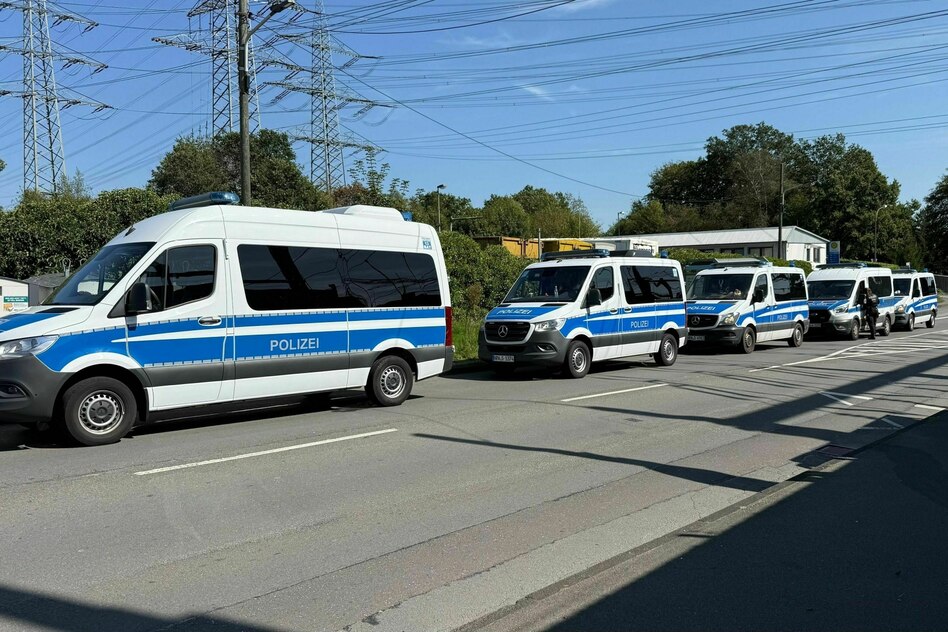
The series of attacks on the German power grid continues to concern the security authorities. On Monday, investigators found additional rocket launchers near the Graustein substation in Saxony. The first explosive devices were defused there on Saturday. The alleged perpetrator Daniel V. is still on the run.
The rockets found in Graustein correspond to those used in attacks on the power grid in Brandenburg and North Rhine-Westphalia last week. There, some of the missiles equipped with timer fuses actually flew into the power lines of substations and caused short circuits. As a result, units of nearby coal-fired power plants had to be shut down in both places. However, the power supply remained stable. In Saxony, however, the police detected the rockets in good time and defused them before they were triggered.
In another incident on Monday, the initial suspicion of terrorism was not confirmed. The fire in a Berlin substation this morning is apparently not the result of a targeted attack. The cause was probably a technical defect. The Berlin power grid remained stable despite the incident, although around 90 traffic lights in the city area were temporarily out of order.
The suspected perpetrator Daniel V. sent a confession letter to the taz after the first two attacks last week. He committed the crimes because generating electricity in coal-fired power plants is “a crime” that “results in untold suffering.” Federal Interior Minister Alexander Dobrindt (CSU) therefore spoke of suspected “climate terrorism” by a lone perpetrator.
However, there are also doubts about the thesis that V. was alone behind the attacks, as he describes in his letter of responsibility. It is therefore highly unusual for perpetrators to reveal their identity and address in such texts - especially since V. at the same time continues to try to evade the authorities. The language of the letter of confession also does not seem typical for people from the left-wing or climate-conscious scene, with phrases such as “law and order”.
Although the police are intensively searching for V., he has managed to elude so far. Finally, the police apparently assumed that V. could be in the Hambacher Forest and combed parts of the area, but without success. The forest has been a symbolic place for the climate movement since major protests in 2018 prevented the forest from being destroyed for brown coal mining.
On Monday, the police also searched an area near a substation in the Remscheid-Wuppertal area. And there was also a large-scale operation in connection with the series of attacks near a substation in Wesel on the Lower Rhine.
Regardless of the perpetrator, the attacks on the power grid have highlighted the fundamental vulnerability of the German infrastructure. Together with the drone attack at Leipzig Airport in August that has now clearly been attributed to Russia, the picture emerges of a country that is easy prey for its enemies.
In response, Interior Minister Dobrindt recently announced that operators of critical infrastructure facilities would be given more authority to secure their facilities. In the future, they should be allowed to fend off drones themselves. In addition, a network of digital sensors called “Cyberdome” will in future detect hacker attacks on infrastructure facilities and thus enable them to be combated at an early stage.
Read the full story at the source →
Source: taz